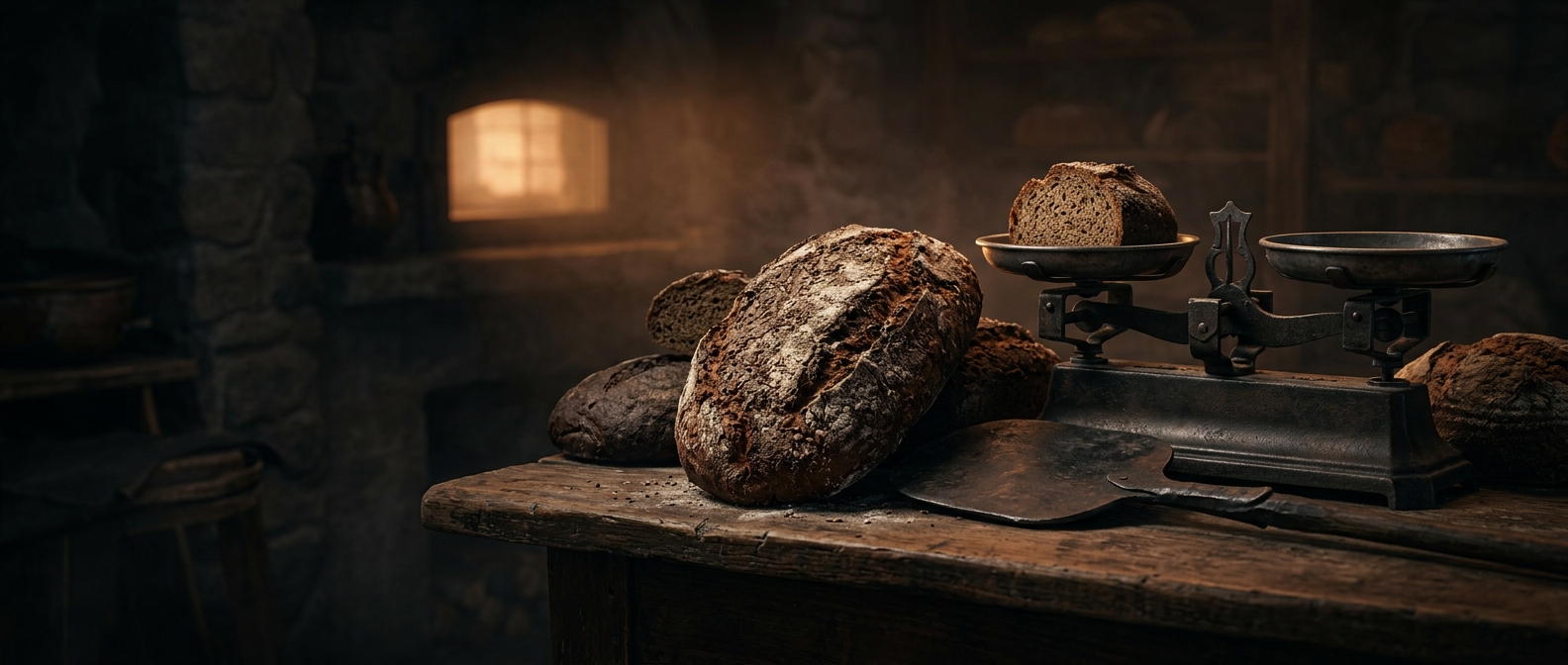
Why some German loaves feel unusually heavy
The weight comes from what is packed into the loaf—and how its flour behaves. Many traditional German whole-grain and rye breads use coarse meal, cracked grains, or intact kernels rather than mostly finely milled wheat flour. Those pieces soak up water and remain in the crumb, leaving less of the airy space that gives a white sandwich loaf its springy feel.
Rye also behaves differently from wheat. Its proteins do not form the same stretchy network that traps expanding gas in a light loaf. Rye dough can rise, but it tends to produce a closer, moister crumb. Add seeds or whole kernels, and a slice becomes more substantial still.
A different texture, not a failed rise
Some dark rye breads, including pumpernickel, are baked slowly in covered pans. The long, gentle bake helps create their deep color and mellow flavor; it also yields a compact loaf that is easy to slice thinly. Other German breads are lighter, so the dense texture is a feature of particular styles, not a rule for every bakery loaf in the country.
That difference changes how the bread is eaten. A thin slice can carry a strong topping without collapsing, and its chewy, grain-rich texture makes a small portion feel satisfying. In a German bakery, a dark, weighty loaf is not necessarily meant to be handled like fluffy toast: it is built for deliberate slices, with the grains and rye doing much of the work.