A lawn made land—and labor—visible
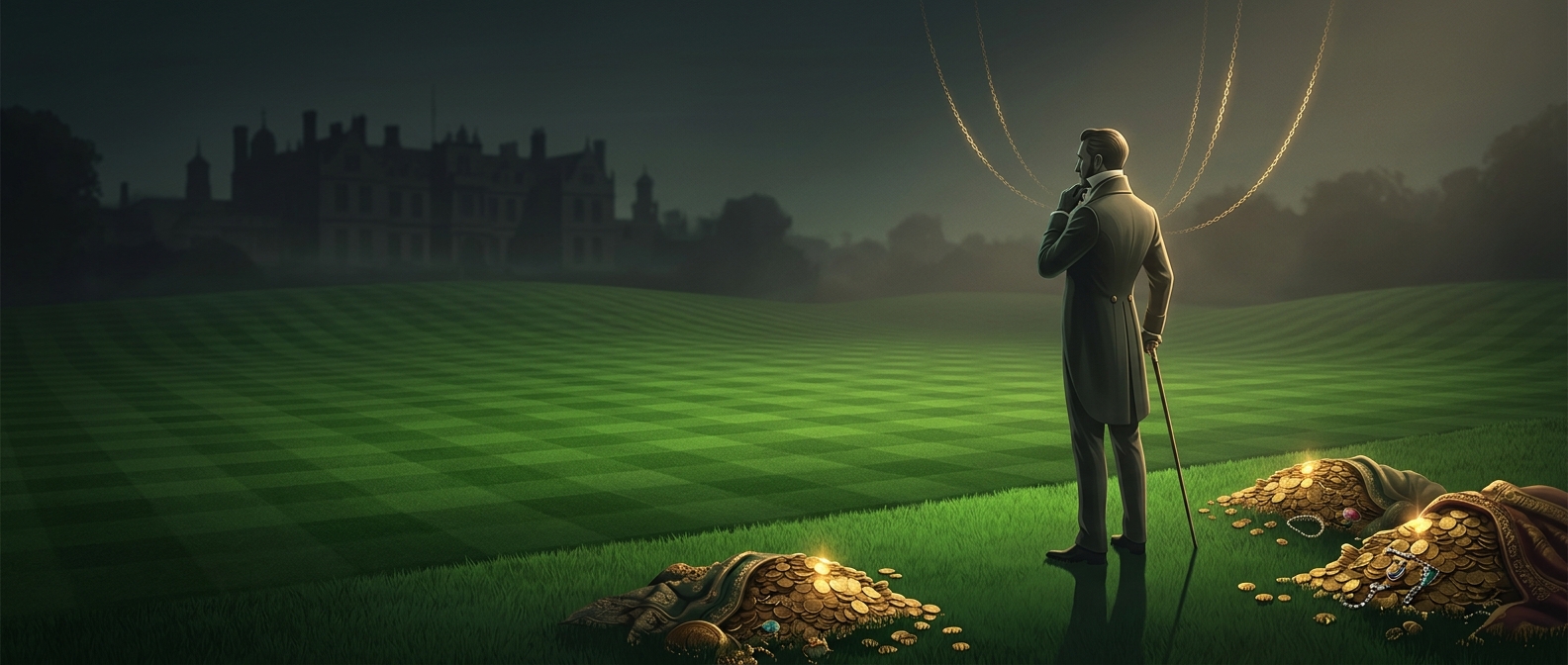
A closely kept lawn was not simply an empty patch. On a large estate, it was a deliberately maintained foreground: a clear, open stretch that framed the house and gave visitors an uninterrupted view of the grounds. Keeping it short and even took work. Before mechanical mowers, grass had to be cut by hand or managed with grazing animals, and the result was less uniform. The smooth green surface therefore displayed more than acreage: it showed that the owner could devote people and resources to land that did not need to produce a crop.
From estate grounds to household standard
The visual ideal spread as more people encountered landscaped estates and urban parks. Later, mechanical lawn mowers made regular trimming more practical for households beyond the very rich. The lawn became a smaller-scale version of the estate’s ordered landscape: a neat, open space at the front of a home that neighbors and passersby could see.
That shift changed the cost of the signal, not its basic logic. Instead of employing groundskeepers, homeowners could spend their own time or money on mowing, watering, fertilizer, and weed control. Weedkillers help preserve the uniform look by suppressing plants that interrupt the grass, but they also make the lawn an actively managed surface rather than a naturally diverse patch of ground.
A costly kind of neatness
A lawn’s status now depends less on owning vast acreage than on maintaining a particular appearance. Its message is carried by repeated upkeep: the clipped edge, consistent color, and absence of weeds. What once required a large estate can be reproduced in miniature—but the green display still asks someone to pay for the land’s upkeep instead of letting it serve another purpose.