Zero disappears through digit reduction
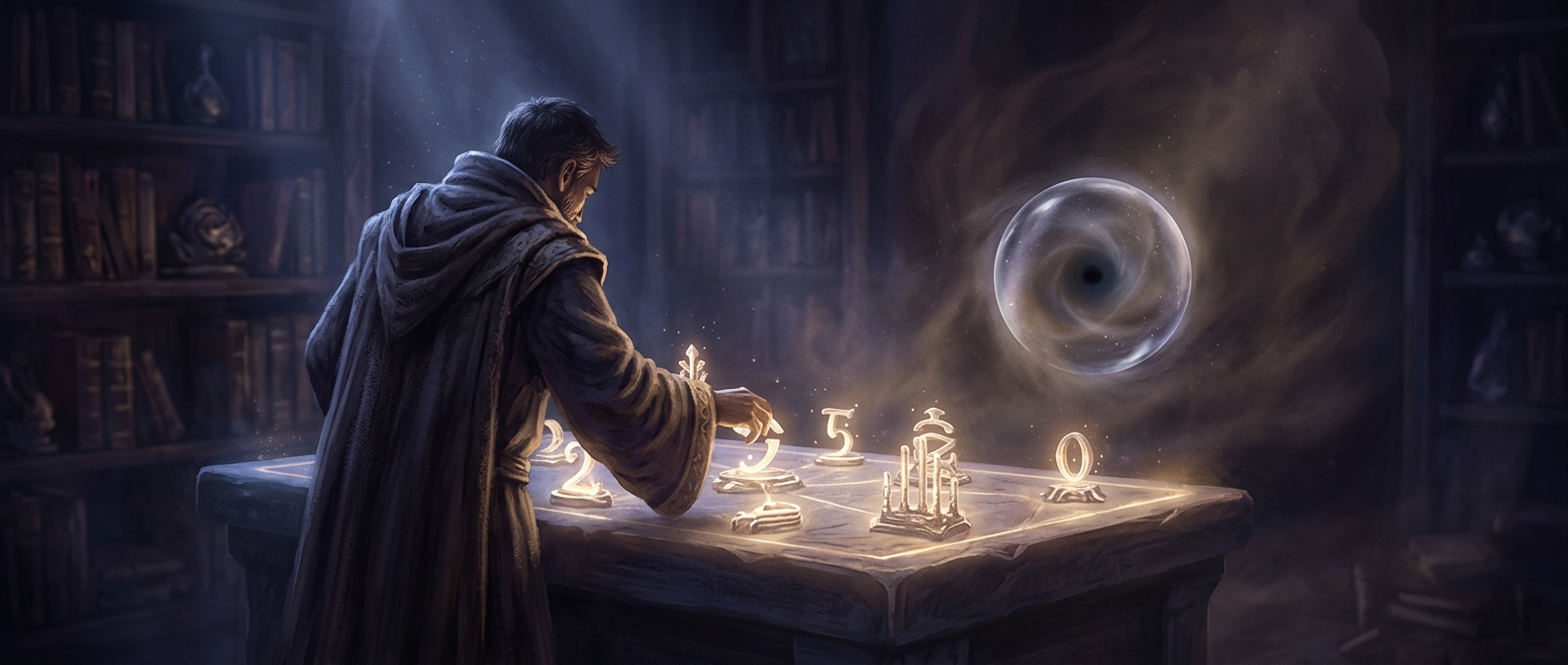
In many numerology readings, a multi-digit number is repeatedly simplified by adding its digits. For example, 28 becomes 2 + 8, or 10, and then 1 + 0, or 1. The final result is treated as a single-digit symbol, so zero functions as part of the calculation rather than as a separate destination.
That distinction is interpretive, not mathematical. In ordinary arithmetic, zero has precise roles: it marks an empty place in numbers such as 20 and leaves a number unchanged when added to it. A numerology reduction instead asks what single-digit result a number reaches, and its symbolic vocabulary commonly centers on 1 through 9.
The reduction also discards detail
Once a number has been reduced, its original size and digit arrangement no longer appear in the final reading. For instance, 20 and 2 both reduce to 2. The method therefore trades detail for a compact symbolic category: it makes many different numbers fit the same interpretation.
Zero is not necessarily irrelevant to every step. It can appear in the starting number and affect how that number is written, even though it does not remain as the final symbol in these systems. The practical consequence is that a reading based on the reduced value tells a story about the destination of the calculation—not about every feature of the number that began it.