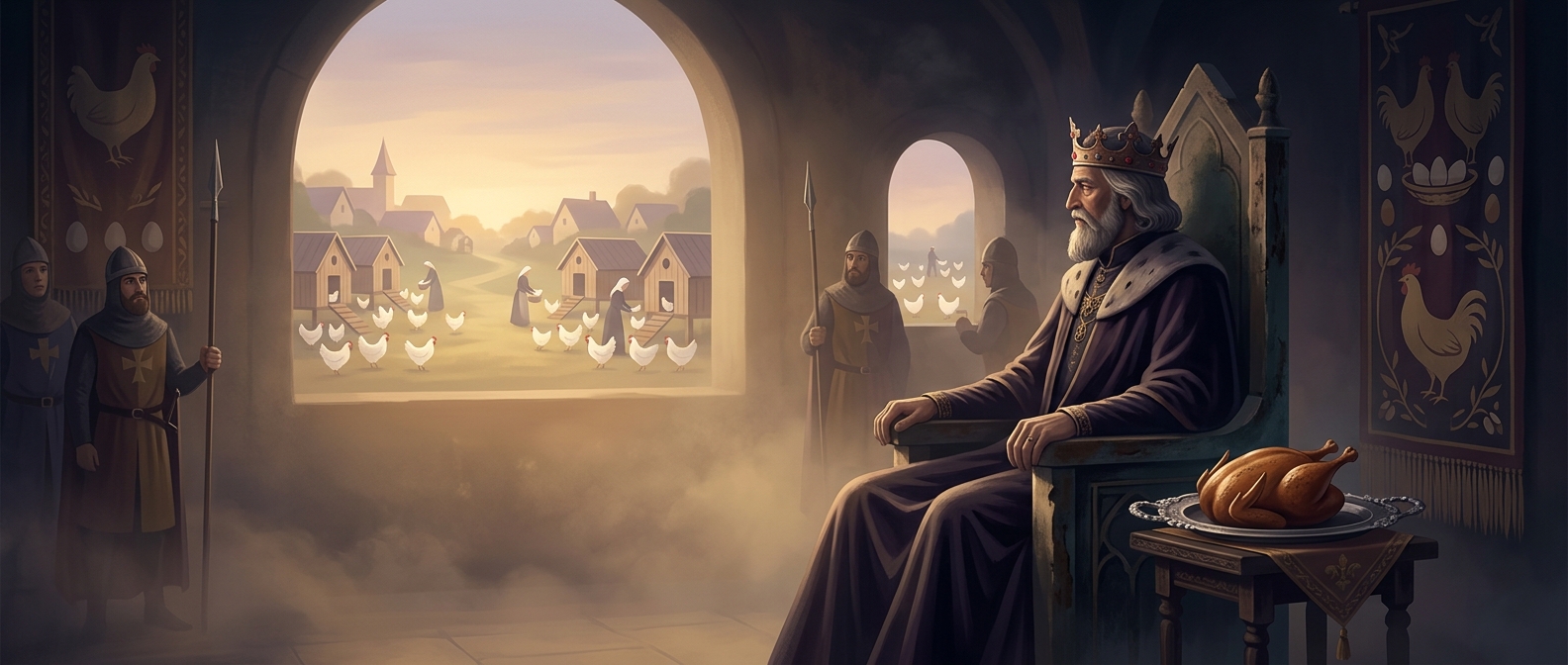
A Royal Appetite Becomes a Military Objective
The striking part of this story is not simply that a ruler liked roasted chicken. It is that a private preference reportedly became a public campaign. Keeping a steady supply of fresh poultry meant controlling more than a meal: someone had to raise the hens, protect the farms, and deliver birds to the ruler’s table. Acquiring that capacity by force turned dinner into a matter of territory and administration.
Why the Campaign Could Not Deliver Loyalty
A military victory can seize assets, but it cannot automatically make the people who manage them willing or able to keep producing. A poultry farm depends on routine care and reliable provisioning—work easily disrupted when a campaign brings disorder. The ruler’s goal may have been simple; the system required to meet it was not.
That mismatch is what gives the anecdote its bite. The campaign reportedly collapsed into chaos, and the hens could not solve the political problem beneath it: possession is not the same as cooperation. A royal table might command a feast, but sustaining it still depended on people and institutions beyond the ruler’s appetite.