A cheap way to make a small supply go further
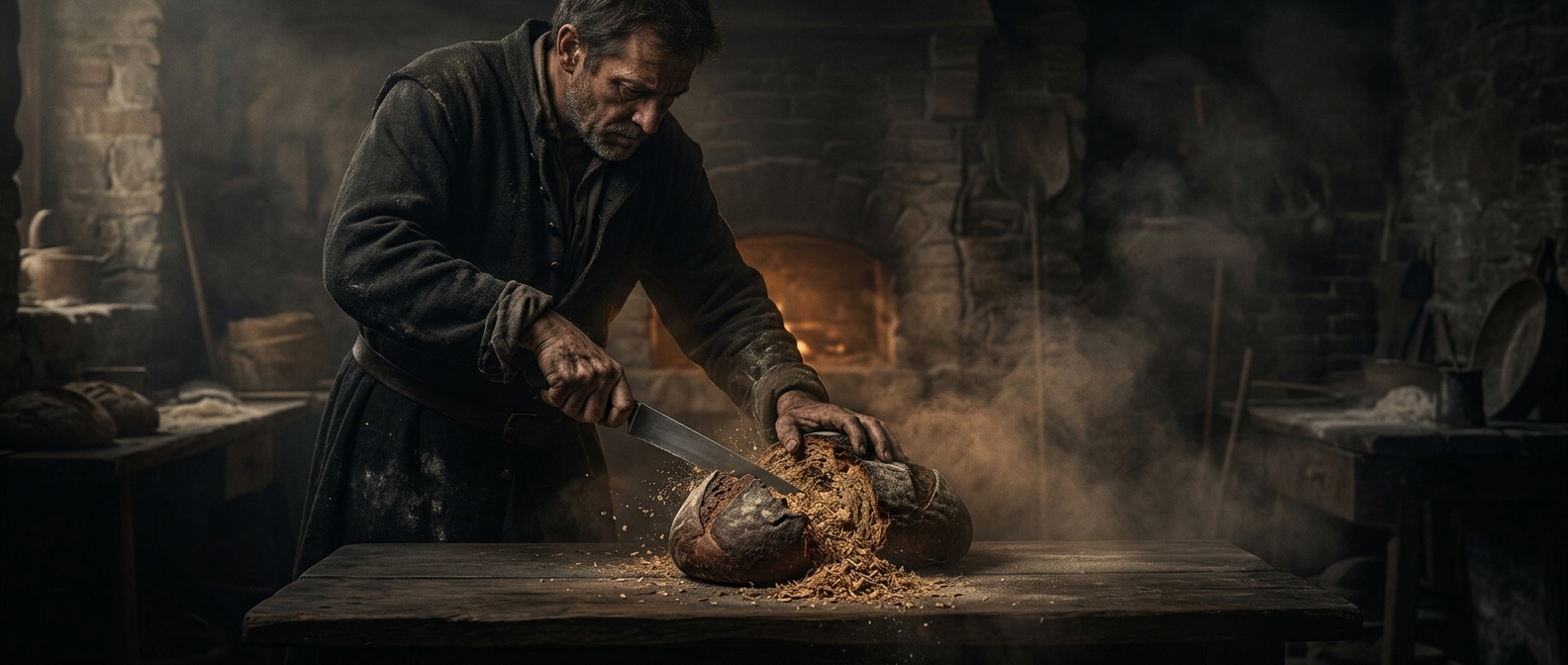
When flour was scarce or expensive, adding sawdust or wood shavings offered a blunt kind of substitution: a baker could mix more material into a batch and turn limited flour into more apparent bulk. The loaves could still be shaped and baked, but the added wood did not behave like flour. Flour’s starch and proteins help bread set and give it its familiar crumb; wood is largely cellulose, the tough plant fiber that gives trees their structure.
That meant the mixture could fill space without replacing what flour supplied. Cellulose can take up water, but people cannot digest it as a source of calories the way they digest the starch in bread. A loaf padded with wood therefore offered less nourishment than its size suggested, and its texture could be coarse or strange.
The deception was in the loaf’s appearance
The practice exploited a simple mismatch: customers judged bread by a finished loaf, while the baker controlled what went into the dough. Wood shavings could increase the batch without producing an equally larger amount of real bread. In a shortage, that might help a seller stretch ingredients; for the person buying the loaf, it meant paying for bulk that did not provide the expected food.
The telling detail is that the oven could make the mixture look like bread without making all of it bread. Baking changed the dough’s form, not the nutritional value of the wood mixed into it.