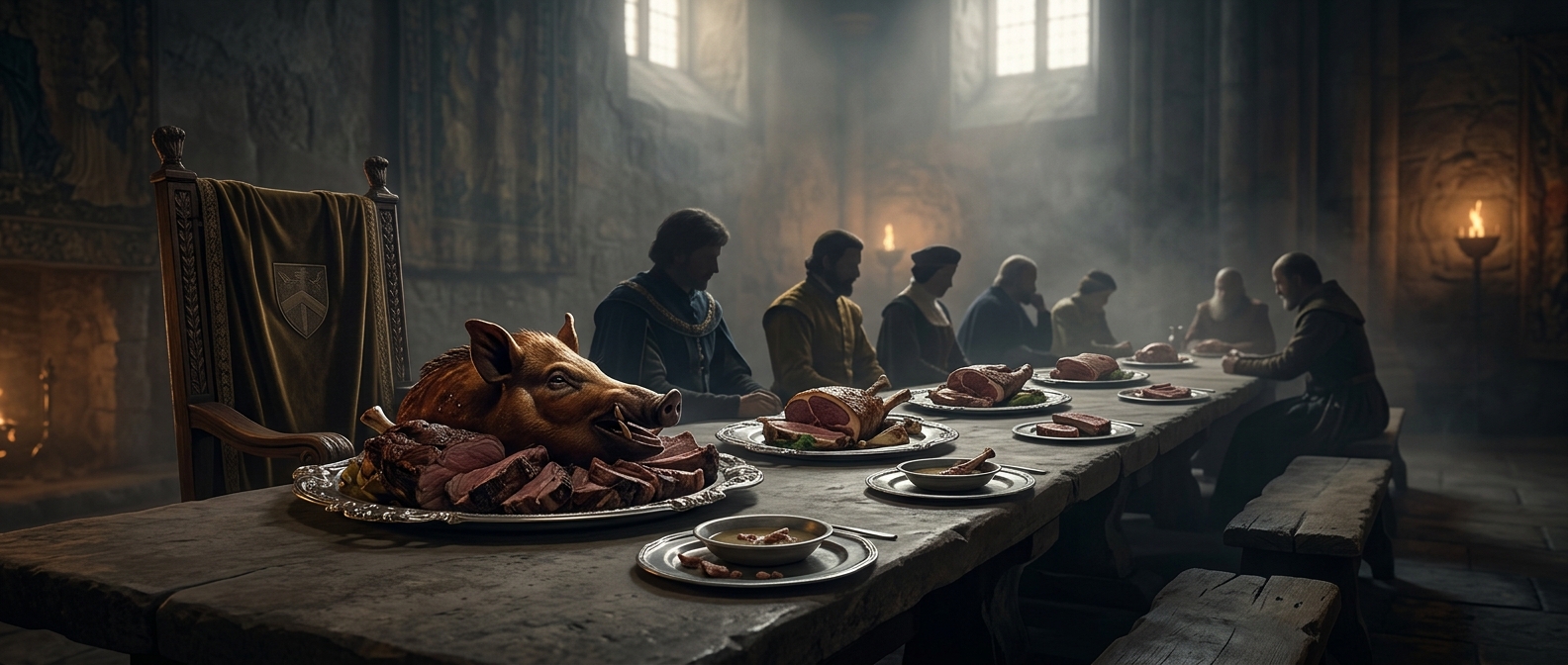
A Portion Could Mark Your Place in the Community
In ancient Greek communities, a meat meal was often tied to a public animal sacrifice rather than an ordinary private dinner. The animal was divided according to ritual and social rules: some portions were offered to the gods, while the rest became food for people gathered to share the occasion.
That division made the meal a visible map of social standing. Priests, officials, honored guests, or other high-status participants could receive prized portions; people with less standing might be assigned less desirable meat. The distinction was not simply about appetite. Receiving a valued cut showed that the community recognized your role and rank.
Why the Distribution Mattered
Meat was not an everyday food for most people, so a sacrificial feast could be a significant communal event. Who received which portion helped turn an abstract hierarchy into something everyone could see—and taste. The meal rewarded some participants with honor while reminding others where they stood.
Practices differed among cities and occasions, so there was no single Greek seating chart or universal rule for every feast. But the underlying principle was potent: the distribution of food could distribute honor, too. At a shared meal, rank was not merely announced; it was served.