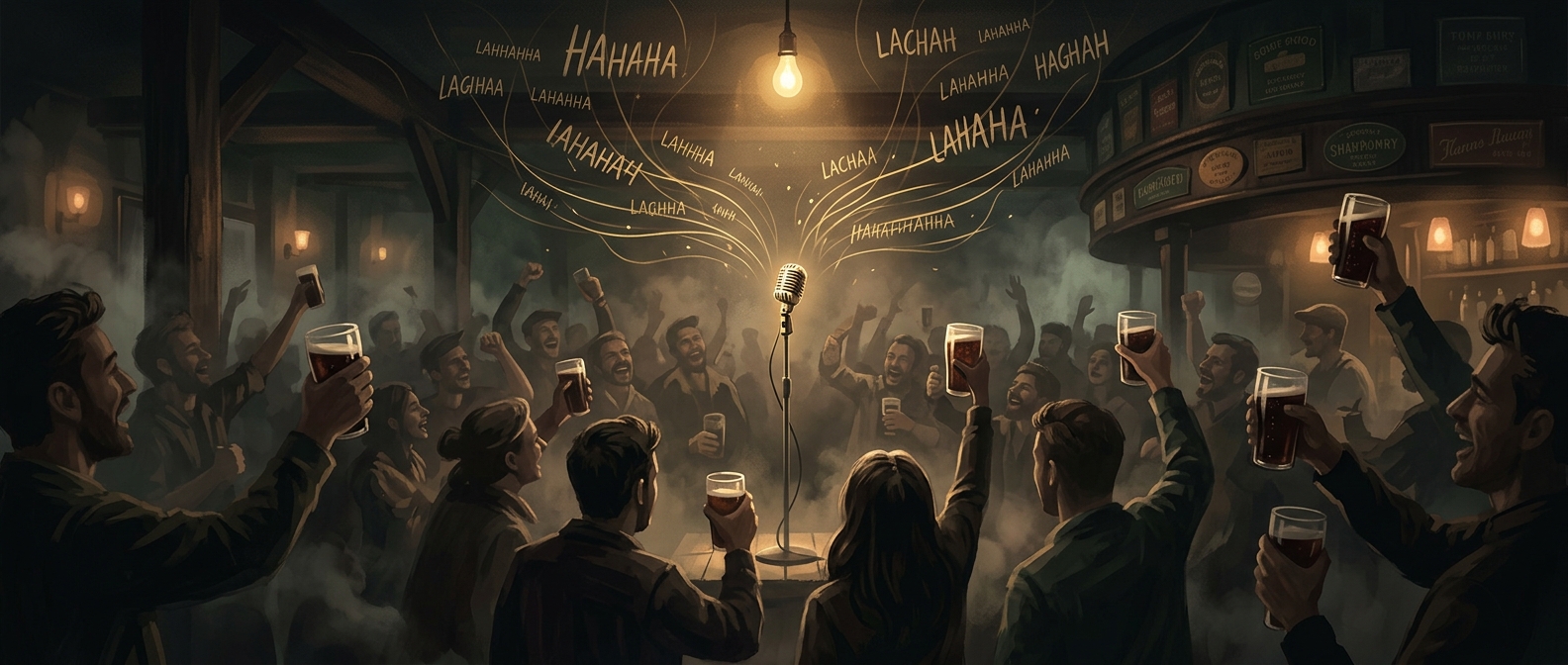
The pub turned an audience into a cast
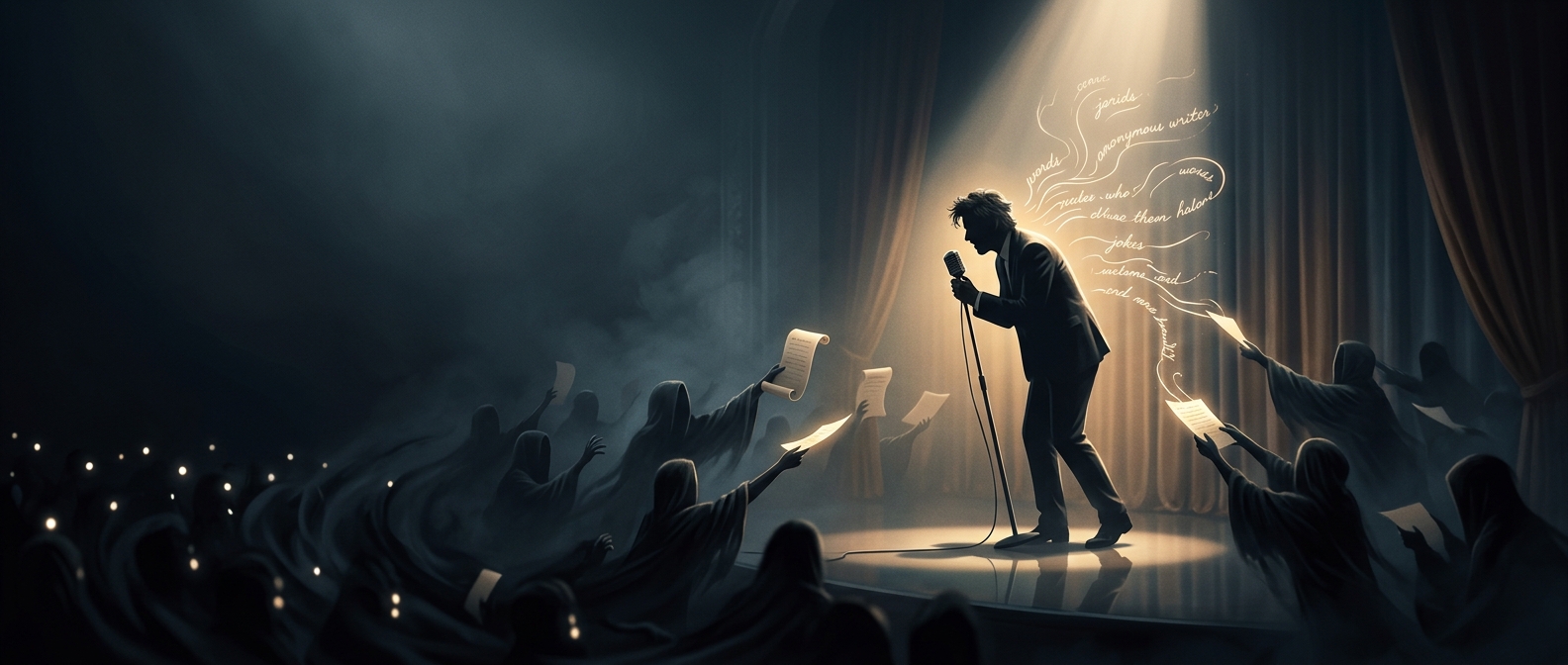
Open-mic comedy in London grew from a simple invitation: during a pub night, someone in the room could get up and entertain the others. The stage was not reserved for a polished professional act. A regular, a first-timer, or a musician might take a turn, making participation part of the evening rather than a separate audition.
That setting mattered. Pubs already gathered people in a shared room, and the performers were close enough to the audience to feel its response immediately. A joke that landed—or fell flat—got an unmistakable reaction. For someone trying comedy, the pub offered a comparatively informal place to find out whether an idea worked in front of strangers.
From an invitation to a running order
As these nights became more organized, hosts had to decide who would perform and when. A casual invitation could become a list of names, with each person given a short turn. That structure helped a night accommodate more hopeful performers and gave the audience a clearer sequence of acts.
The change also created a familiar tension: many people might want stage time, but the evening had only so many minutes. Modern sign-up lists and waits are a practical answer to that constraint, not the starting point of the idea. The lasting appeal is the original bargain: a pub gives a newcomer a few minutes, and the room supplies an immediate, unfiltered test.