A reservoir made of rock, not an underground lake
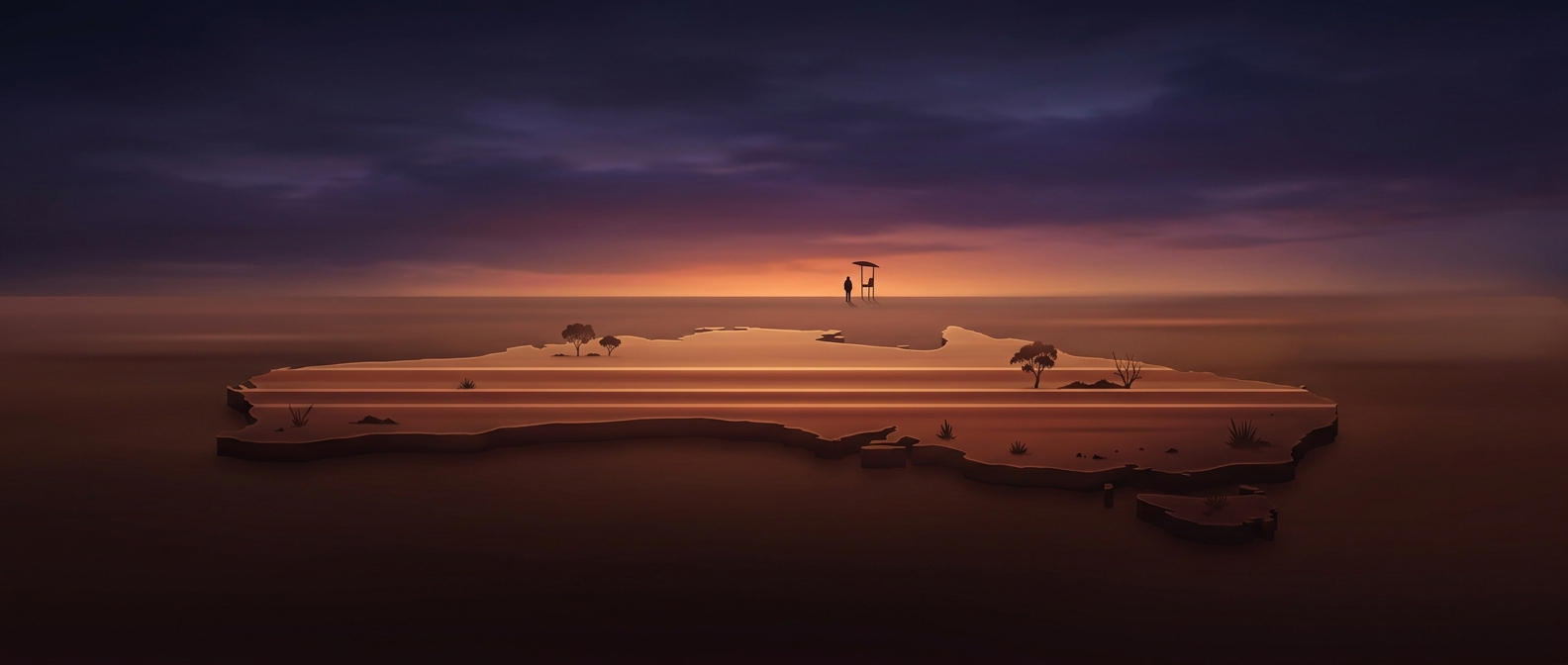
Beneath Australia’s dry interior, the Great Artesian Basin stores water in layers of porous sandstone. The sandstone’s tiny connected spaces hold water much as a sponge holds it, while layers of less-permeable rock above and below restrict its movement. The result is a confined aquifer: a water-bearing layer under pressure, not a vast open cavern.
How water reaches the surface
Rainfall enters the sandstone mainly where it is exposed around the basin’s edges, including higher ground. From there, water moves slowly through the buried rock toward lower parts of the basin. Because confining layers prevent it from simply escaping upward, pressure can push water to the surface through natural openings or wells. A well that brings water up without pumping is called an artesian well.
In some places, groundwater emerges as springs. Around the basin, these springs can create small, persistent wet habitats in an otherwise arid landscape. Their water has traveled through underground layers, and the springs’ location depends on where the rock allows that pressurized water to escape.
Why the hidden water matters
The basin’s size does not mean every part is equally easy to use: water is unevenly distributed, and movement through the rock is slow. For communities and farms in dry regions, wells can make groundwater accessible far from rivers. But the same slow replenishment means water drawn from the basin cannot be treated like a nearby stream that quickly refills after rain. Its most striking surface signs may be modest—a spring, a wet patch, or water rising in a bore—while the system feeding them extends far beneath the landscape.