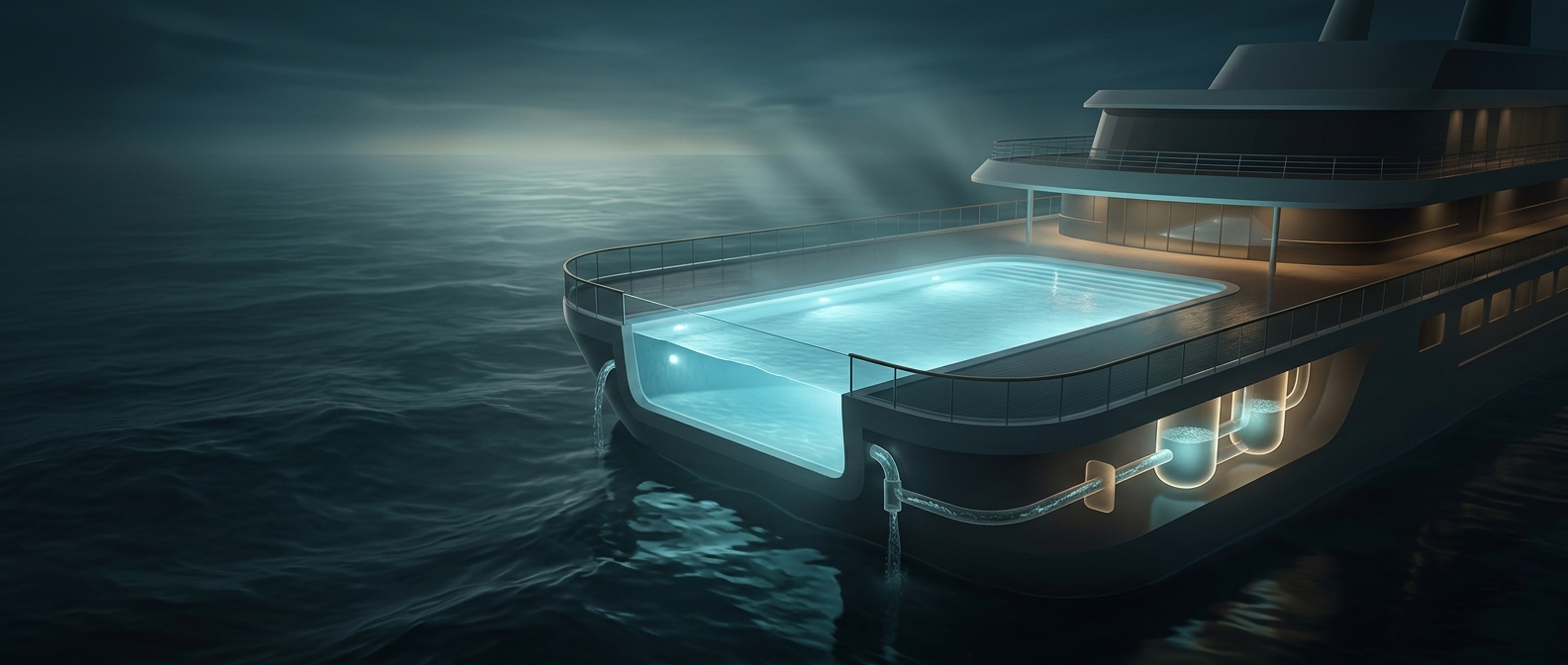
From the Sea to the Pool
A seawater pool begins at an intake below the ship’s waterline. Pumps lift seawater into the ship, where screens can catch larger debris before the water passes through sand filters. In those filters, water moves through a bed of sand that traps suspended particles, such as grit and organic matter, while the water flows onward to the pool.
Sand filtration improves clarity, but it does not remove the dissolved salts: the pool remains seawater, not desalinated freshwater. Nor does filtering alone guarantee that pool water is free of microbes, so the pool’s operating system may also use other treatment and monitoring to keep the water suitable for swimming.
A Shipboard Tradeoff
Using seawater can reduce the demand on the ship’s stored freshwater, which is also needed for drinking, cooking, washing, and other daily uses. The tradeoff is that seawater brings salt and marine material into equipment designed to handle a busy pool. Pumps and filters must keep the water moving and clear, and the system must be managed as conditions change.
That makes the pool a small piece of ship infrastructure: the ocean supplies the water, but onboard equipment turns it into something usable for recreation without first converting it into freshwater.