Why cenotes mattered beyond their water
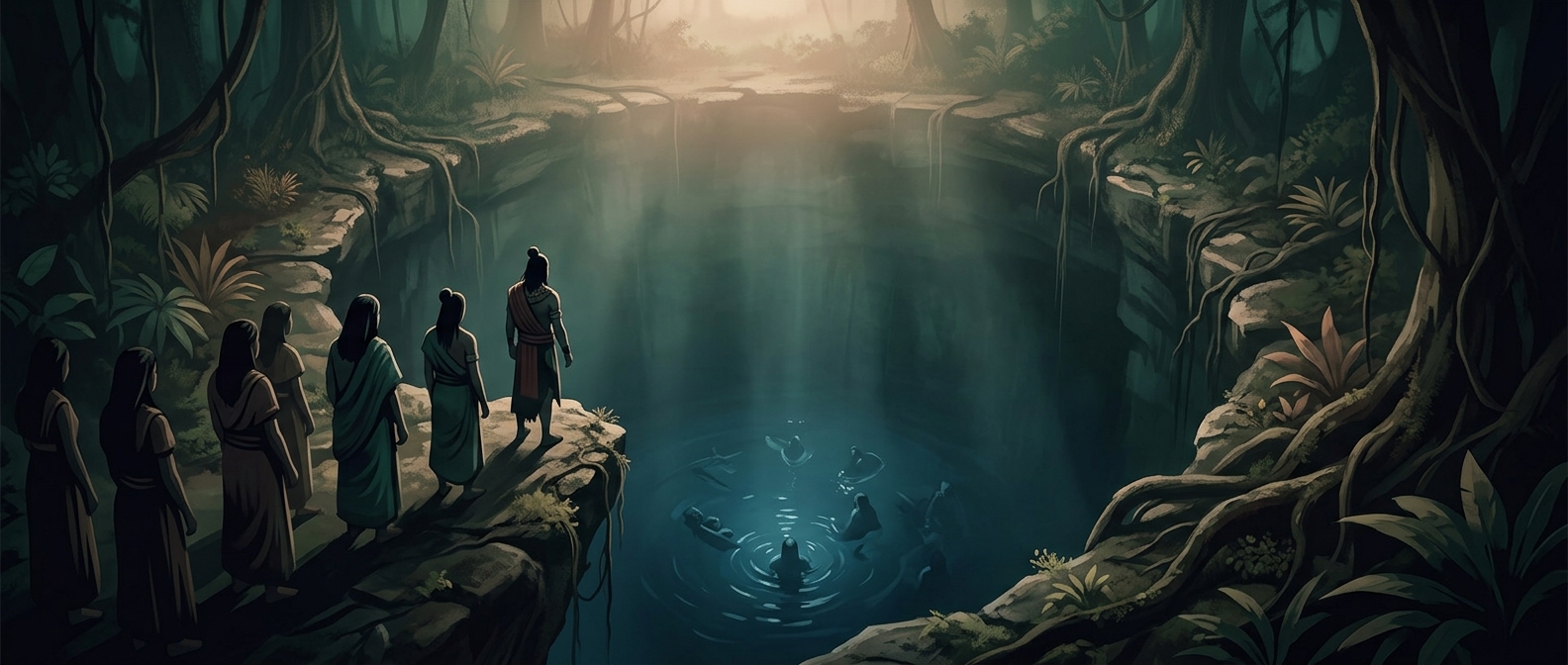
Across the limestone lowlands of the Yucatán Peninsula, rainwater could seep through porous rock rather than collect in rivers. When the roof of an underground chamber collapsed, it exposed a cenote: a natural opening to groundwater. In a landscape with few surface-water sources, cenotes were practical lifelines—but their depth and connection to hidden water also made them powerful sacred places.
For the ancient Maya, some cenotes were understood as thresholds between the human world and the unseen realm, including Xibalba, the underworld described in Maya tradition. That association gave a pilgrimage to a cenote more than a physical destination: approaching the water could mean approaching divine powers believed to govern rain, fertility, and life.
What an offering did
An offering was a way to make that relationship tangible. Jade, pottery, and other valuable objects were placed in the water as gifts to deities or forces associated with the place. During drought, when crops and communities depended acutely on rain, appeals for water could take on particular urgency. Human sacrifice occurred in some contexts, but it was not the only form of offering.
The cenote’s shape helped make these acts enduring. Objects dropped into a deep, water-filled opening disappeared from view, passing into a space people could not readily enter or retrieve them from. The same geological feature that supplied drinking water thus became a route for communication with the sacred—and a place where devotion could leave a material trace beneath the surface.