How the reservoir became a wave source
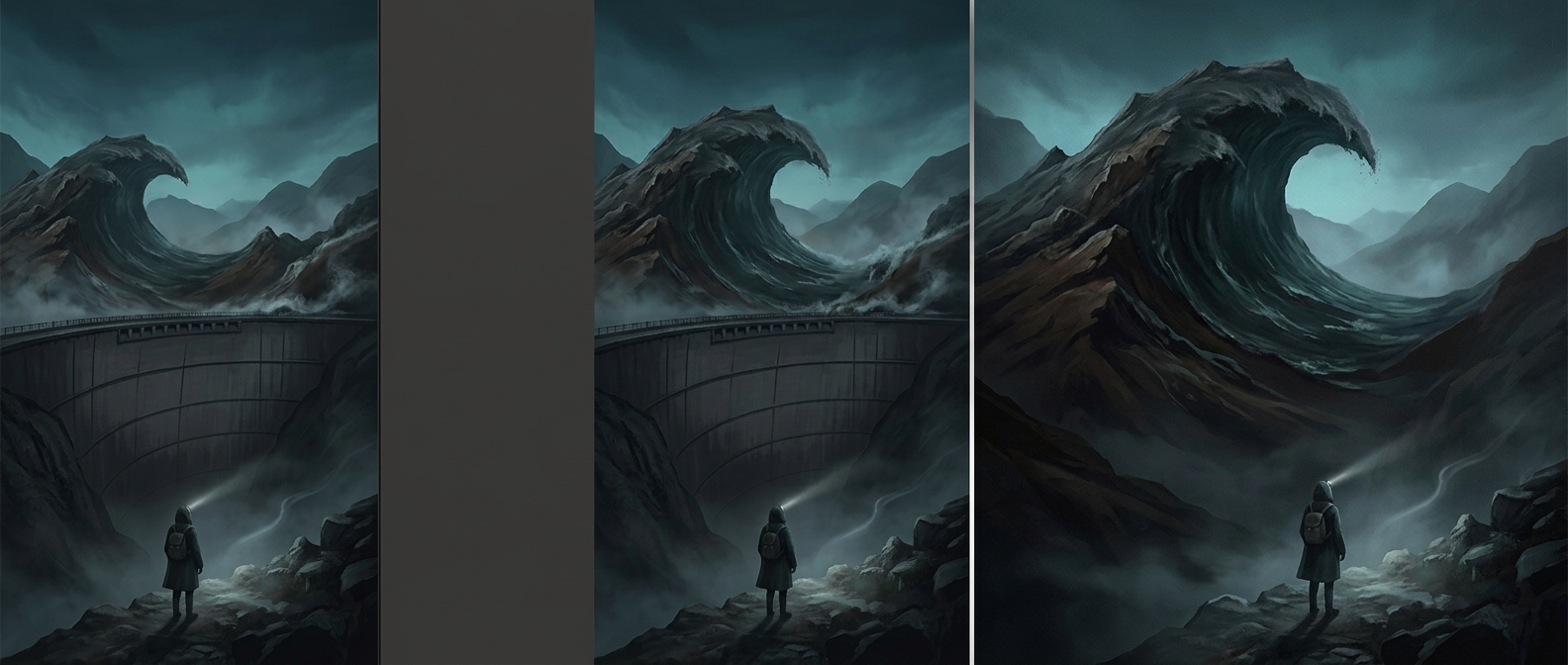
Vajont Dam stood in a steep Italian gorge, holding back a reservoir beside unstable mountain slopes. In 1963, a huge section of Mount Toc slid into the water. The sudden impact displaced the reservoir, forcing water upward and outward in a surge that overtopped the dam.
This was not a conventional flood released through a broken gate. The landslide itself supplied the force: rock plunged into confined water, and the gorge directed the displaced water toward the dam and the valley below.
The dam held; the valley did not
The concrete structure remained standing because the disaster did not require it to crack or collapse. Water simply passed over its crest. On the far side, the surge plunged into the narrow valley and swept through Longarone, destroying much of the town and killing thousands of people.
That distinction is the unsettling lesson of Vajont: a dam can survive structurally while failing to protect the people downstream. Its intact wall became a stark marker of how little a sound structure matters when the hazard comes from the reservoir’s surroundings rather than from the dam itself.