A Turned Card Records a Game State
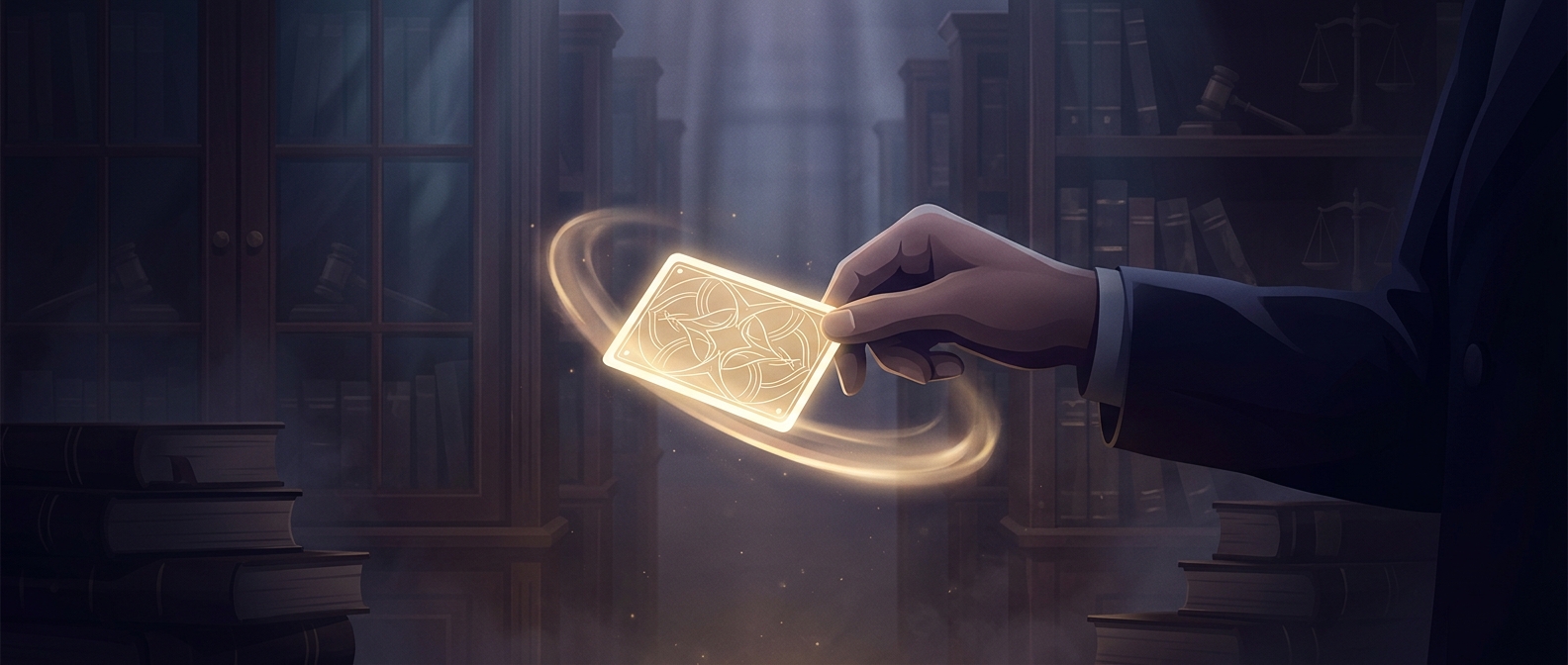
In Magic: The Gathering, turning a card sideways—“tapping” it—works like a visible status marker. A card in its usual upright position is ready to be used; a tapped card has already been committed to an action and generally cannot be used again until it is made ready, or “untapped.” The board itself keeps track of what each player has spent.
That matters because a player may control many cards with different jobs and limits. Instead of relying on memory or placing a separate token on every used card, players can change the card’s orientation. The state is easy for both sides to see and can be reversed when the card becomes available again.
Why the Mechanic Mattered
Tapping links a simple physical gesture to the game’s rules. In play, it can mark that a card has supplied a resource or been committed to an action, such as attacking. The gesture therefore helps make choices consequential: using a card now can leave it unavailable for another purpose until it is readied again.
The patent application’s subject was this kind of game procedure—the interaction of cards, player choices, and rules—not the abstract idea of rotating a rectangle. The distinction is important: the sideways turn is only the visible signal. Its role comes from the larger system that tells players what tapping means, when it can happen, and what follows from it.
A Small Gesture With a Practical Job
A card game needs a reliable way to show changing information without interrupting play. Tapping puts that information directly on the table, where opponents can inspect it at a glance. One turn of a card can make an invisible rule state visible—and let the next decision begin without anyone having to ask what was already used.