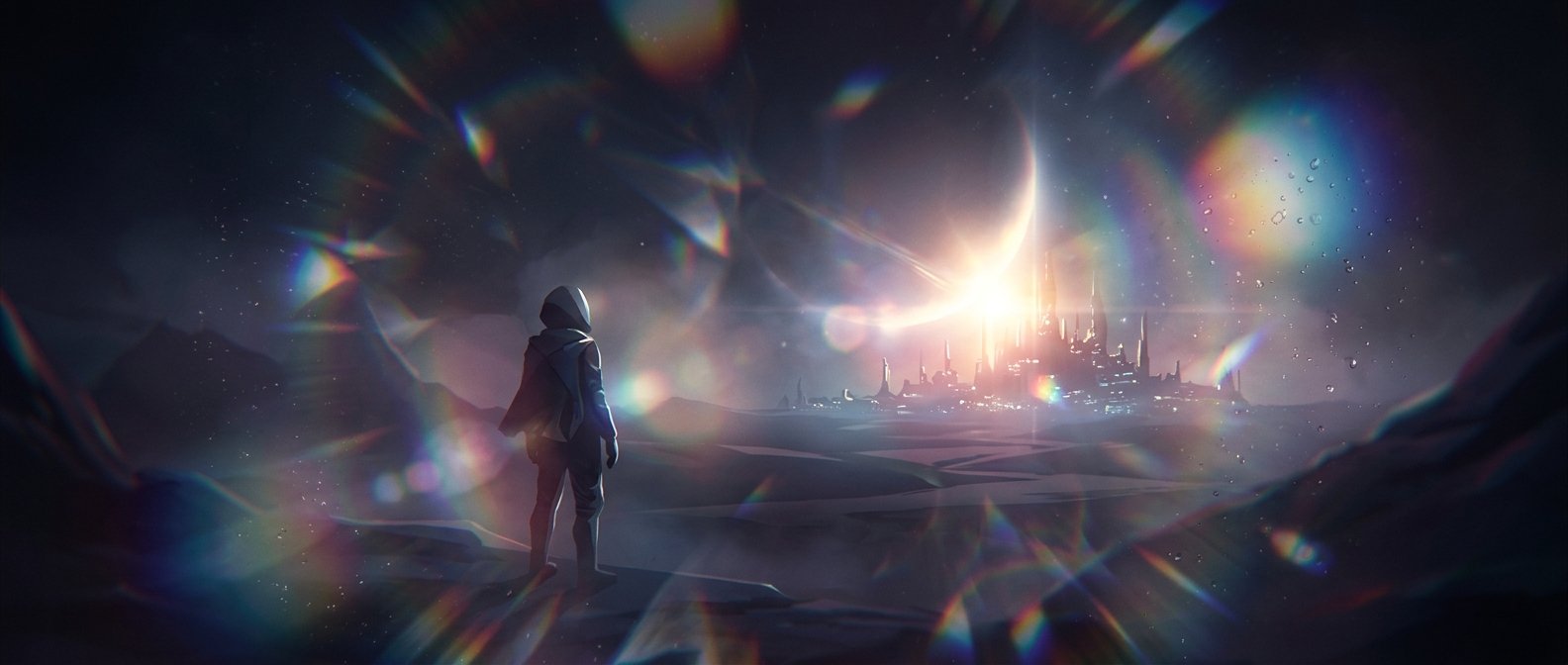
Why a Camera Turns Bright Light Into a Streak
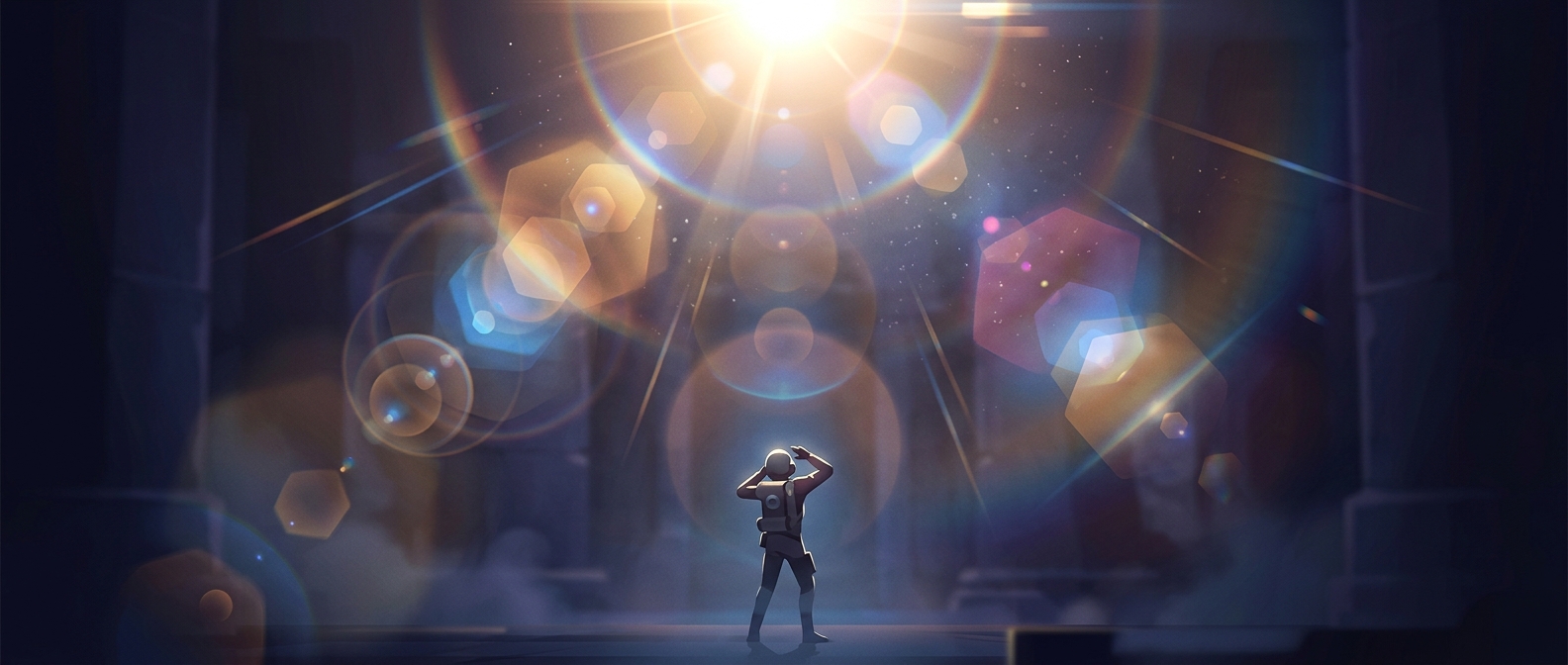
A lens flare begins when intense light—often the sun or a bright lamp—enters a camera lens and bounces between its glass surfaces. Those reflections can create colored spots, hazy veils, or long streaks across the image. The flare is an optical side effect, not an object in the scene.
Human vision works differently. The eye’s cornea and lens can scatter light and produce glare, but they do not usually make the crisp, geometric streaks associated with a camera flare. Those shapes depend on the camera’s lens elements and how light reflects inside them.
Why Filmmakers Add an Artifact
A movie image is built through a camera, so a flare can make a shot feel as if it was captured by a physical lens rather than assembled as a perfectly clean picture. It can also signal that a powerful light source is just outside the frame, or draw attention toward one side of the image. In effects-heavy scenes, that visual cue helps make an artificial setting feel more like a photographed space.
The choice is a tradeoff: a flare can add atmosphere, but it can also wash out details or compete with the action. Filmmakers may capture one during filming or add it later, placing and shaping it to suit the shot. The streak is less a record of what a person would see than a visual shorthand for what a camera sees.