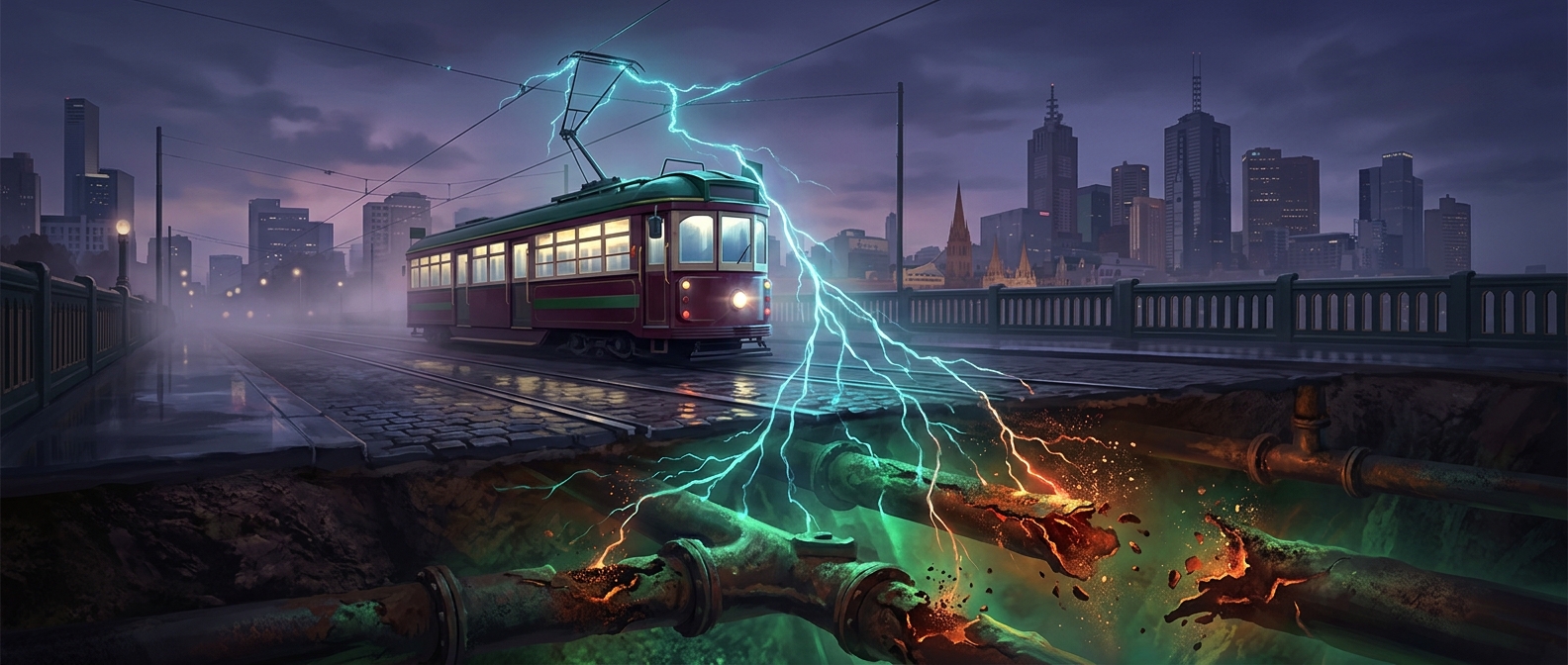
How tram current can reach a water pipe
Electric trams draw power from overhead wires and use their rails as the return path for current. But rails are not perfectly insulated from the earth. Some current can leak into the damp ground, which conducts electricity, and encounter buried metalwork such as water pipes.
A long metal pipe can offer an easier route than soil. Stray current may travel along it before finding a way back toward the tram’s electrical supply. The damage happens where that current leaves the pipe: metal atoms give up electrons and enter the surrounding soil as charged particles. This is electrolytic corrosion, a form of electrical rusting that can thin the pipe from the outside.
Why the damage is localized
The current does not necessarily corrode every part of a pipe it touches. The critical spots are where it flows off the metal and back into the ground. Over time, those small areas can become pits or holes, turning an electrical side effect into a leak underground—often out of sight until water reaches the surface or pressure falls.
Transport and utility engineers can reduce the risk by limiting current leakage from the rails and providing controlled electrical paths back to the traction system. They can also inspect or monitor vulnerable buried infrastructure. The challenge is to keep the tram’s return current on its intended route without disrupting either the railway’s electrical operation or the pipes that happen to share the city beneath it.
A tram can therefore keep running normally while its stray current quietly works on plumbing below street level.