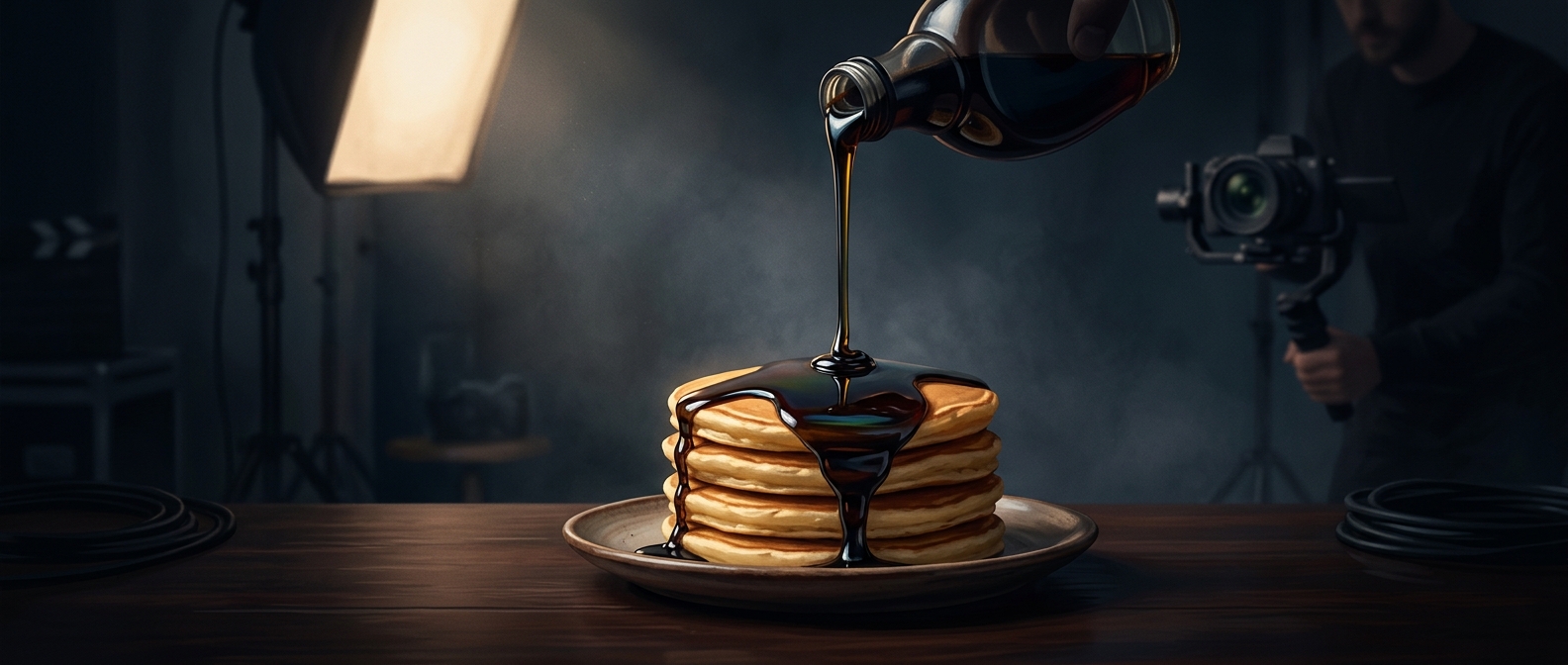
The pancake is built for the camera, not the plate
A food shot has to hold its appearance while the crew adjusts the camera, lights, and framing—and possibly repeats the take. Real syrup can soak into a pancake or run off its surface, changing the look from moment to moment. That makes it hard to preserve the glossy, freshly poured effect a close-up is meant to show.
A prop pancake can be assembled to resist that change. Cardboard inside gives it a firmer shape and helps keep the stack from sagging under the lights. The topping is chosen for its appearance on camera, rather than for taste or nutrition; in this case, motor oil can remain visibly slick instead of disappearing into the pancake like edible syrup might.
A convincing image comes with a practical tradeoff
The substitution helps the food look consistent across a shot, but it also means the finished stack is strictly a prop. It cannot be served or sampled, and the crew must keep the inedible topping separate from food intended to be eaten.
That divide is easy to miss in a brief commercial: the viewer sees a breakfast ready for the table, while the set is arranged to make every surface behave predictably under hot lights and repeated takes. The camera gets the appetizing shine; the pancake never has to be breakfast.