How a gravity-driven subway would trade flat track for hills
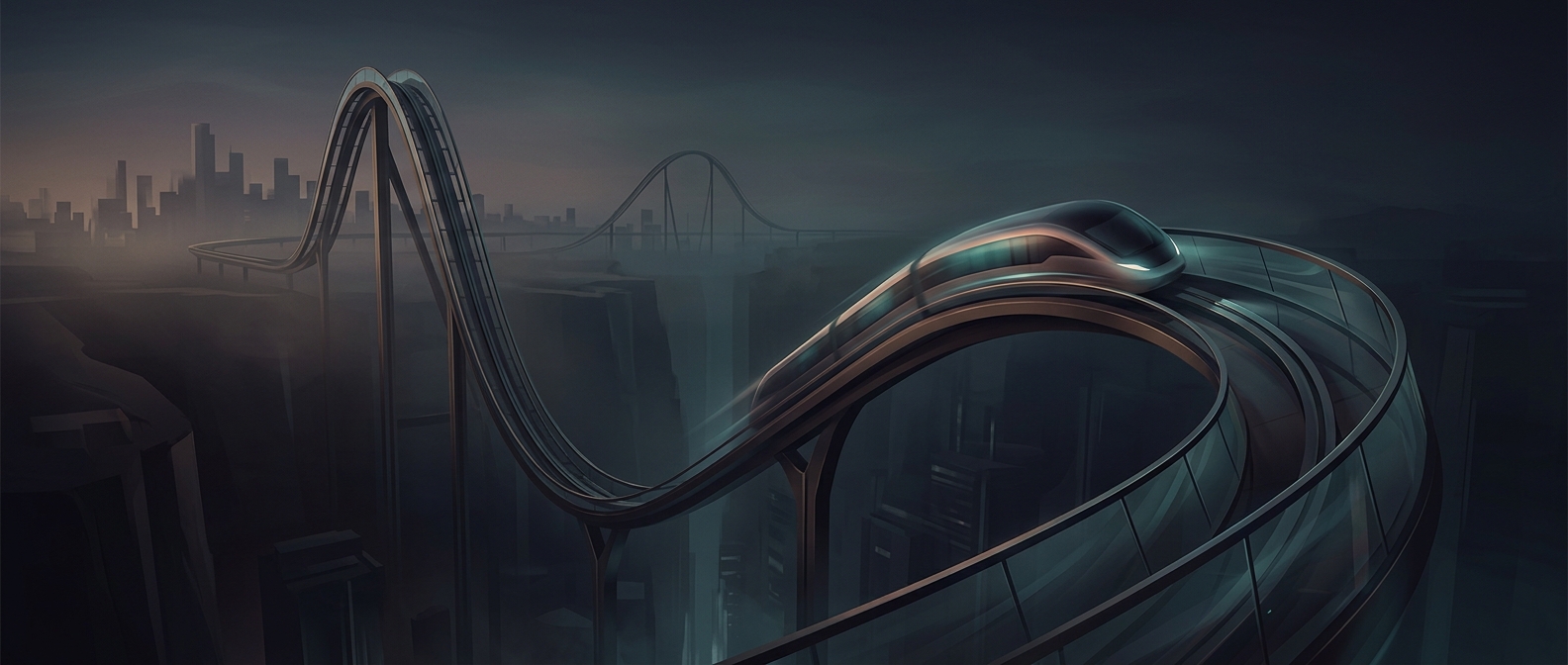
A gravity-powered route would treat elevation as part of its propulsion system. At a station placed high on the track, a car could roll down a slope, converting gravitational potential energy—the energy it has because it is elevated—into motion. The car would then use that momentum to climb toward the next station.
The climb would recover some of the height it lost, but not all the energy from the descent. Wheels and rails create friction, air resistance slows the car, and braking at stations turns motion into heat. Motors would have to make up those losses, help the train accelerate when needed, and control its speed on downhill sections. The idea is therefore not a train that runs without power; it is a route designed so gravity can do part of the work.
The track would shape the commute
This design depends on a carefully balanced profile of rises and dips. A long descent can build speed, but the following climb must be gradual enough for a comfortable ride and steep enough to fit the available route. Stations also need to be positioned where cars can slow, stop, and start reliably. Those requirements could make it difficult to serve neighborhoods laid out on relatively level ground or to add stops wherever demand arises.
A commuter system must also keep travel predictable. Steep slopes bring questions of braking, traction, and safe operation in wet or icy conditions, while repeated climbs and dips may be less comfortable than a conventional level ride. The central tradeoff is clear: the route can save some propulsion energy only by accepting more constraints on where the track and stations can go.