Symmetry makes the fight about choices
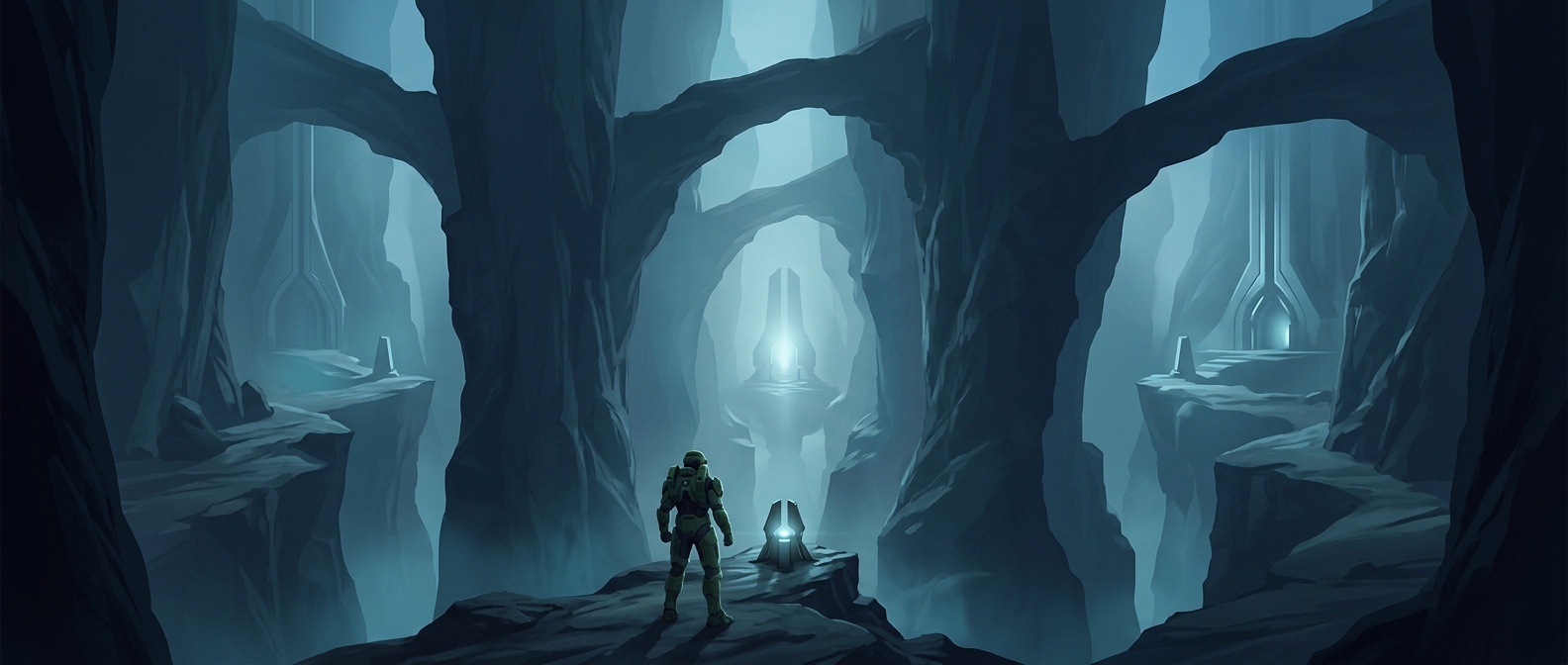
Blood Gulch gives Red and Blue comparable starting positions, so neither team begins with a built-in advantage in access to key routes or weapons. That matters because a multiplayer map is not just scenery: every ledge, vehicle, and shortcut affects how quickly players can reach a fight and what they can do once they arrive.
With the bases arranged as counterparts, players can learn one side and apply that knowledge on the other. A sniper can look for the equivalent firing position; a driver can expect a similar route out of either base. The map’s layout becomes easier to read, leaving less room for victory to hinge on one team simply knowing the terrain better.
Fair starts, different battles
Equal geography does not make every match play out the same way. The open ground between the bases gives vehicles room to move, while exposed crossings make those drives risky. Players can take the direct route, use cover, or try to outmaneuver opponents; each choice creates a different kind of encounter.
That is the useful tension in Blood Gulch: the map balances where teams begin without dictating how they must fight. Its mirrored setup makes the contest feel fair, while the distance and open space between the bases give players plenty of ways to turn a fair start into an unpredictable match.