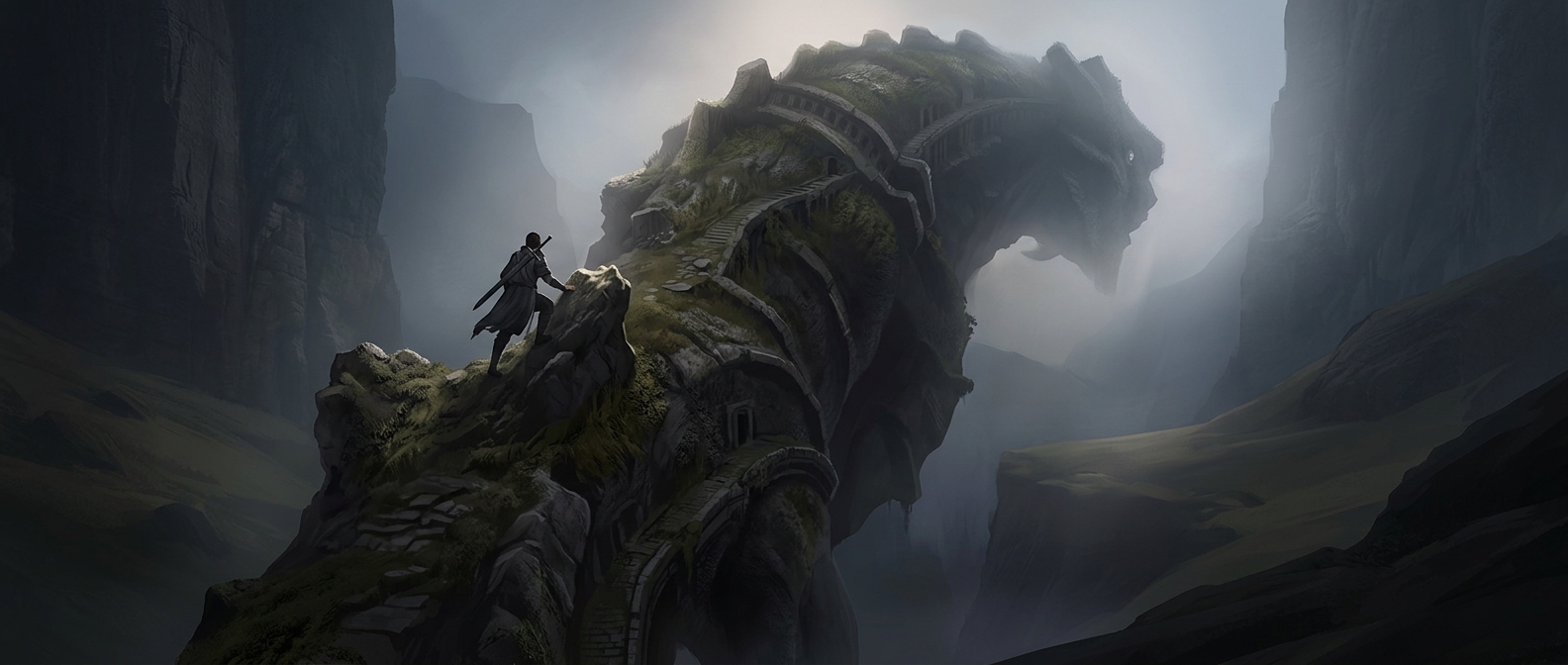
A battlefield you have to climb
In Shadow of the Colossus, a giant is not simply an enemy standing in an arena. Its body is the arena. The player must find a route up its moving limbs and torso, holding on as the creature bucks and shifts. That turns the boss’s animation into part of the challenge: a movement that makes the colossus feel alive can also throw the player off.
Climbing depends on a limited grip stamina meter. Hang on too long, or fail to find a stable place to rest, and the climb becomes dangerous. The player is therefore solving two problems at once: how to reach the target and how to conserve enough strength to get there.
Each fight is a physical puzzle
The goal is not to strike anywhere at random. The player has to locate vulnerable points, often marked by glowing sigils, then reach them and attack. Some colossi require a detour through the landscape or a clever use of the surroundings before a safe climbing route opens. Others make the route itself the main puzzle.
This design makes observation as important as reflexes. A creature’s shape, movement, and behavior offer clues about where to climb and when to move. A swipe or a shake is both an obstacle and information: it reveals how the colossus defends itself, and when it may be possible to advance.
The boss fight becomes the level
Conventional action games often separate navigation from combat: cross a stage, then meet an enemy. Here, those tasks collapse into one encounter. The scale that makes each colossus seem imposing also creates a platforming space with changing footholds and hazards.
The result is a fight measured not just in damage, but in progress up a living landscape. Reaching a weak point can feel like solving the whole level—because, for that encounter, it is.