The safety advantage is built into the approach
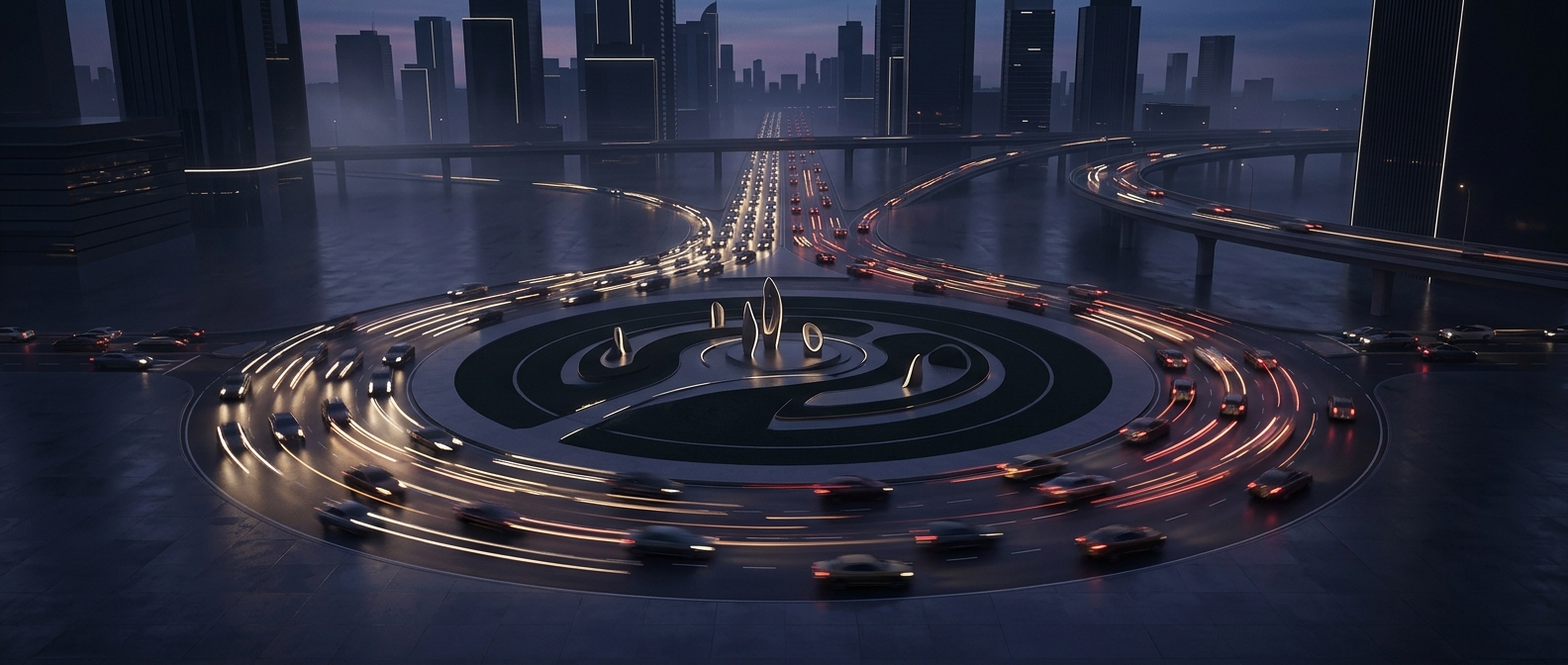
A circle does not make an intersection safe simply by sending cars around an island. The crucial change is how drivers reach it: instead of crossing straight through, they bend toward the circulating roadway and yield to traffic already there. That approach makes drivers slow before entering and gives them a chance to merge into a single direction of travel.
The geometry matters. At a conventional crossing, vehicles can meet at right angles, often with little time to react. In a roundabout, the approach curves steer vehicles into a lower-speed path. If a collision happens, it is more likely to be a sideswipe or a glancing impact than a high-speed perpendicular crash. Because crash energy rises sharply with speed, even a modest reduction in speed can make a collision less severe.
Fewer crossing conflicts, more merging
A roundabout also changes the kinds of movements drivers must manage. Traffic no longer makes opposing streams cross through the center of the junction. Instead, entering vehicles wait for a gap and join traffic moving around the island; exiting vehicles peel away from that stream. The design replaces many direct crossing conflicts with slower merges and departures.
That tradeoff is the point: drivers may have to slow, yield, and follow a curved route, but the intersection discourages the fast, straight-line movements that make crashes especially forceful. The circle still carries traffic around its center; its safety comes from controlling the speed and angle at which vehicles meet.