Why a red light can keep you waiting
A signal is not simply switching between “your turn” and “their turn.” It must give vehicles and pedestrians time to clear the junction before conflicting traffic moves. At a busy intersection, separate phases may serve through traffic, turning vehicles, and people crossing on foot. A phase is one part of that sequence, when a particular set of movements is allowed to proceed.
The signal also has to balance competing needs. A longer green can move more cars in one direction, but it makes other queues wait; frequent changes can waste time while traffic clears the intersection. Some signals use sensors to respond to approaching vehicles, while others follow a timed sequence. Either way, safety and orderly movement—not the convenience of any one driver—shape the cycle.
How brief stops become a lifetime total
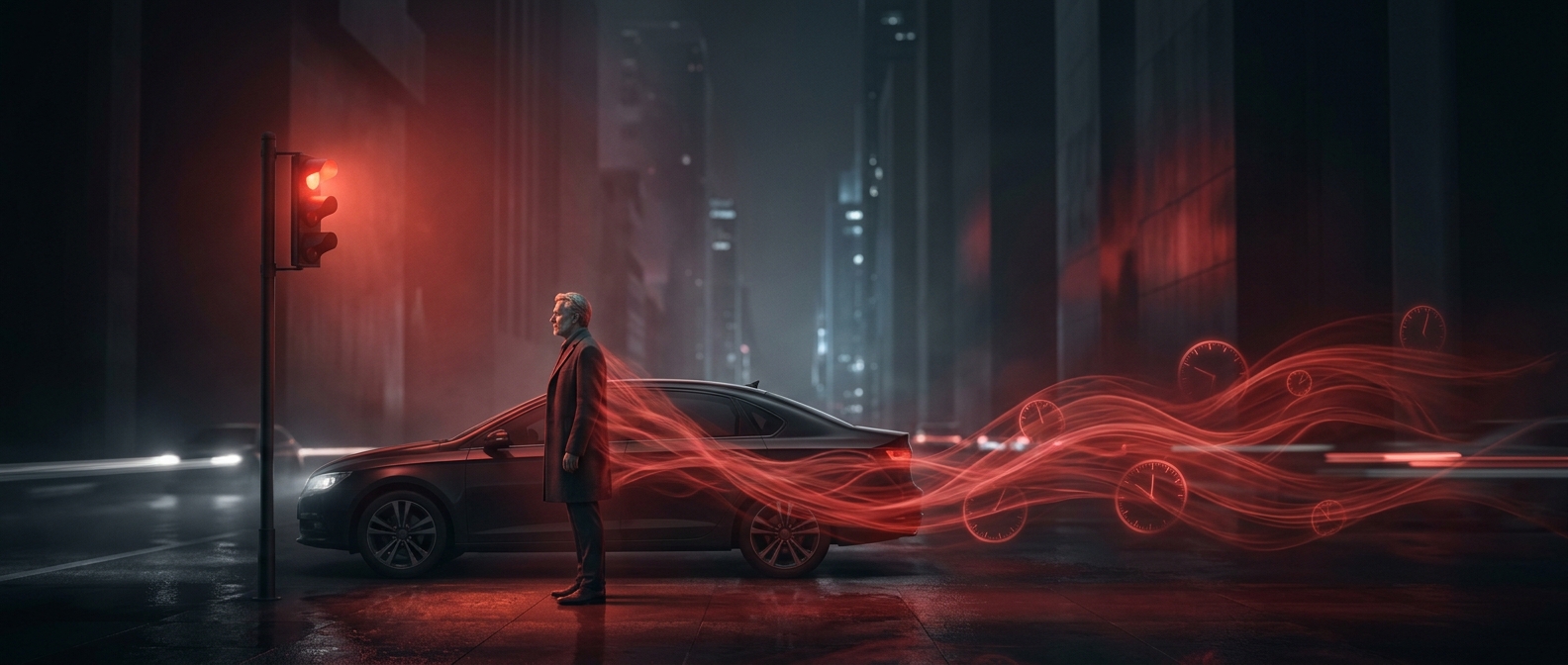
The lifetime figure comes from accumulation, not from any single unusually long delay. A few minutes of red-light waiting on an ordinary driving day can add up over years of repeated commutes and errands. The total depends heavily on where and when someone drives: a route through many urban intersections can produce far more waiting than one with few signals, and traffic conditions change from trip to trip.
That makes the estimate a way to picture the hidden cost of a routine part of driving, rather than a fixed tally for every person. Each stop is small, but the signal is allocating a scarce resource—time in the intersection—among drivers, cyclists, and pedestrians moving in different directions.