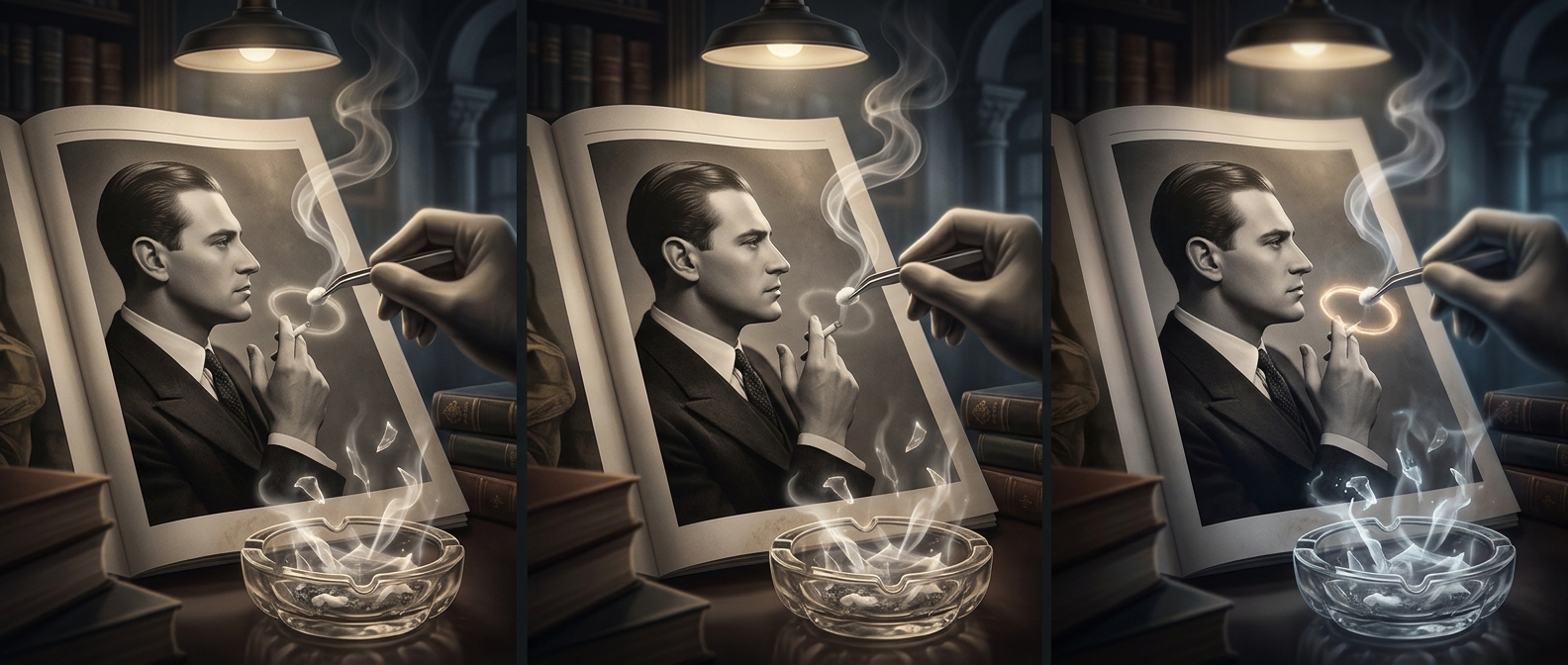
The cigarette vanished; the photograph did not
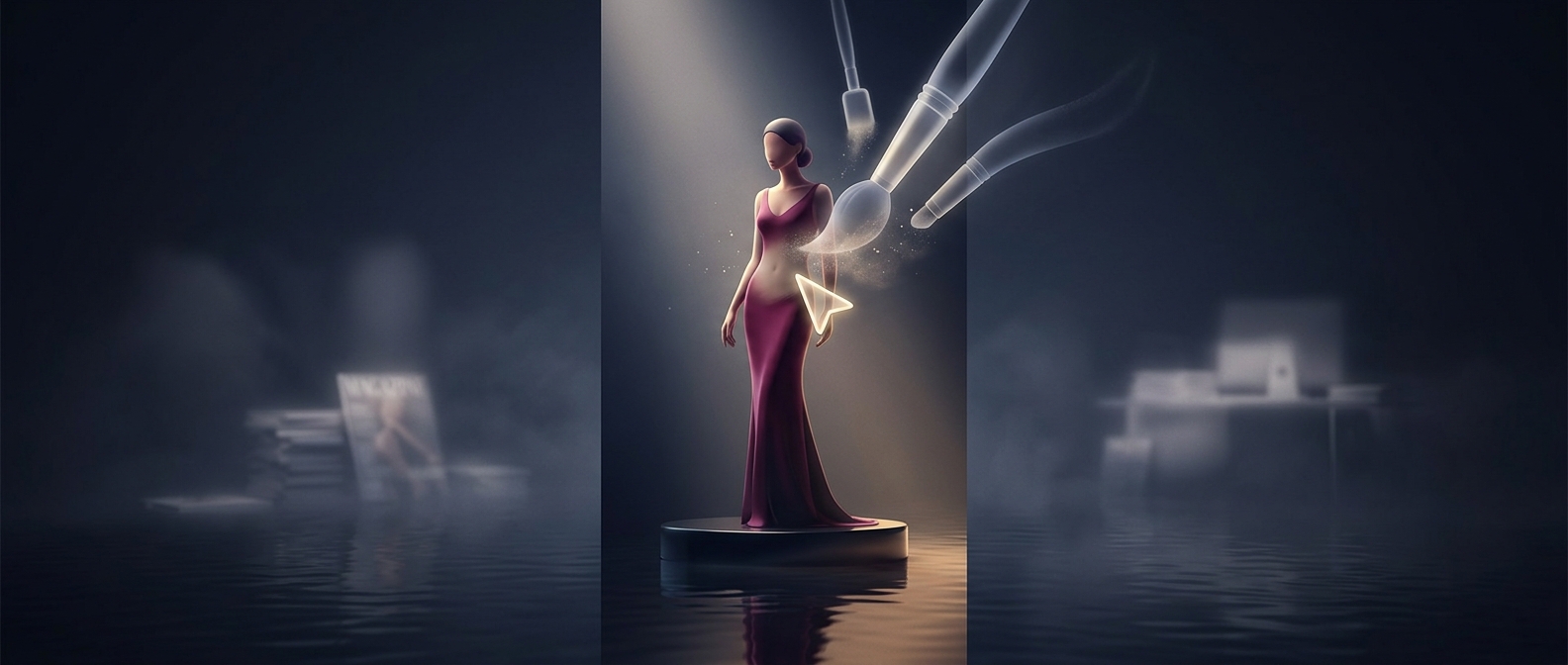
Before digital editing, magazine retouchers could alter a photograph with paint, scraping, or an airbrush—a tool that sprays a fine layer of pigment. Working on a print or its reproduction, they could cover a cigarette, soften its outline, and blend the surrounding tones so the change would be difficult to spot in the finished page. The person and setting remained, but a small detail that carried meaning disappeared.
That detail mattered because cigarettes were once common in photographs of public figures. Removing one could make an image feel more suitable for a broad or family-oriented readership, or bring it into line with changing expectations about smoking. The edit did not need to transform the whole portrait: a hand near the face might simply look empty, or an ordinary pause might appear more polished.
A magazine page is also an editorial record
Readers usually encounter the retouched version, not the unaltered photograph. That can quietly change how a past moment is remembered. A cigarette may have signaled a familiar social habit, a carefully cultivated persona, or simply what the subject happened to be doing. Once erased, the image can seem to show a more restrained era—or a more wholesome public figure—than the original scene did.
The change is revealing in two directions. The untouched photograph records something about its time; the retouching records what an editor thought readers should see. The missing cigarette is evidence not only of smoking’s place in the past, but of later efforts to reshape that past for the page.