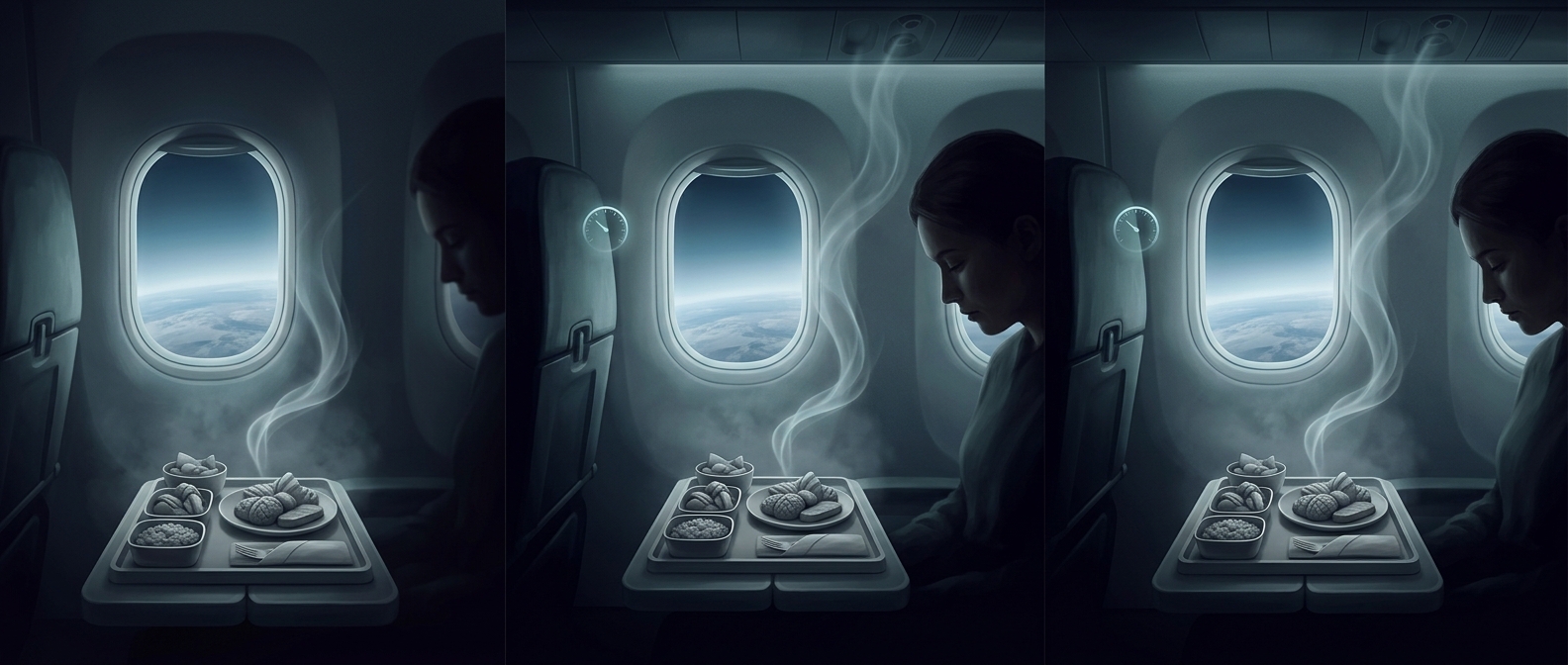
Why Airplane Cabins Feel So Dry
The key is that cabin humidity is relative humidity: a measure of how much water vapor the air holds compared with the maximum it could hold at its current temperature. Air brought in from high altitude contains very little water vapor. The aircraft compresses and warms that air to make it breathable, but warming it does not add moisture. The result is air with a low relative humidity.
Passengers add some moisture by breathing, and recirculated cabin air carries some of it around. But ventilation continually brings in fresh, dry air, so the cabin usually remains much drier than a typical indoor space.
Why Not Add More Moisture?
Humidifying a cabin is possible, but it creates engineering tradeoffs. Water adds weight, and moisture can condense on cooler parts of the aircraft’s structure, where it may contribute to corrosion or other damage. Designers therefore have to weigh passenger comfort against the difficulty of keeping water out of places where it does not belong.
Humidity varies with the aircraft, the weather, and the flight. Many cabins fall in the low-teens to around 20 percent relative humidity, though some can be drier. That helps explain why a long flight can leave a traveler with a dry throat or irritated eyes: the cabin is not merely cool or heavily ventilated; it contains little moisture for the body to draw on.