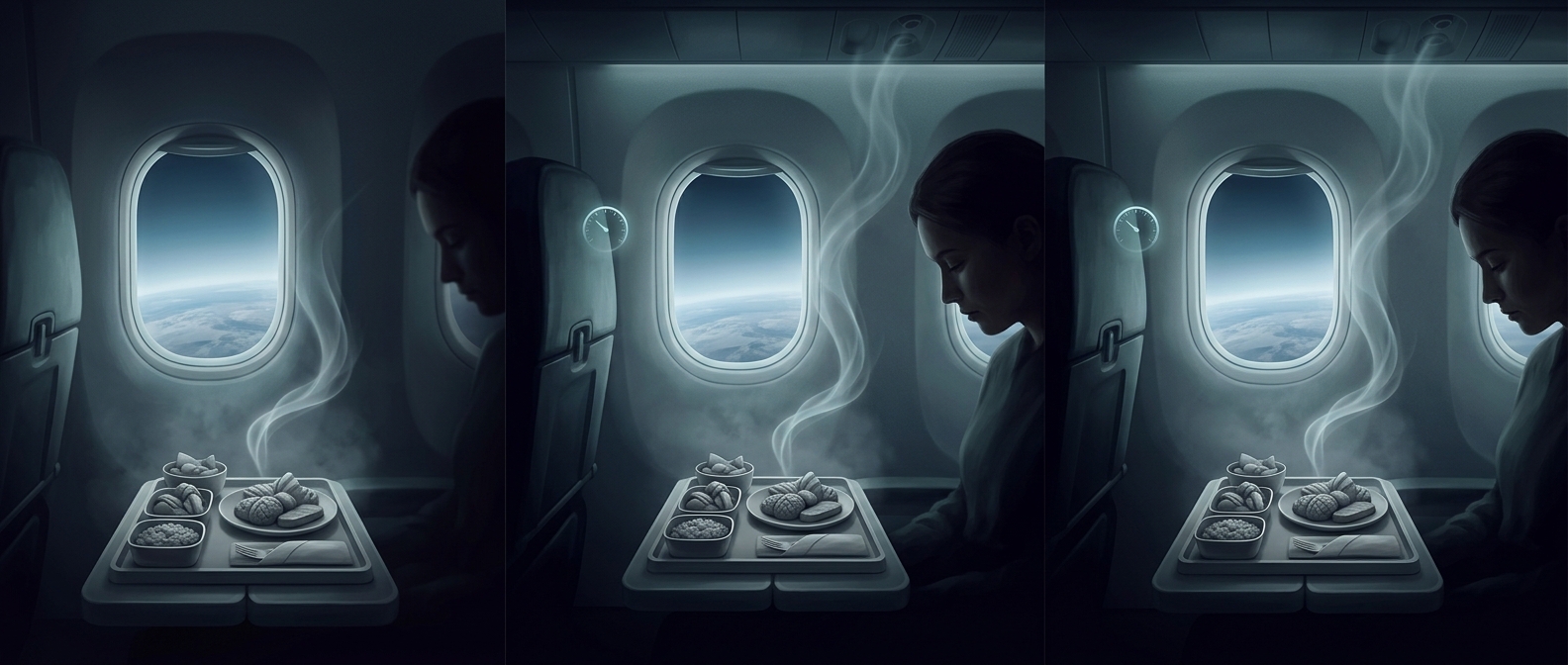
Why Salt and Sugar Seem Weaker in the Cabin
Airplane meals are not simply ordinary food served at an unusual height. The cabin’s lower air pressure and dry atmosphere change the conditions in which people experience flavor. In flight, sensitivity to saltiness and sweetness can fall by about 30%, so a dish that tastes balanced on the ground may seem muted in the air.
That change affects taste, the basic sensations detected by the tongue. Flavor is broader: it also depends heavily on smell, texture, and temperature. Dry cabin air can make the nose and mouth feel less comfortable, while the steady engine noise adds another distraction from subtle flavors. Together, those conditions can make a meal’s delicate notes harder to notice.
Why Airline Meals Are Seasoned Differently
Caterers have to design food for the setting in which it will be eaten, not just for the kitchen where it is prepared. If a meal relies on gentle sweetness or restrained seasoning, those qualities may fade once it reaches the cabin. Stronger flavors, aromatic ingredients, and sauces can help a dish remain appealing despite the shift in perception.
There is a practical constraint, though: airline food is cooked, chilled, transported, and reheated before it reaches a passenger. The recipe must survive that chain as well as taste good at altitude. Seasoning is therefore part of a wider balancing act between flavor, consistency, and food that can be safely served after reheating.
The result is that “bland” is not always a verdict on the recipe alone. A meal is being judged by senses working under different conditions than they do at home—and a seasoning level that seems bold on the ground may be what lets its flavor come through in the air.