What “Manglik” means in a horoscope
In Vedic astrology, Manglik (also called Mangal dosha) refers to a birth chart in which Mars occupies certain houses. Astrological traditions differ on the precise rules and interpretation, but the placement is often treated as a potential source of strain in marriage. Some families fear it could harm a spouse, including through an early death; this is a religious and astrological belief, not a demonstrated effect of Mars on a person’s fate.
Why marry a tree or a pot first?
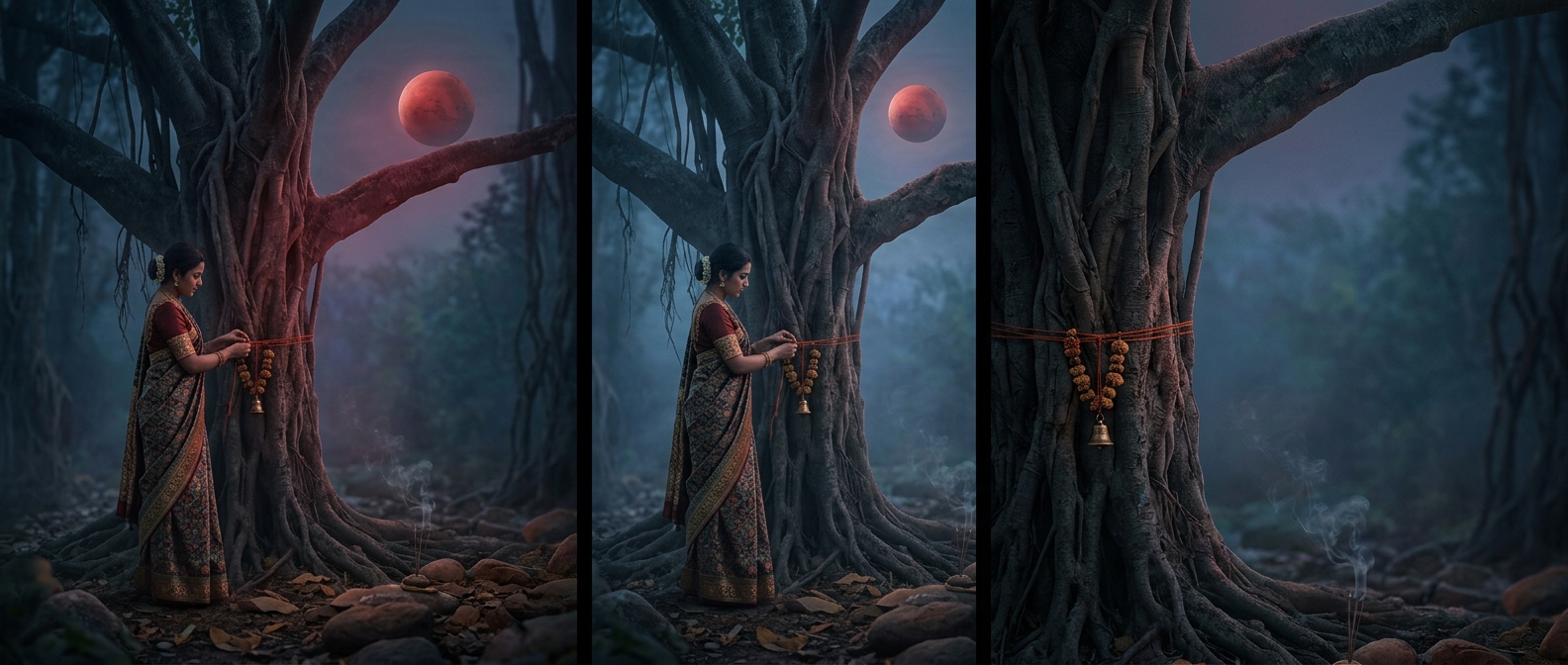
In some communities, a ritual called Kumbh Vivah addresses the feared consequence before the person marries a human partner. The person performs a symbolic first marriage to an object or plant—commonly a banana tree, a clay pot, or another prescribed substitute. The substitute may then be cut down or broken, marking the end of that symbolic union. Within the ritual’s logic, the supposed danger is directed toward the substitute rather than the future spouse.
The ceremony is not practiced by every Hindu family, and its details vary. For some, it is an act of devotion or a way to follow family custom; for others, it can be part of negotiations around a match when horoscope compatibility is considered important.
A ritual with social consequences
The practice makes an abstract chart reading tangible: a feared prediction becomes a sequence of actions that relatives can witness before a wedding. That can offer reassurance to families who take the astrological interpretation seriously, while also placing pressure on the person labeled Manglik. The tree or pot is therefore more than a prop—it gives the ritual a visible way to mark the feared obstacle as already dealt with.