The Rosicrucian tomb lit like a geometric machine
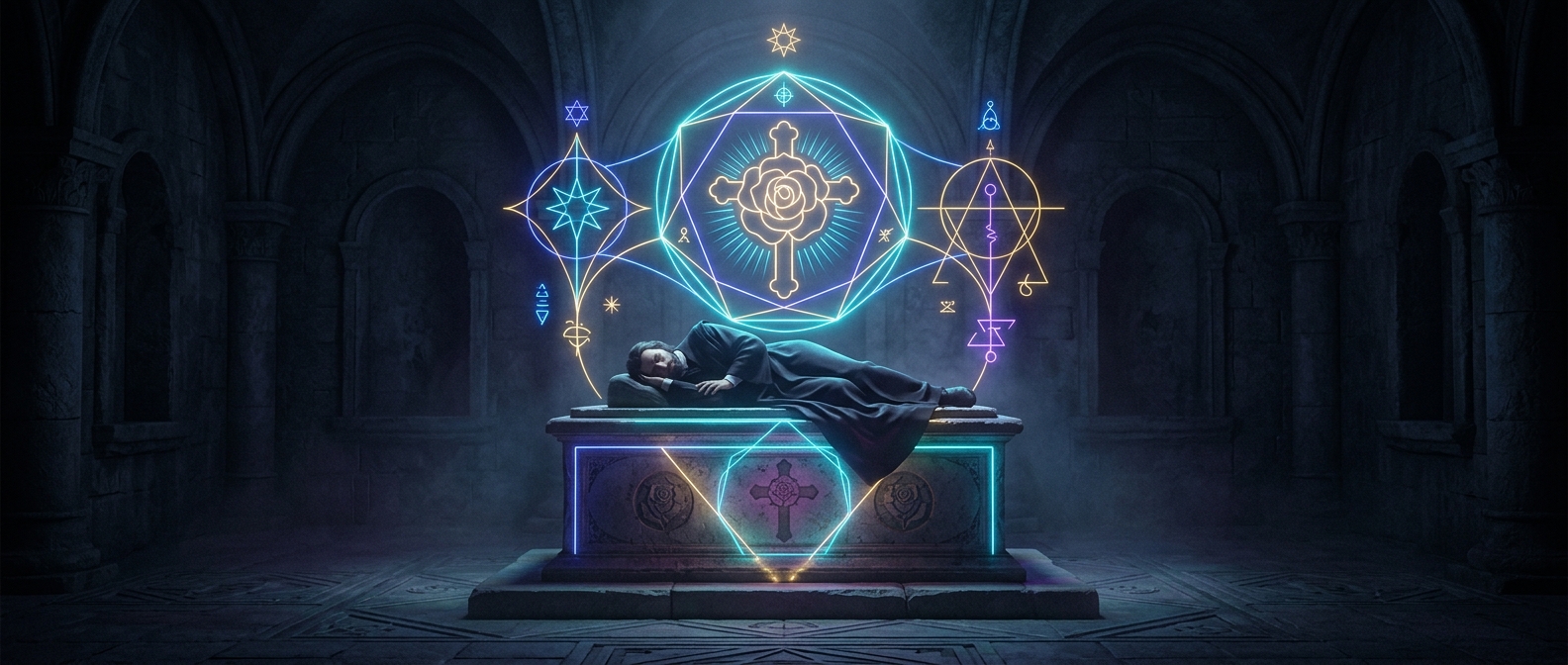
In the Rosicrucian origin story, Christian Rosenkreuz’s tomb is not an ordinary grave. The account describes a hidden vault whose ordered, many-sided design and ever-burning lamp make it seem almost engineered to preserve a secret. Calling it “neon” is a modern, playful image: the story’s light comes from a lamp, not electric signage.
A room built to reveal a secret
The tomb’s geometry matters because it turns the discovery into more than the opening of a burial chamber. Its carefully arranged space suggests that Rosenkreuz’s followers have made the room itself part of his teaching—an enclosed world governed by order, light, and knowledge. The lamp’s continued glow intensifies the impression that the vault has been sealed away from ordinary time.
In the Rosicrucian narrative, the chamber is found long after Rosenkreuz’s burial. The discovery reveals his body and the objects placed around it, including a message associated with the fraternity. The tomb thus works like a locked archive: its contents are hidden until the right moment, when the physical room becomes evidence within the story.
Why the image endured
The scene gives an abstract promise—ancient wisdom preserved for future readers—a vivid setting. Instead of merely saying that Rosenkreuz’s teachings survived, the legend lets a reader picture them waiting in a luminous, precisely shaped chamber. The striking detail is that the tomb’s light does not just help someone see what is inside; it makes the hidden room feel as though it has been waiting to be found.