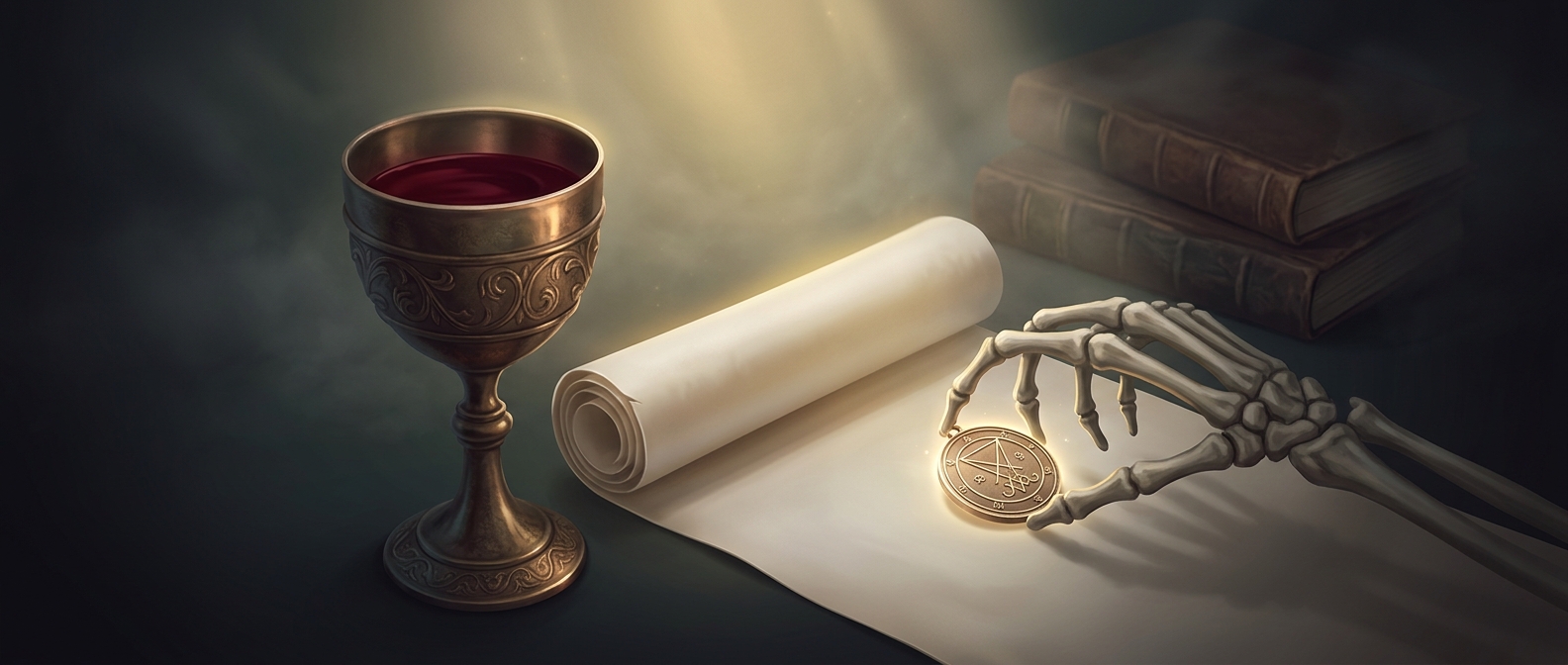
Making an Ordinary Tool Ritually Ready
In the Key of Solomon, a tool is not treated as magical simply because it has a particular shape or purpose. The instructions place its preparation inside a larger ritual sequence: materials are selected, the practitioner observes periods of purification, and work is timed to planetary alignments. Virgin parchment—parchment set aside as unused—and prescribed substances such as lion’s blood mark the process as exacting rather than casual.
The logic is one of ritual transformation. A tool begins as an ordinary object; prescribed materials and actions distinguish it from everyday use and prepare it for a specific role within the rite. “Purification” here means observances intended to make the practitioner or materials ritually fit, not a claim about physical cleanliness alone.
Why the Preparation Takes So Long
Careful timing and extended preparation make the ritual a sequence of linked steps, not a single act of handling an object. Planetary timing connects the work to an ordered cosmos as the tradition understands it, while restrictions on materials and conduct signal that the practitioner must follow the procedure rather than improvise. The requirements also make the object’s ritual status depend on how it was prepared, not just on what it is made of.
That distinction is central to the grimoire’s approach: the tool’s readiness is something the rite establishes. The weeks of preparation and unusual ingredients give the object a boundary from ordinary life before it is used in ceremonial work.