A Wand Was a Ritual Object, Not Just a Stick
In The Key of Solomon, making a wand was presented as a prescribed operation: the practitioner was to cut a hazel branch with a knife they had forged, at a specified time and while facing a specified direction. Such instructions belong to the grimoire’s ritual logic. A wand was not simply a handy tool; it had to be prepared in the right way to serve in dealings with spirits.
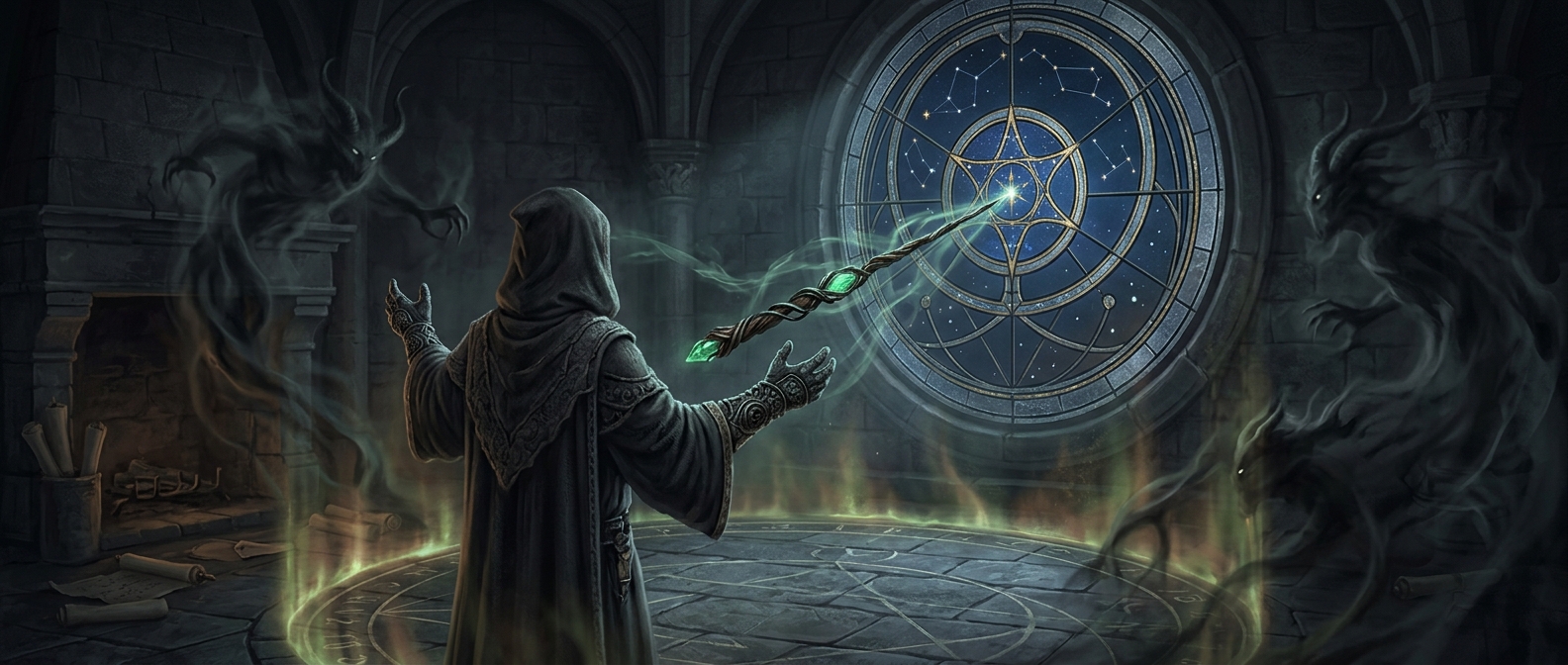
A grimoire is a handbook of ritual magic. Its detailed rules helped define when an operation was valid and what the practitioner needed to do before attempting it. Within that worldview, ignoring the requirements could mean approaching spiritual forces without the protections or authority the ritual was meant to provide—including, in the caption’s terms, risking demonic interference.
Why Specify the Hour, Direction, and Materials?
The instructions join several kinds of condition. Wednesday at 4 a.m. fixes the timing; facing east fixes the practitioner’s orientation; hazel and a self-forged knife prescribe the materials and their preparation. Astrological timing mattered in magical systems that treated time as spiritually significant, rather than as a neutral backdrop. The act of making the wand was therefore part of the ritual, not a preliminary chore separate from it.
The specificity also made the procedure repeatable: a practitioner could check each requirement instead of relying on improvisation. It turned an ordinary branch into an object prepared according to a rule-bound sequence. The wand’s claimed power depended not only on what it was made from, but on the conditions under which it was made.