How a spellbook’s words became scrambled
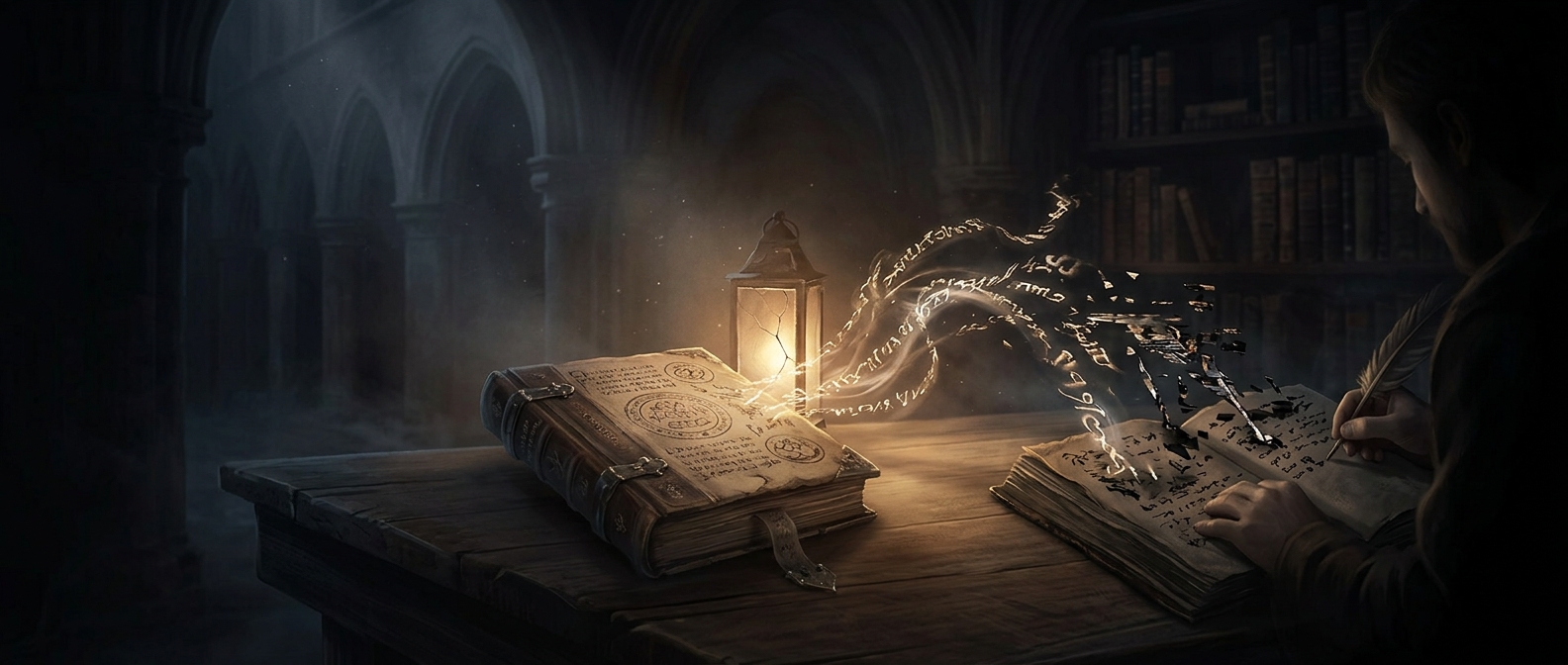
A medieval grimoire was a handwritten book of ritual instructions, prayers, protective formulas, and names associated with spirits. Such books often passed through several hands. A scribe might copy an existing manuscript without understanding every word in it, especially when the text contained passages translated from Arabic or Greek into Latin. Each copying could preserve an earlier translator’s mistake—or add a new one.
The problem was not simply poor spelling. A copyist unfamiliar with a language or script could mistake one letter for another, divide a phrase incorrectly, or reproduce an unfamiliar sequence of sounds as best they could. Once that version became the model for another copy, the error could travel onward, gradually making a passage harder to recognize.
When confusion looked like secret knowledge
In ritual writing, unintelligible words did not necessarily make a text seem useless. Names and formulas were often treated as powerful precisely because they were unfamiliar, and a scribe might preserve them rather than risk changing them. Over time, a damaged translation could look like a deliberately secret language.
That helps explain why some supposed demonic speech is described as misspelled Latin mixed with nonsense: a reader may be seeing a jumble shaped by copying and translation, not a coherent language. The manuscripts still reveal something real about their makers and readers—not proof of supernatural communication, but the effort to transmit authority and ritual knowledge through texts whose words could become less understandable with every hand that copied them.