A long retreat with a theological goal
The Book of Abramelin is less a collection of quick spells than a manual for reshaping a practitioner’s daily life around one aim: what the text calls the “knowledge and conversation” of a holy guardian angel. In this context, conversation means a direct spiritual encounter, not simply receiving a message or speaking with an ordinary person.
The demanding schedule gives the goal its logic. Withdrawal, prayer, and restraint were meant to turn attention away from everyday appetites and distractions and toward God. The secluded room was not just a stage for dramatic magic; it was the practitioner’s dedicated setting for a sustained religious discipline. The long duration made the operation a test of consistency as much as a sequence of ceremonies.
Why demons come after the angel
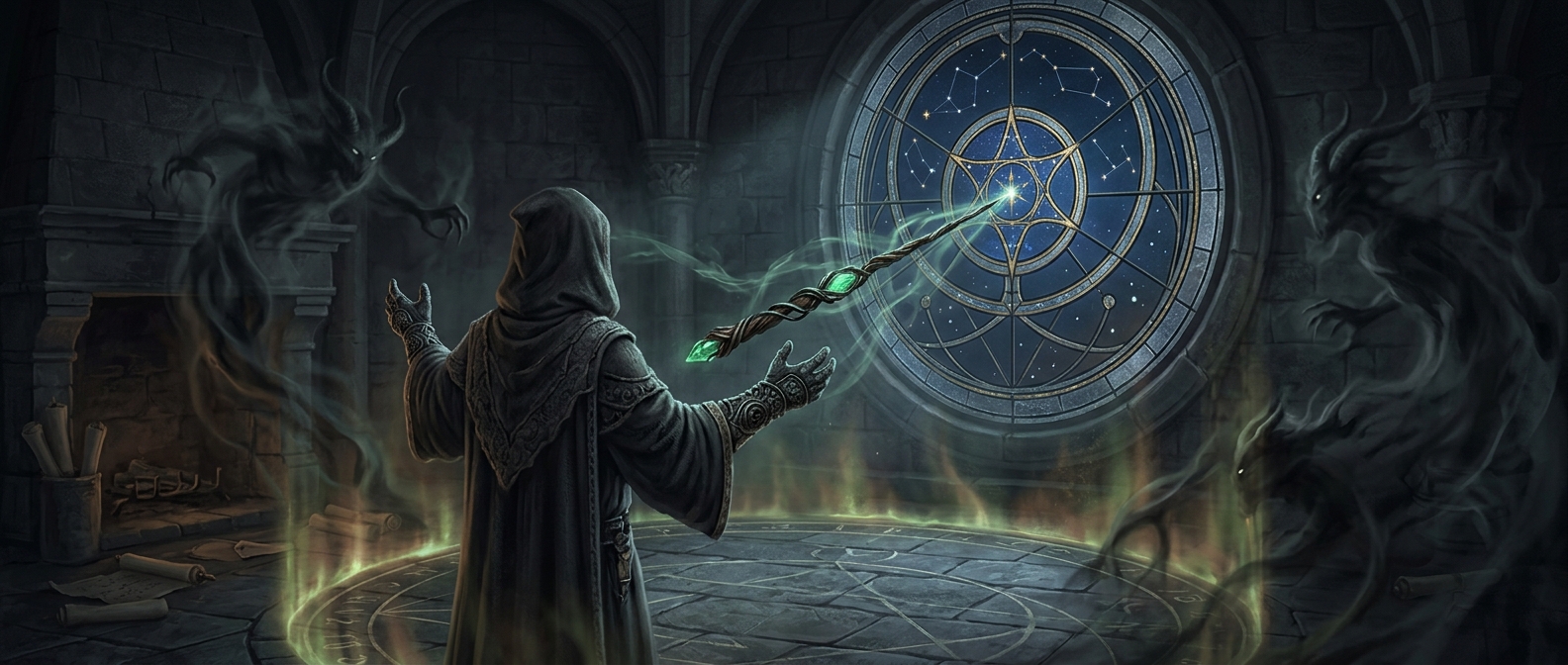
The later summons of demons can seem at odds with the operation’s devotional opening. Within the grimoire’s worldview, however, the angelic encounter establishes spiritual authority before the practitioner attempts to command lesser spirits. The demons are not treated as partners on equal footing: they are supposed to be compelled to submit and swear loyalty under a higher power.
That sequence helps explain the book’s distinctive blend of piety and coercive magic. Its practitioner first seeks alignment with a holy authority, then uses that authority to control forces regarded as dangerous. The ritual’s success, as the text presents it, depends not merely on knowing secret names or reciting formulas, but on completing the arduous preparation that is supposed to make such command legitimate.
The result is a grimoire in which the most consequential magical instrument is the practitioner’s own prolonged discipline: the demons are summoned only after that discipline has reached its intended spiritual turning point.