How “grammar” became a word for magic books
The word grimoire is linked to Old French gramaire, an earlier form of “grammar.” The connection makes more sense when “grammar” is understood in its older, broader sense: not just rules for arranging sentences, but learned knowledge—especially the Latin learning found in books.
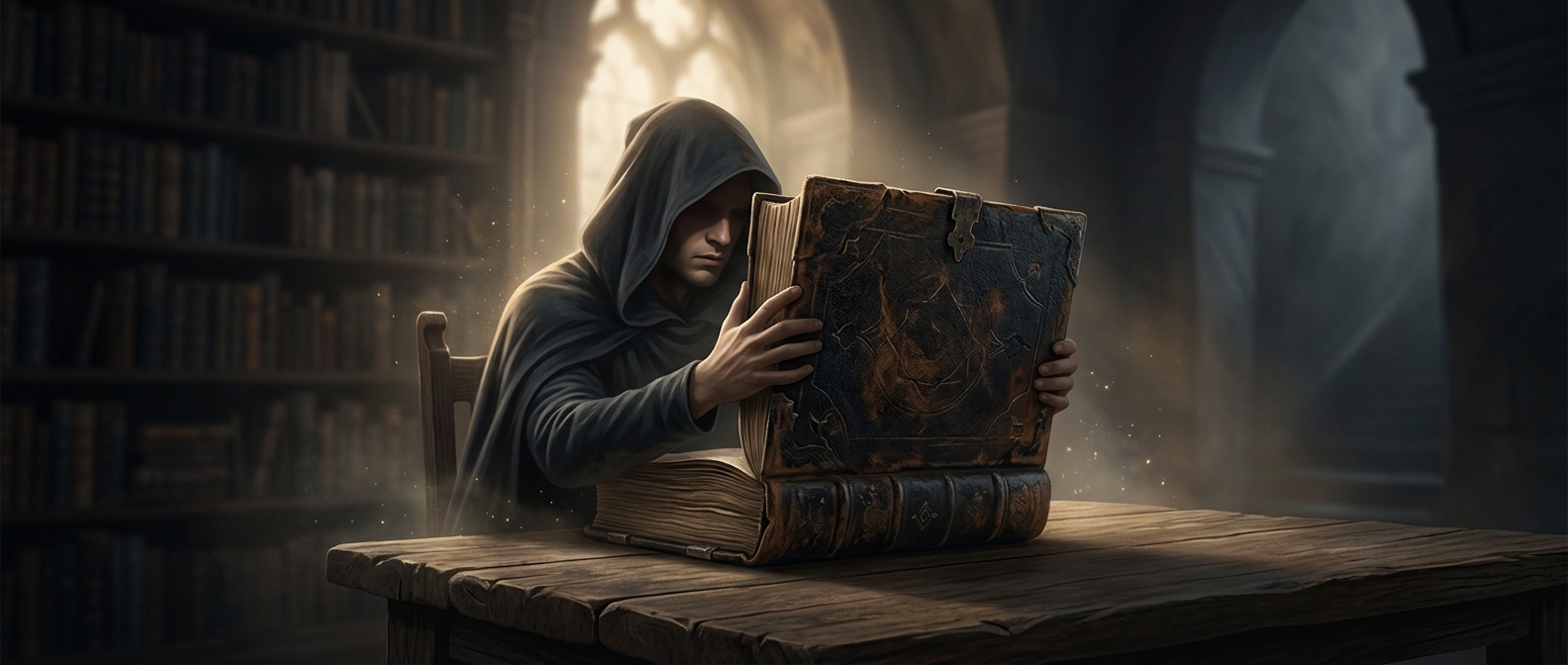
For people without access to that education, a book full of unfamiliar writing could seem powerful or secretive. That did not mean every nonreader mistook writing for sorcery. Rather, literacy was scarce, and the languages and symbols used in learned texts could make their contents difficult to distinguish from hidden knowledge.
From learned text to spellbook
Some books of learned or specialized material included instructions associated with magic, such as rituals or formulas. Over time, the French word connected with grammar and learning narrowed toward this particular kind of book: a grimoire, or a manual of magic. The change in meaning preserves a social boundary as much as a linguistic one: knowledge that was ordinary to a trained reader could look mysterious to someone shut out of the written world.
The word’s history is a reminder that a book’s aura can come not only from what it says, but from who is able to read it.