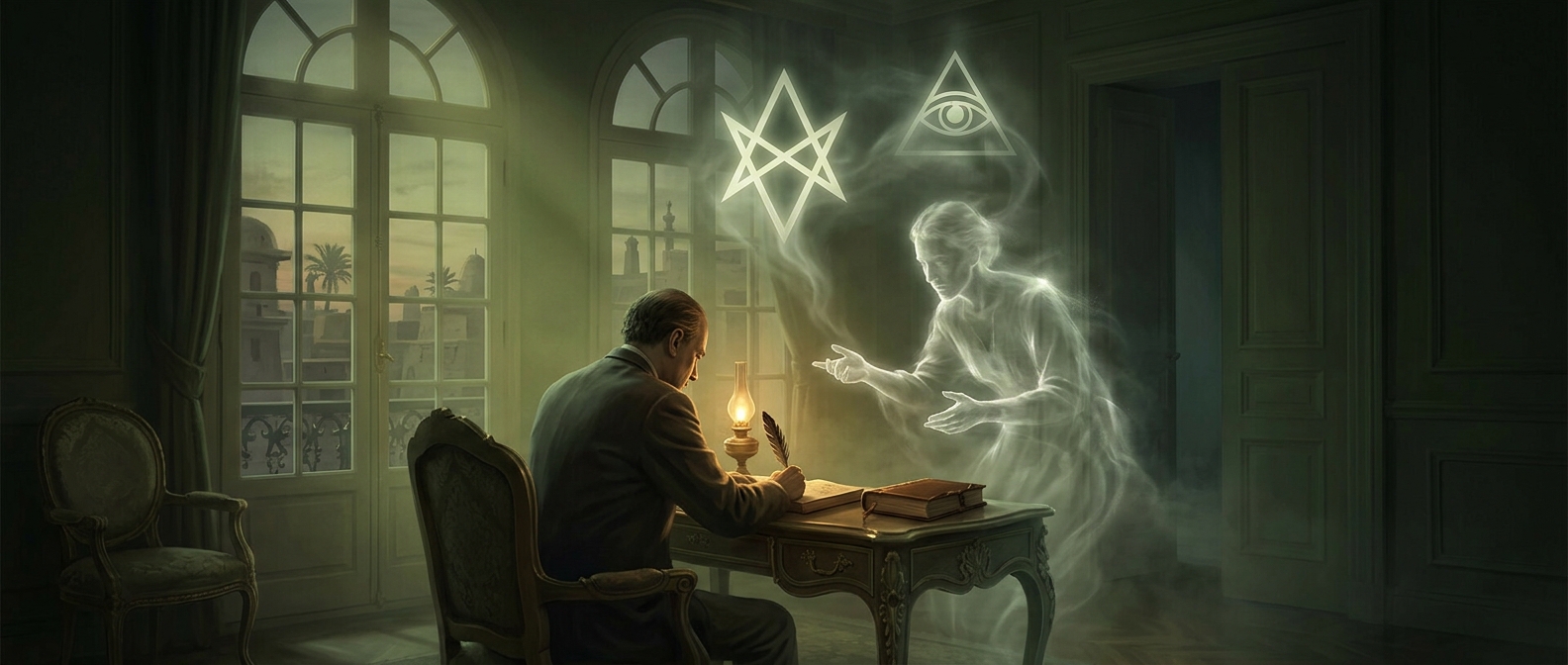
Crowley’s Attempt to Make Ritual Measurable
Aleister Crowley treated a magical ritual not just as a ceremony but as an operation to be recorded and assessed. In his diaries, he paired descriptions of what he did with numbered judgments of how the work had gone. The record turned private practice into something he could revisit rather than rely on memory alone.
That approach fit Crowley’s broader insistence that practitioners keep a “magical record”: a working diary of the conditions, methods, and perceived results of an operation. A number offered a compact way to mark an impression of success or failure, while the surrounding notes preserved the circumstances that might help explain it.
What the Numbers Could—and Could Not—Show
A rating could help Crowley compare one attempt with another and notice whether a particular method seemed to produce the experience he sought. It also imposed a kind of discipline: an operation had to be evaluated, not simply remembered as impressive after the fact.
But the scale was his own tool, not a standardized measure shared by practitioners. It recorded Crowley’s judgment within his occult framework; it did not independently establish that a supernatural effect had occurred. The striking feature is the blend of ritual and bookkeeping: Crowley tried to make an intensely personal practice cumulative, leaving later entries—and later readers—something more concrete than a story told from memory.