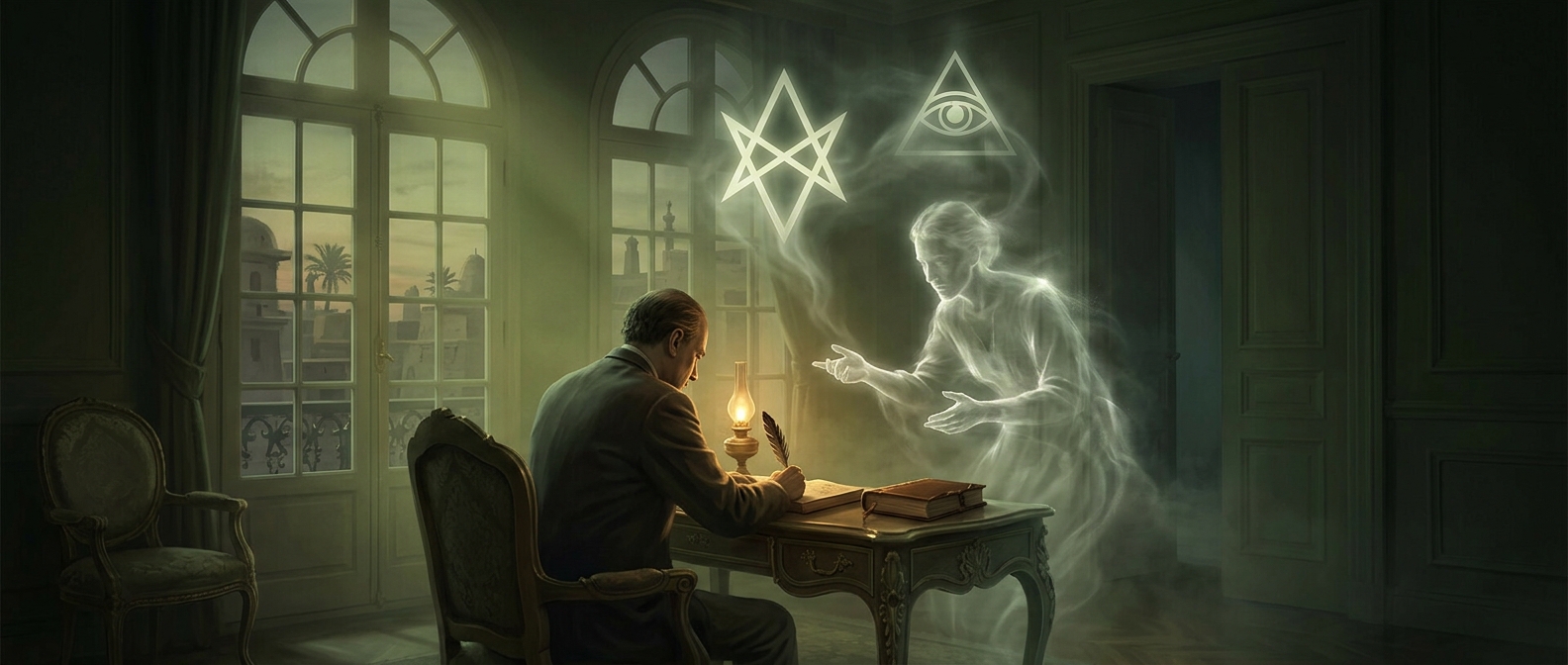
A Cairo dictation became Thelema’s founding text
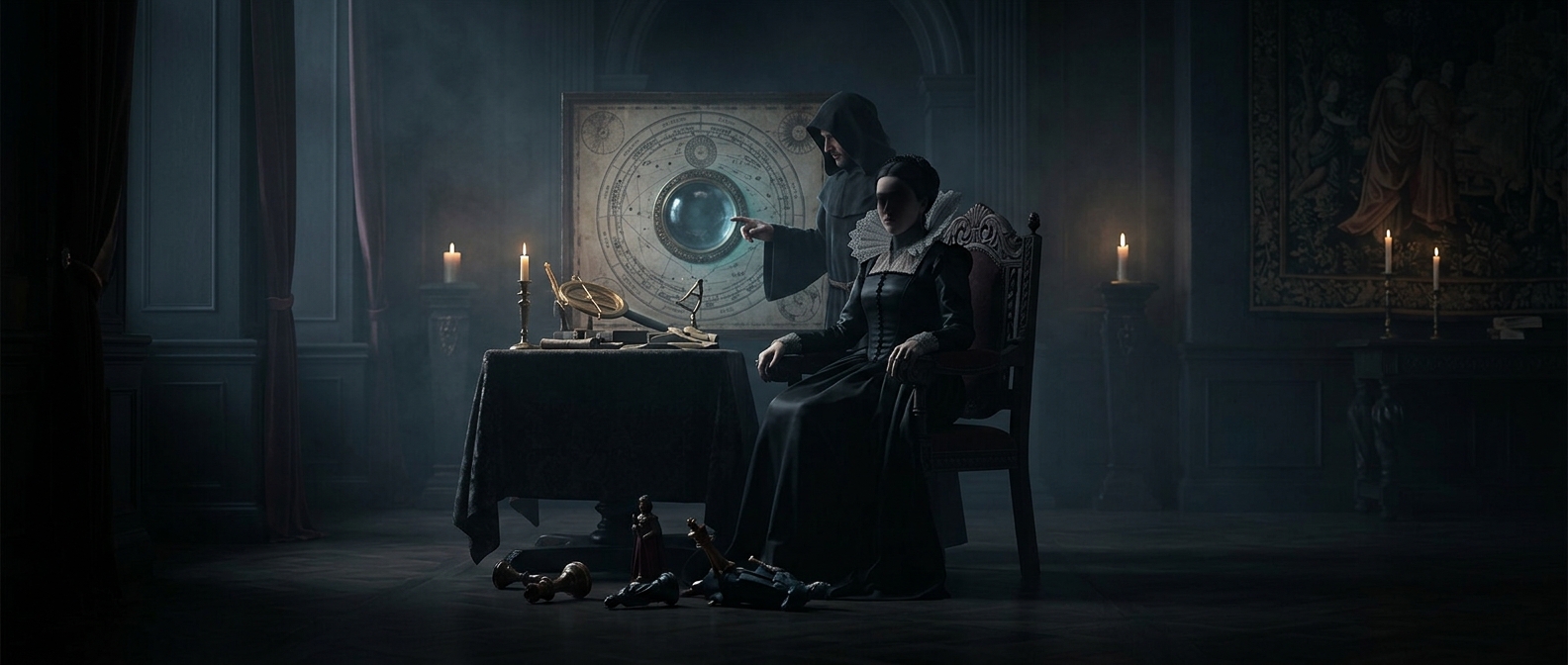
Crowley’s account of the event centers on his wife, Rose Edith Kelly, and a voice she said came through her during a trance in Cairo in 1904. Crowley identified the speaker as Aiwass. Over three days, he said, the entity dictated a text that he recorded as The Book of the Law.
The episode mattered because Crowley treated the writing not as a private vision to keep to himself, but as a revelation meant to establish a new religious era. In his later work, he built Thelema around the book and interpreted its message as a guide to discovering and pursuing one’s “True Will”—a person’s deepest purpose, not simply whatever they happen to want in the moment.
From unusual experience to religious system
A claimed dictation alone does not make a religion. Crowley made the text the starting point for one by returning to it, interpreting its ideas, and organizing a spiritual path around them. Thelema drew on ritual practice and esoteric traditions, while making the individual’s search for True Will central. That gave followers a way to approach the book not only as a record of a supernatural encounter, but as a framework for action and self-understanding.
The origin story also left Thelema with an enduring tension: its authority rests partly on Crowley’s report of an event outsiders could not verify, while its lasting appeal depends on what readers find in the text and how they interpret it. The Cairo episode is therefore more than a strange tale about a voice; it is the point at which Crowley said a private encounter became the basis of a movement.