The Abbey was meant to make belief a daily practice
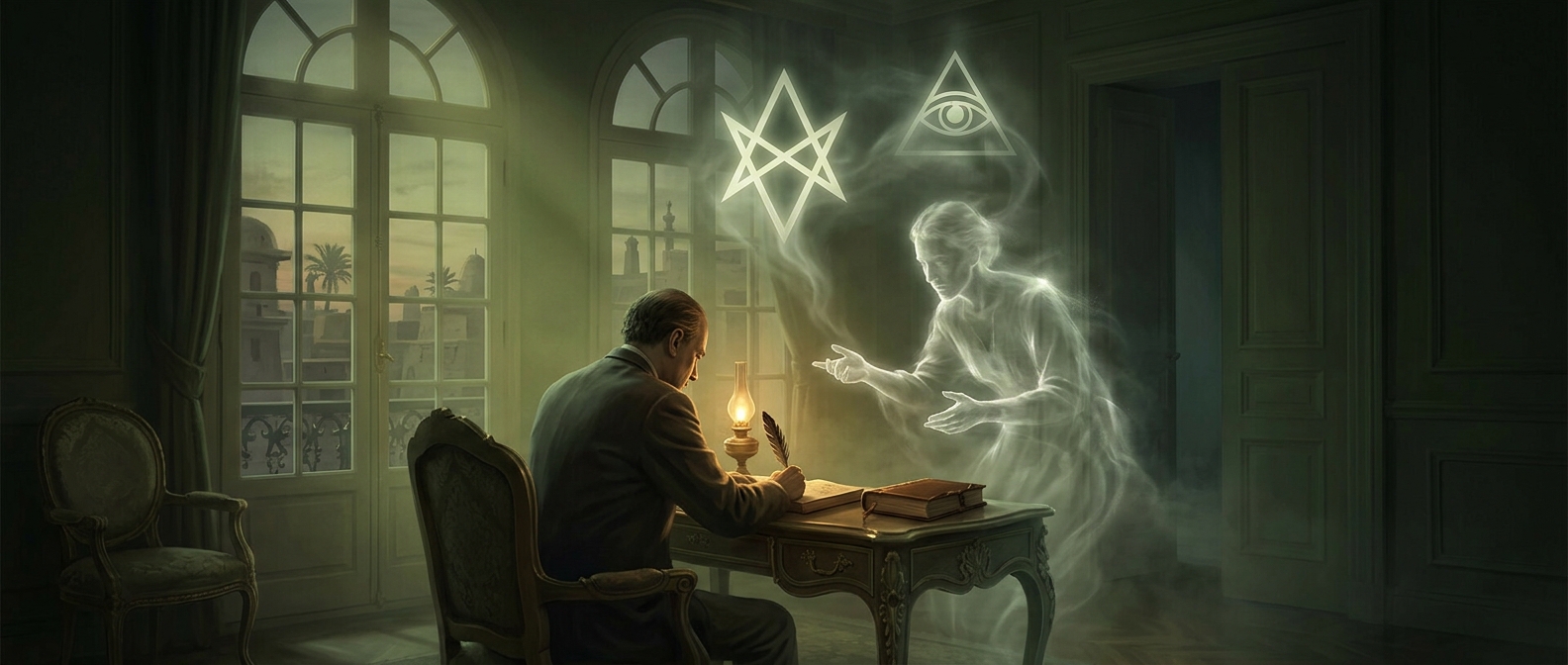
Aleister Crowley’s Abbey of Thelema was not simply a hideaway for occult ceremonies. Founded in Cefalù, Sicily, in 1920, it was a communal experiment built around Thelema, the spiritual philosophy Crowley developed and summarized with the phrase “Do what thou wilt.” Residents were expected to pursue their own will through ritual and discipline, while living together in a villa that also served as the movement’s headquarters.
That ideal met the ordinary pressures of communal life. The villa was dilapidated, and its residents shared close quarters with animals, including dogs. Crowley’s elaborate rituals and forceful personality could make him a compelling leader, but the same intensity could make daily life around him difficult. The Abbey’s reputation grew not just from what its members believed, but from the gap between spiritual ambition and the unglamorous realities of the household.
Scandal turned a private experiment into public spectacle
Crowley cultivated a deliberately provocative image, including calling himself the Great Beast 666—a reference to the apocalyptic figure in the Book of Revelation. In a culture already primed to view occult practices as threatening, his self-presentation made lurid stories about the Abbey especially easy to sell. Reports of disorder and controversy helped transform an obscure religious community into a newspaper sensation.
In 1923, Italy’s Fascist government under Benito Mussolini ordered Crowley to leave the country. The expulsion ended the Abbey experiment, but it did not settle how much of its notoriety came from the community’s actual practices and how much from sensational reporting. What remained was a potent image: an ambitious spiritual commune whose leader’s public persona made its uncomfortable domestic life impossible to keep private.