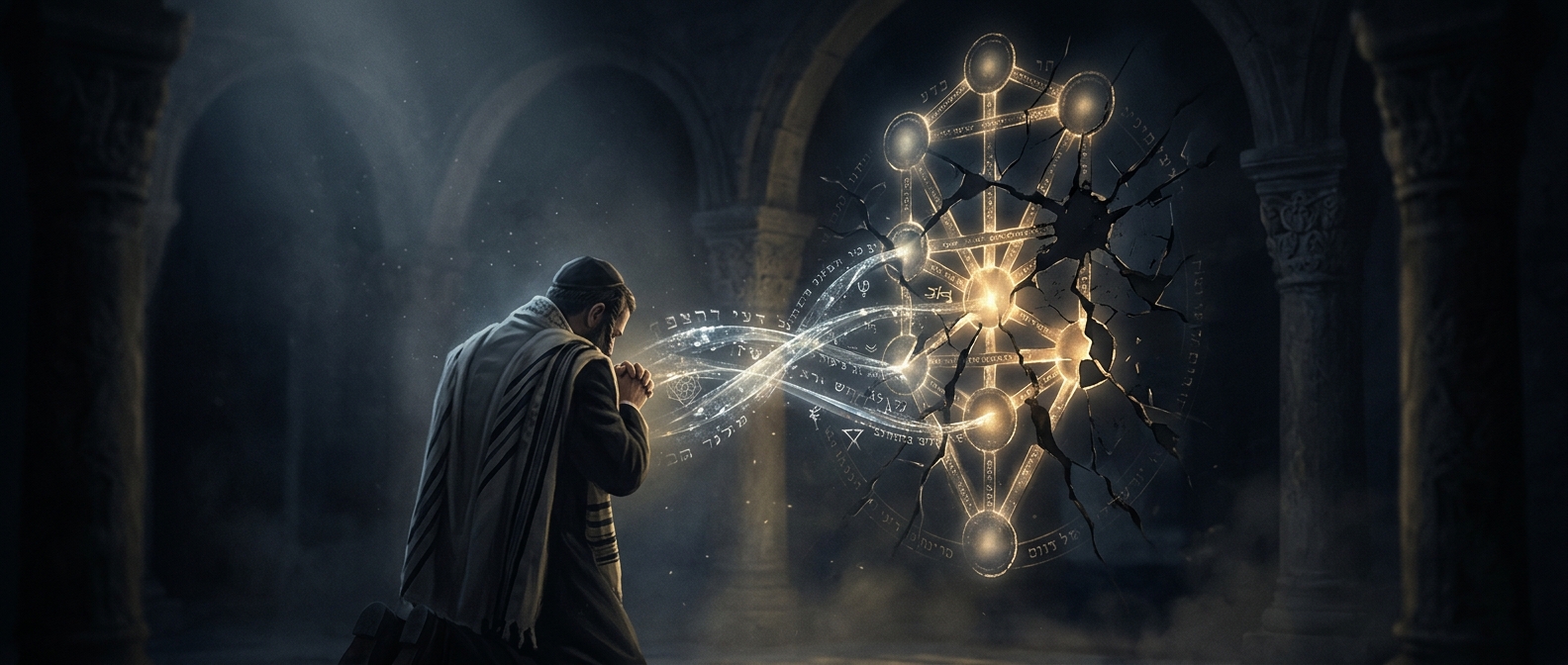
How a cosmic rupture made ordinary actions matter
In the 16th century, the kabbalist Isaac Luria and his circle in Safed described creation as a process that went wrong. In their account, divine light entered vessels—structures meant to contain it—but some vessels broke under its force. This “shattering of the vessels” left sparks of holiness scattered and entangled in the material world.
The story gave human beings a role in repairing creation, a process called tikkun—restoration or repair. It was not simply a matter of wishing hard enough: the tradition connected repair to disciplined religious practice and the intention behind it.
What prayer and daily practice were meant to do
A worshipper could pray with kavvanah, focused spiritual intention, directing attention to the divine meanings associated with the words. Lurianic prayer could also involve prescribed combinations of sacred names. These practices were understood as helping restore relationships among divine powers and gather scattered sparks—not as a physical mechanism that could be measured.
The same idea reached beyond the synagogue. Observing commandments and carrying out ordinary acts in a mindful, religiously prescribed way could, in this framework, release holiness from material life. A meal, for example, might become part of spiritual repair when approached through the relevant blessing and practice.
That made the cosmos’s imagined fracture consequential in daily life: repair was not reserved for a single grand ritual. Each act performed with the right intention could be understood as helping return a scattered piece of creation to its proper place.