Why smooth air can turn rough in seconds
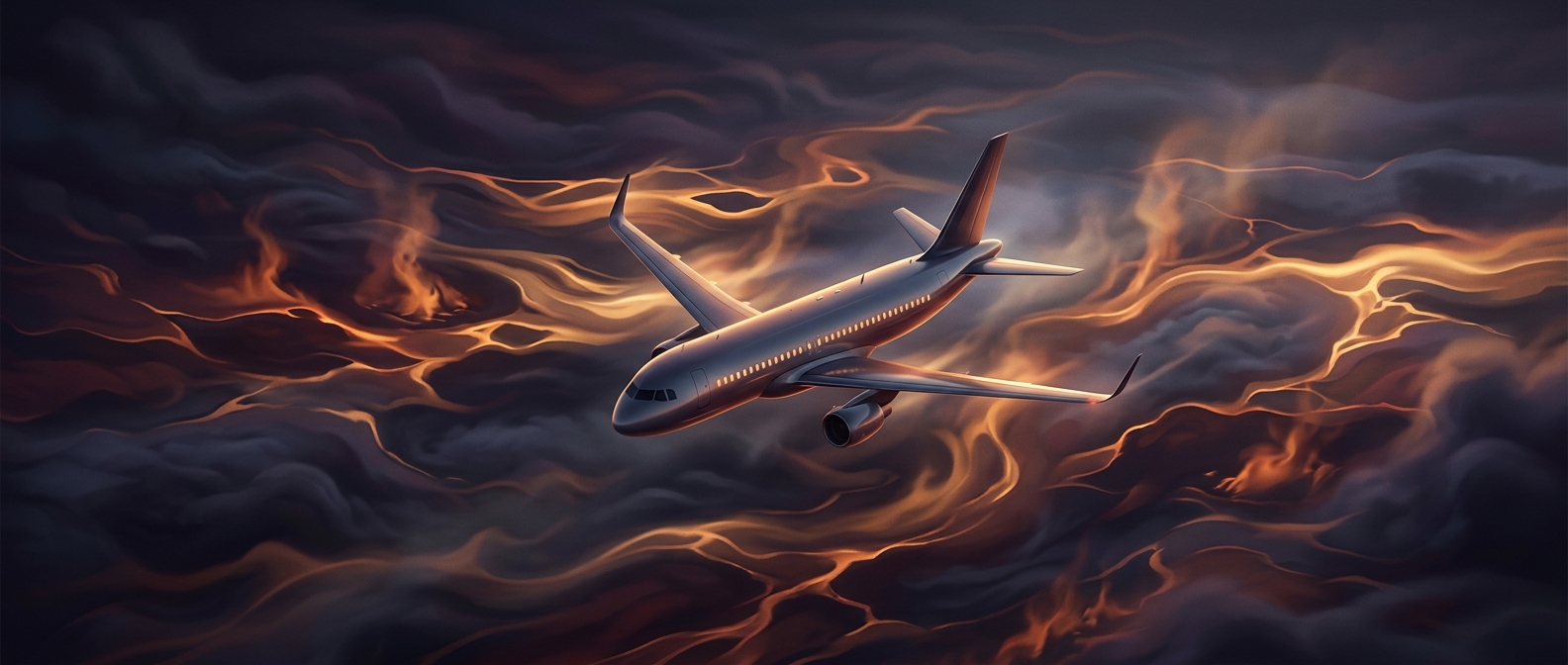
Air is not a uniform fluid. Two neighboring layers can move at different speeds or in different directions, creating wind shear. When those layers interact, they can form irregular, swirling motion that buffets an aircraft. Near the jet stream—a fast-moving ribbon of air high in the atmosphere—sharp changes in wind speed can produce turbulence even when the surrounding sky looks calm.
The boundary between smooth and disturbed air may be too diffuse to mark a visible edge. A plane can therefore cross it in moments, with little change in the view outside.
Why the plane may get no advance warning
Aircraft weather radar is useful for locating storms because it detects precipitation. But clear-air turbulence often contains no rain or cloud droplets for radar to pick up. The instruments can show the conditions that make turbulence more likely, such as strong wind changes, but they cannot reliably map every rough patch ahead of the aircraft.
Pilots and dispatchers use forecasts and reports from other aircraft to avoid known trouble, change altitude, or warn the cabin. Those reports help, but conditions can vary over short distances, and a patch may form or shift after a forecast is made. A route can be smooth for one aircraft and bumpy for another passing through the same region later.
The practical consequence inside the cabin
Because the jolts can arrive before a warning is possible, keeping a seat belt fastened while seated matters even when the ride feels calm. The aircraft is designed to withstand turbulence, but an abrupt bump can throw an unbelted passenger or loose object across the cabin. The sky’s rough spots are hard to see—and that is why the simplest protection is the one already within reach.