Why a downdraft can feel like a drop
A plane does not need to fall freely for passengers to feel suddenly lighter. When it enters air moving downward, that air changes the forces acting on the wings. For a moment, the aircraft may accelerate downward, and the seat pushes up on your body less firmly than before. That push is what you normally feel as your weight. When it briefly weakens, your stomach may seem to float.
This sensation is about acceleration, not how far the plane has traveled. Your inner ear detects changes in motion, while the cabin moves along with you. With few nearby objects appearing to shift, your eyes may offer little clue about the movement, making the brief change feel like a sudden plunge.
The air is moving; the plane is still flying
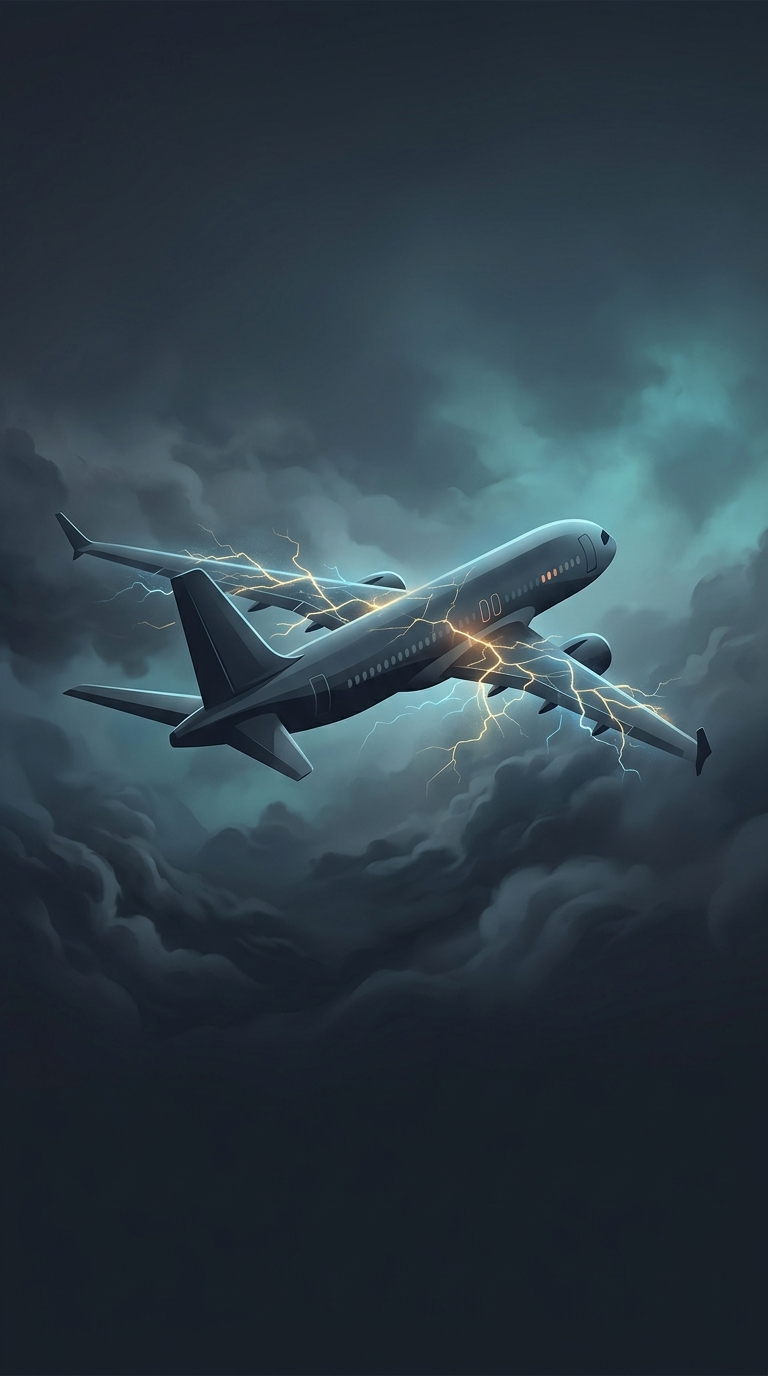
Turbulence is uneven air motion, not a hole or gap in the atmosphere. A downdraft is one possible feature: a region of air flowing downward. As the plane crosses changing currents, the airflow over its wings changes, altering lift—the upward force that helps support the aircraft. The aircraft responds to those shifts, producing the bumps and brief changes in apparent weight passengers notice.
Turbulence can be uncomfortable without meaning the airplane has lost control. The practical risk in the cabin is that a sharp jolt can throw an unbelted passenger or loose object upward. Keeping a seat belt fastened when seated helps keep your body moving with the seat, even when the air—and the plane—briefly moves down.