How desert dust crosses an ocean
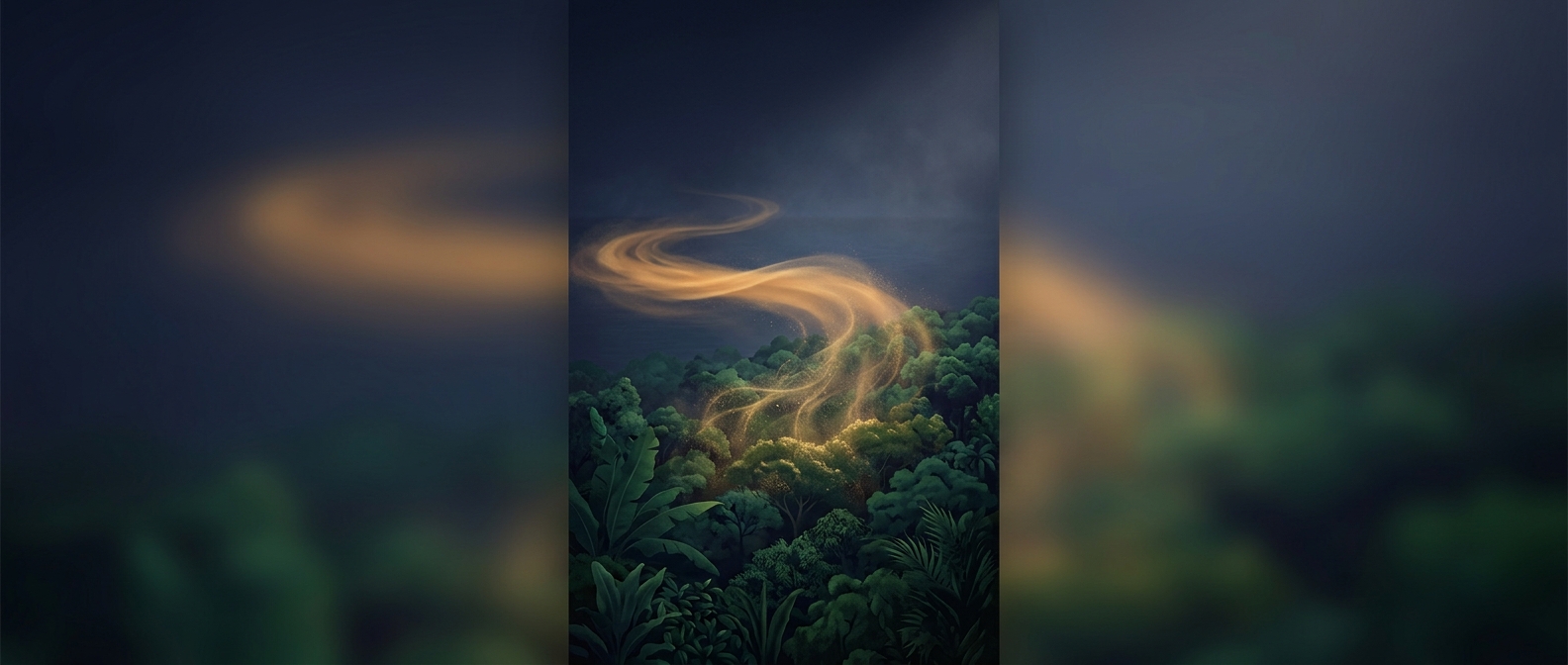
The journey begins when strong winds lift fine mineral particles from dry parts of the Sahara. Because the grains are tiny, air currents can keep them aloft and carry them westward over the Atlantic. Along the way, some dust falls into the ocean; some remains in the atmosphere long enough to reach South America.
Rain and gravity bring the particles down over the Amazon. The dust contains phosphorus, an element plants need to build cells and grow. Once deposited, that phosphorus can enter the soil and become available to roots and the wider ecosystem.
A nutrient balance in a rainy forest
The Amazon receives abundant rain, but heavy, frequent downpours also wash dissolved nutrients out of its soils. That makes the arrival of mineral-rich dust useful: it supplies some of what water carries away. The dust is not the forest’s only nutrient source, and not every particle reaches land, but it is one link in a long-distance nutrient cycle.
The striking part is the contrast in the route: material lifted from a dry landscape can help replenish a distant, rain-soaked one. A gust over desert ground can ultimately deliver plant food to a forest thousands of miles away.