How a wooden trough moved timber downhill
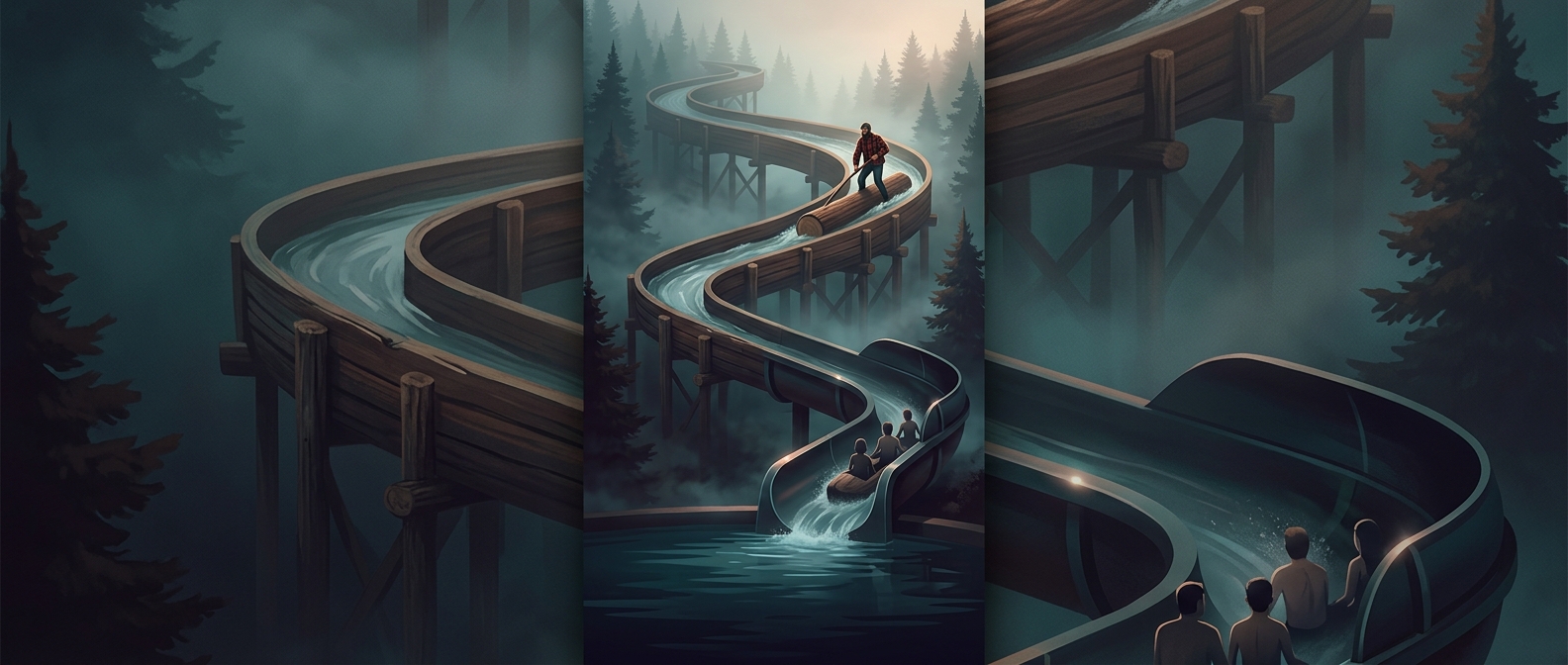
A logging flume was a long, narrow channel built to carry logs over terrain that would otherwise be difficult to cross. Loggers lined the trough with water, then released timber into it. Gravity pulled the logs downhill, while the water helped them slide and float instead of grinding over rocks and soil.
The channel could guide a log around obstacles and keep it moving toward a river, a mill, or a loading point. That mattered because hauling heavy timber overland was slow and labor-intensive. A flume turned the mountain’s slope into part of the transport system: the higher starting point supplied the force, and the trough supplied the path.
From work route to ride
That same combination—an elevated channel, flowing water, and a downhill run—underlies the modern flume ride. But the resemblance is in the basic idea, not the purpose. A logging flume was built to move timber; a ride is designed to carry people through a controlled course and into a splash at the bottom.
The link is easy to picture: a log once shot through a wooden chute under the pull of gravity, and a modern ride vehicle follows a similar water-filled route. What changed was the cargo and the engineering around it. The mountain’s slope still does the dramatic work, while the channel turns an uncontrolled descent into a route people can take for fun.