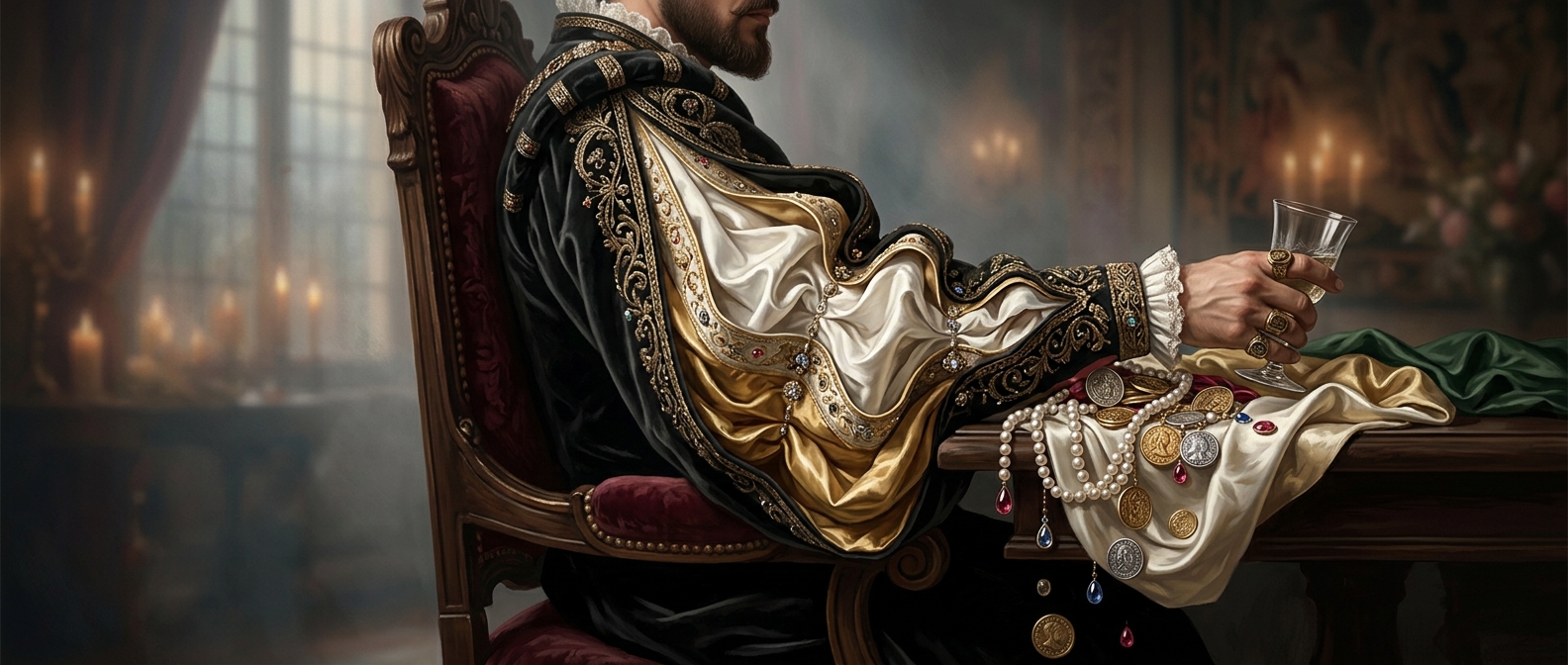
Why visible veins could signal rank
In 17th-century France, a pale complexion could suggest that a person spent little time doing strenuous work outdoors. That made skin more than a matter of appearance: it could serve as a visible clue to a life supported by wealth and status.
Blue veins strengthened the effect. Because veins show through pale skin, drawing thin blue lines made that look more pronounced. The cosmetic detail turned an ordinary feature of the body into a deliberate status signal—one that suggested both delicacy and distance from manual labor.
Making “blue blood” visible
“Blue blood” was a way of describing aristocratic lineage, not a literal difference in blood color. The drawn lines helped make the idea legible on the body: a viewer could see the pale skin and blue tracery together, rather than having to take someone’s rank on trust.
The practice also hints at how status worked in appearance-conscious court culture. Wealth could be communicated through clothes and surroundings, but it could also be staged through grooming. A few painted veins made privilege look like a natural quality of the skin—even though the effect was carefully made.