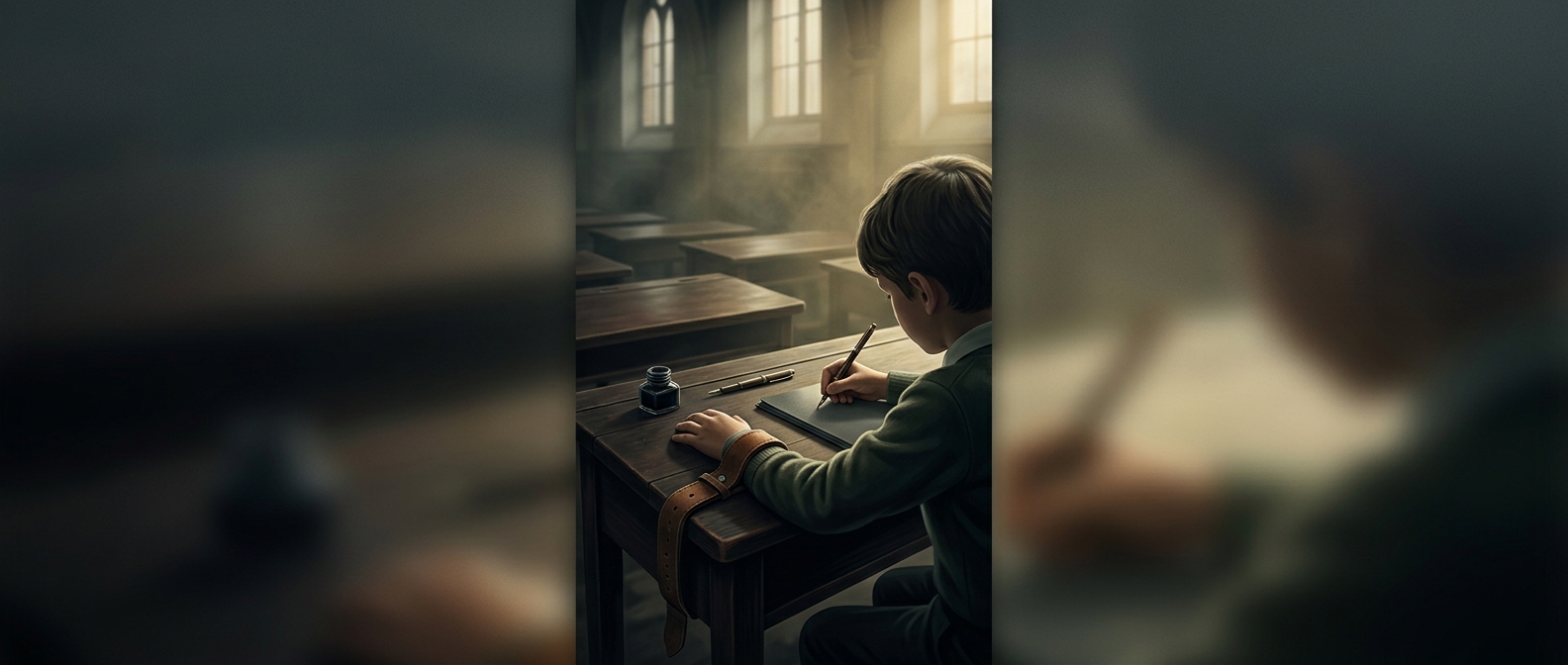
When the “right” hand was the only acceptable one
In classrooms that enforced right-handed writing, a child’s natural hand preference was treated as a behavior to correct. The pressure could be direct: some teachers restrained a child’s left arm or hit the hand when it reached for the pencil. The goal was not simply neater handwriting; it was to make the child use the hand the school considered proper.
That expectation reflected a broader preference for uniformity. A right-handed classroom was easier for adults to organize around familiar habits and assumptions. But handedness is not a choice a young child makes for convenience. It emerges as children learn to coordinate movements, and most left-handed children naturally favor their left hand for precise tasks.
What switching demanded of a child
Writing is a practiced sequence: the hand grips the pencil, controls pressure, and guides it through repeated strokes. A child pushed to switch had to build those skills with the less-preferred hand while also learning letters and keeping up with schoolwork. Restraining the left hand could make the rule impossible to ignore, but it did not make the right hand feel natural.
Some children learned to write with the right hand while continuing to favor the left for other activities. Others resisted or struggled with the extra demand. The experience could turn an ordinary lesson into a test of obedience, with the child’s own movements treated as wrong.
The lasting significance is in that small classroom correction: a pencil grip became a way to enforce conformity. For a left-handed child, learning to write was not always just learning to write—it could also mean learning to hide a natural preference.