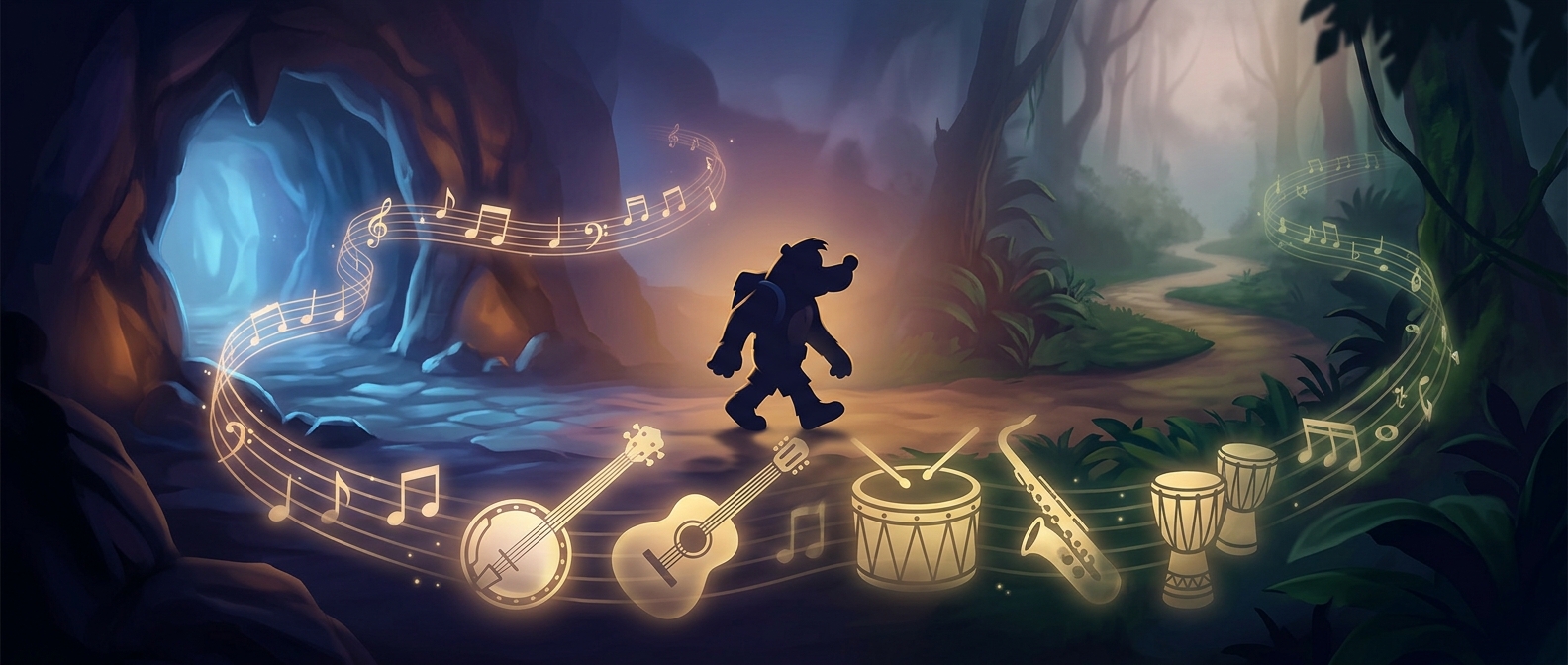
One Tune, Reorchestrated for Each Place
In Banjo-Kazooie, a familiar melody can sound markedly different as Banjo and Kazooie cross from one part of a world to another. The game keeps the musical idea recognizable while changing its arrangement: bright, percussive sounds can give way to instruments that make the same tune feel eerie or mysterious.
That works because a melody is more than its instrumentation. Its notes and rhythmic shape can remain recognizable even when the sounds playing around it change. The shift lets the score adapt to the setting without making every area feel as if it belongs to a separate piece of music.
The Boundary Becomes Part of the Score
The game treats movement through its world as a musical cue. As the characters enter a different area, the music changes to match the new surroundings. Rather than relying only on a new track for each place, the changing arrangement makes the transition itself audible: the player can hear the world’s mood shift while following the same underlying musical thread.
That choice suits a game built around exploring connected spaces. A player may cross an invisible boundary without stopping to watch a scene or choose a new level. The music can mark that change immediately, helping a location feel distinct while keeping the journey continuous.
The result is a small but memorable design trick: the setting changes the tune’s character, not its identity.