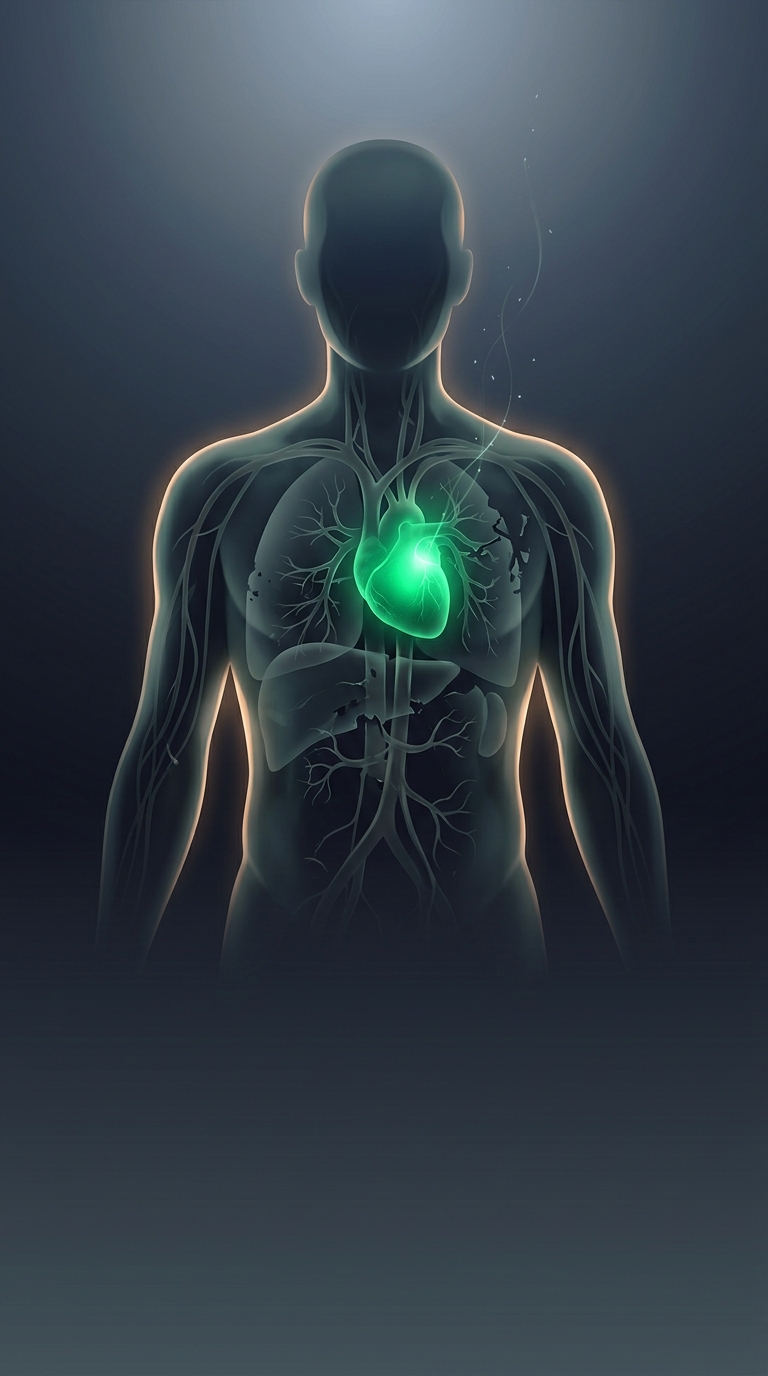
The body gives off a tiny trickle of light
Living cells constantly run chemical reactions to release energy and maintain themselves. Some of those reactions leave molecules briefly in an energized state; as they settle back down, they can release photons—the particles of light. This faint output is called ultraweak photon emission. It is a by-product of ordinary cell chemistry, not a glowing layer or a light-producing organ.
That distinction matters: scientists sometimes use “bioluminescence” broadly for light from living things, but the familiar bright glow of fireflies comes from a specialized light-making system. Human emission is far weaker and is not visible to the naked eye.
How a camera can detect what eyes cannot
To capture the signal, researchers use highly sensitive cameras in a dark environment. With ordinary light blocked, the equipment can register individual photons accumulating over time. A person may appear brighter in one area than another in the resulting image, but that pattern is a measurement of photon emission—not a visible aura and not a map of heat.
The emission is associated with chemical activity in cells, including reactions involving oxygen. Because those reactions occur throughout the body, the signal can offer researchers a way to study changes in living tissue without adding a visible glow.
A daily pattern, not a change you can feel
Measurements have found that the emission varies over the course of a day, with the strongest signal reported around 4 p.m. Such a rhythm may reflect daily changes in the body’s activity, though the camera reading itself does not tell us exactly which process caused each fluctuation.
The striking part is how little light is involved: the body can release photons while remaining completely dark to human vision. The “glow” becomes real only when a detector is sensitive enough to count what the eye misses.