How a gene becomes a working message
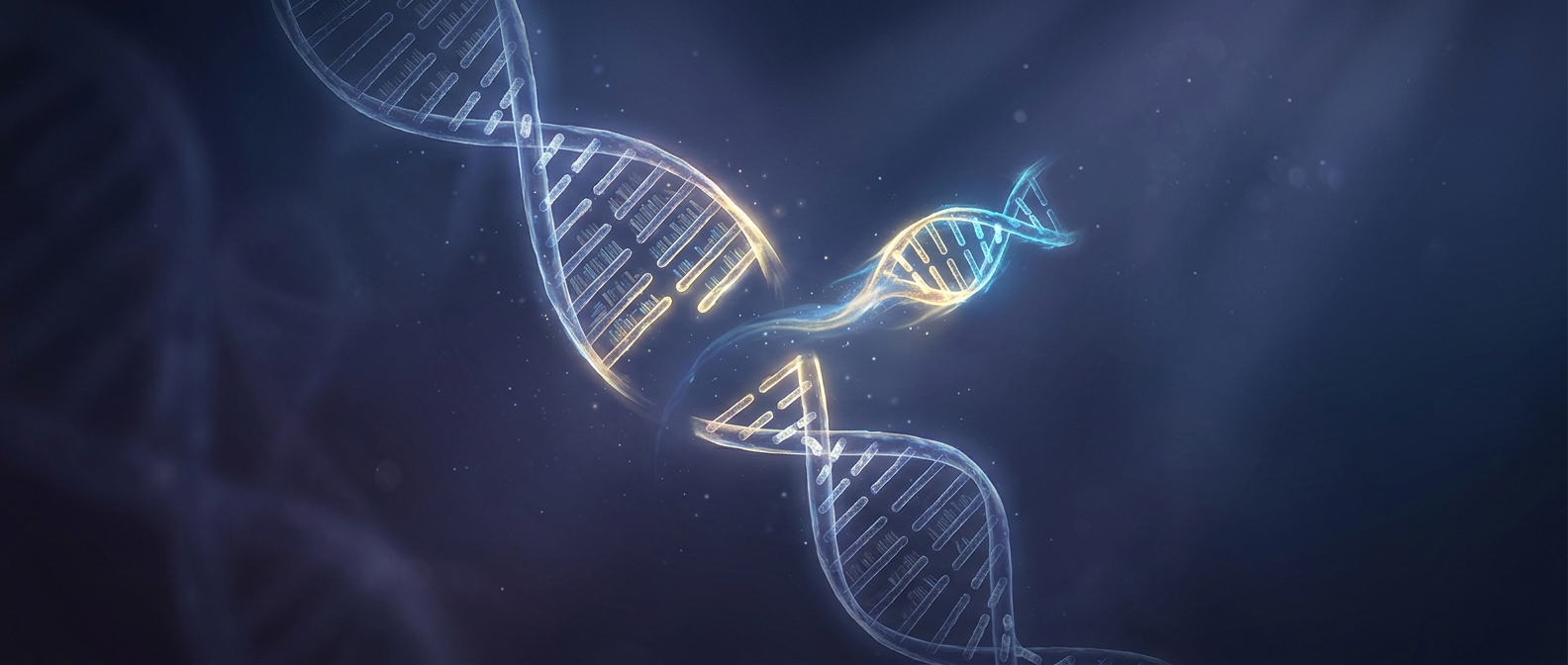
A gene is a stretch of DNA whose sequence can be used to make a functional product. To use a protein-coding gene, the cell first makes an RNA copy of its instructions in a process called transcription. The copy is usually messenger RNA, or mRNA. Unlike DNA, which is kept in the cell’s protected genetic archive, mRNA can travel to the machinery that builds proteins.
Reading the message three letters at a time
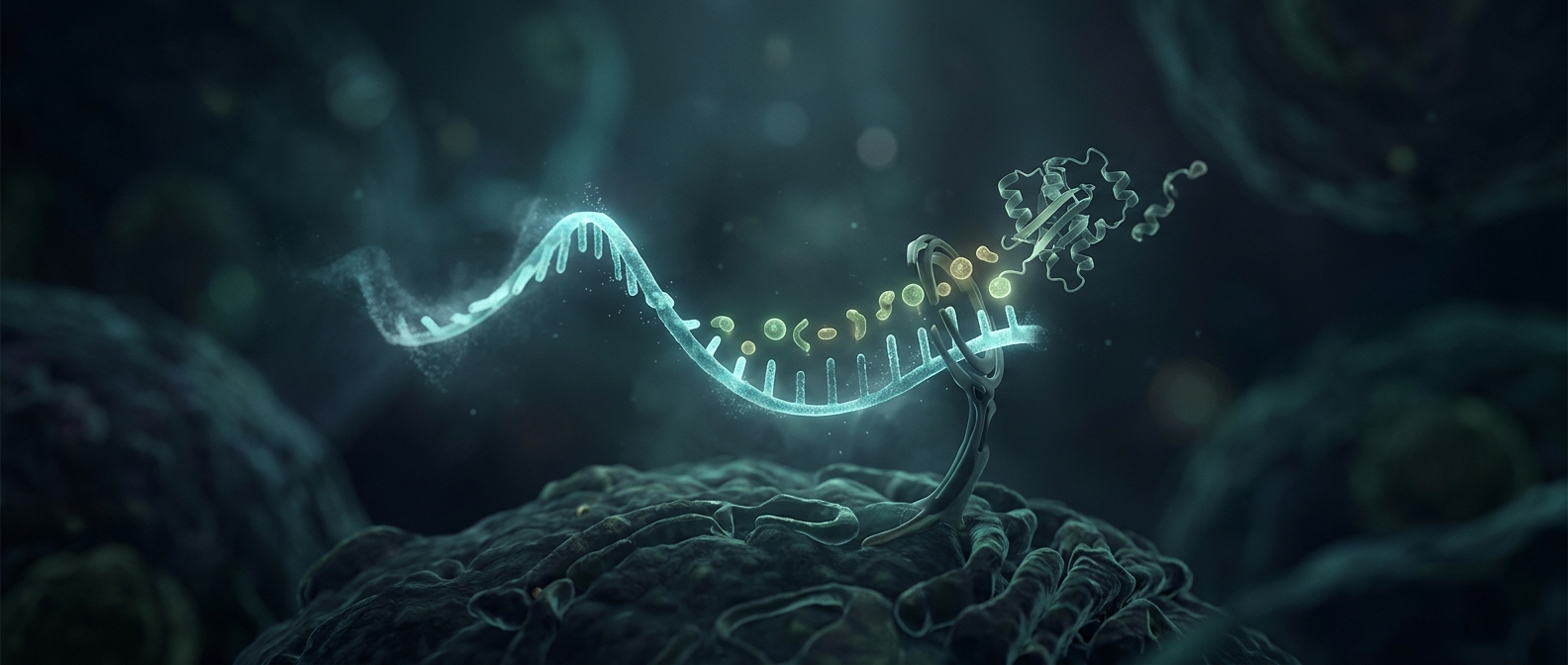
A ribosome—the cell’s protein-building machine—moves along the mRNA and reads its chemical letters in groups of three, called codons. Each codon specifies an amino acid, one of the small units that make up a protein, or signals where building should begin or end. Transfer RNA molecules bring the matching amino acids to the ribosome, which links them in the order encoded by the message. That sequence folds into a protein with a particular shape and job.
Why make a copy instead of using DNA?
A disposable message lets cells control protein production without repeatedly exposing or moving their DNA. They can make more mRNA when a protein is needed and less when it is not. The message’s lifetime also matters: cellular enzymes eventually break mRNA down, limiting how long it can be read. This helps a cell adjust protein output as conditions change, while the DNA instructions remain available for future use.
The same chain of steps is central to some medical technologies. Certain vaccines deliver mRNA that prompts cells to make a harmless piece of a virus, giving the immune system something to recognize; the delivered message is later degraded rather than becoming part of the cell’s DNA.