A language archive you can inspect without a computer
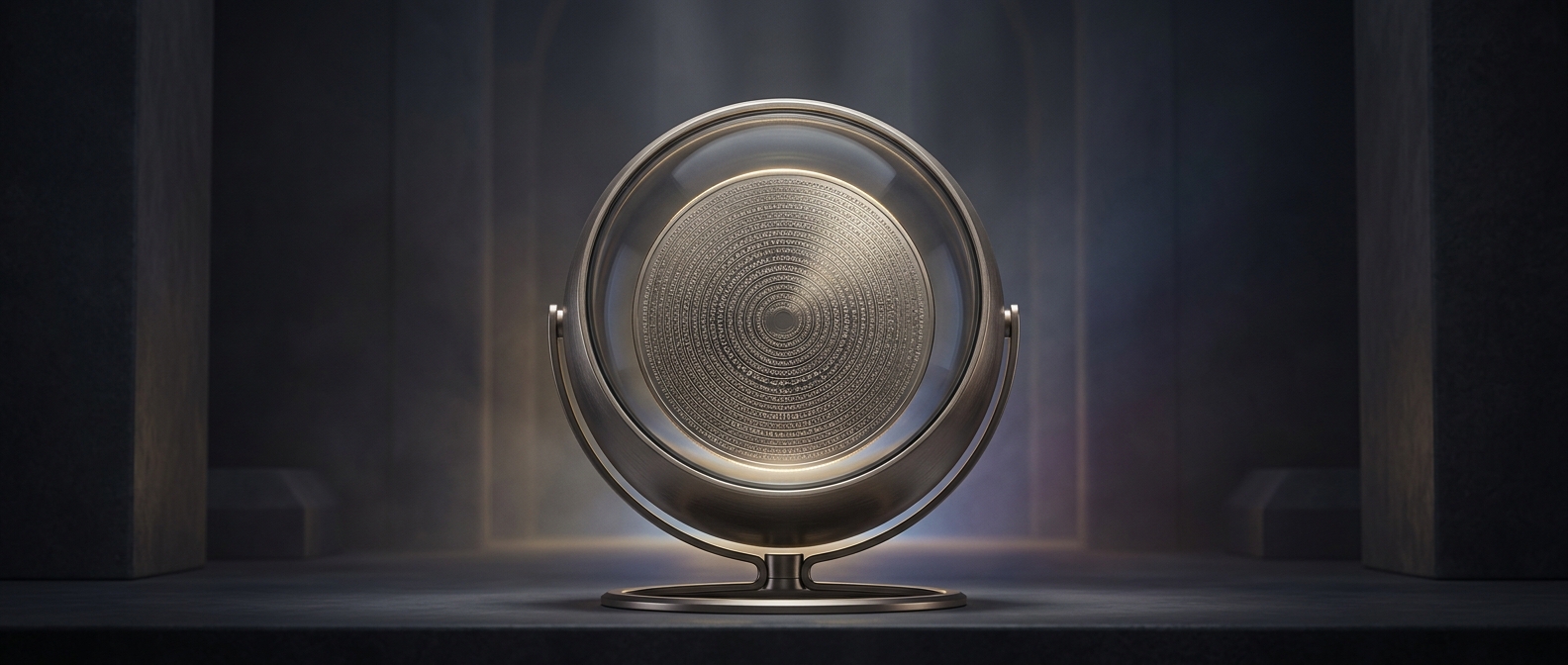
The Rosetta Disk is built around a simple archival gamble: if future readers can physically reach it, they may be able to read it without recovering today’s electronics. Its texts are etched directly into nickel, rather than stored as magnetic bits or files that require a working drive and compatible software.
The writing is so small that the disk’s surface acts more like a page viewed under magnification than an ordinary inscription. A magnifying glass reveals the text. That makes the archive human-readable in principle without digital decoding—though a reader still needs to recognize the writing systems and languages represented.
Why put so much on one disk?
The disk preserves samples of more than 1,500 languages in a compact physical form. A conventional inscription could not fit anything close to that breadth on a three-inch object. Micro-etching solves the space problem by shrinking the lettering, while the magnifier provides the practical bridge between tiny marks and readable text.
The choice of metal matters, too. Nickel resists corrosion better than many common materials, helping the etched surface endure exposure that could damage paper or electronic media. But no object is invulnerable: the disk’s long-term usefulness depends on it surviving, being found, and being understood.
The real test is whether someone can make sense of it
A durable archive is not automatically an accessible one. Future readers would need to discover the disk, work out how to examine its surface, and connect its language samples to languages they know. The design addresses one fragile link—dependence on machines—by keeping the information physically visible.
That is what makes the disk unusual: its most important reader may not have any of our technology. A simple magnifying glass could be enough to turn an otherwise mysterious metal object into a library of human language. /final-offsetof