A Guard’s View Is a Game Rule, Not a Human Eye
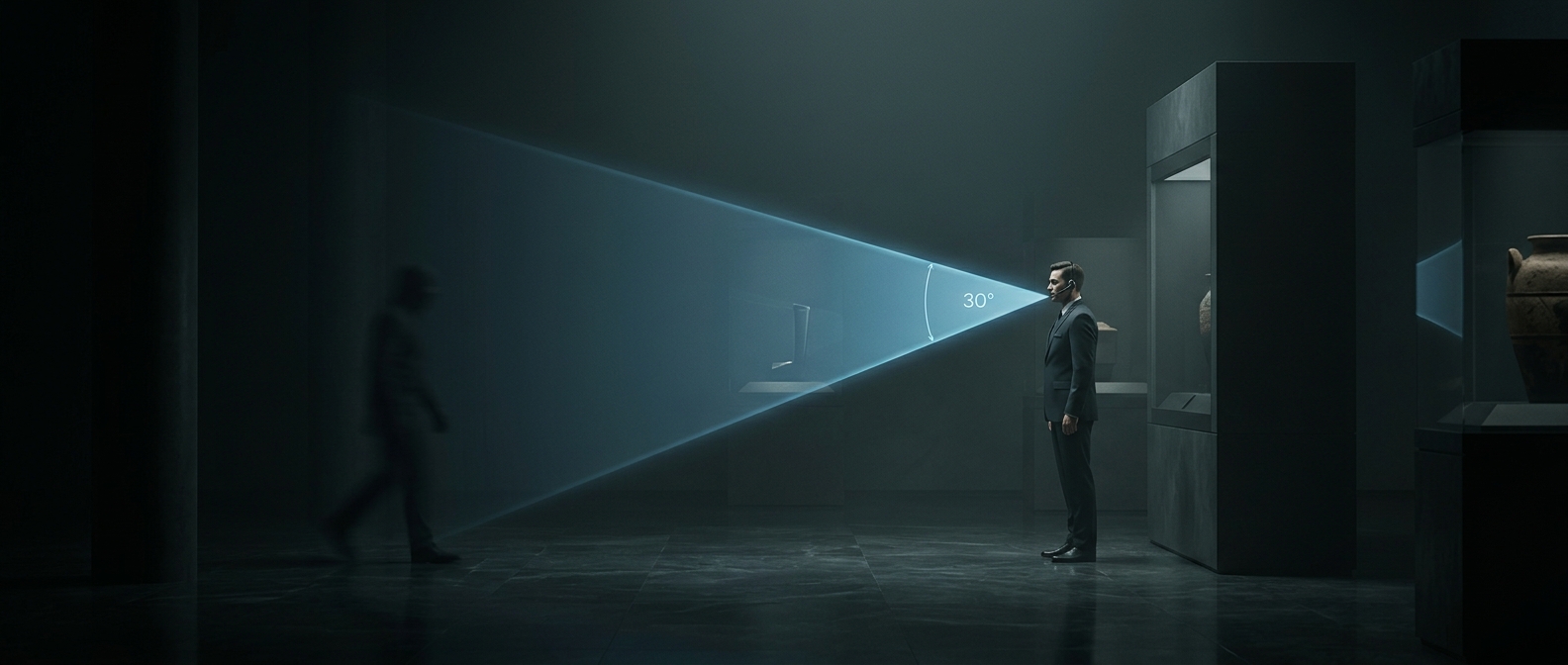
In Hitman, a guard’s awareness can be represented as a narrow viewing cone: the space in front of the character where the game checks for things they might notice. That turns a complicated act of perception into a readable stealth puzzle. The player can judge not only whether a guard is nearby, but where the guard is facing—and whether a change in position might keep an action out of sight.
The cone is an abstraction, not a claim about how people literally see. Real vision includes peripheral awareness, changing attention, and clues such as movement. A game needs simpler rules players can learn and use under pressure. A fixed boundary makes the difference between “seen” and “not seen” legible enough to plan around.
Why the Boundary Changes the Risk
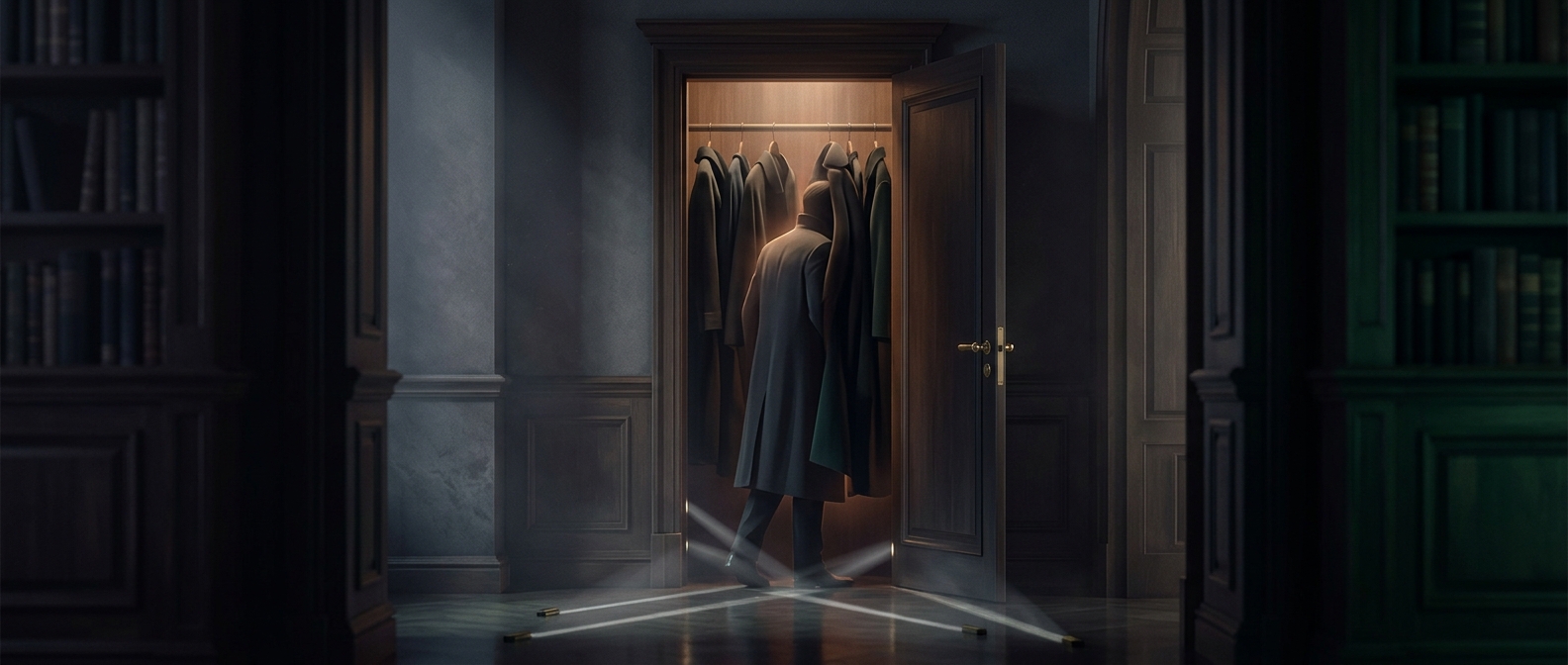
A hallway can be bright and still offer a brief opportunity if a guard is looking elsewhere. The challenge is less about darkness than timing and angle: the player must account for the guard’s patrol, the direction of the view, and how long an exposed action takes. If the guard turns at the wrong moment, a route that seemed safe can become dangerous.
That clarity supports Hitman’s larger style of play: success often comes from studying a space and choosing the right moment, not simply reacting faster. The small viewing zone lets a player make a precise calculation—move when the guard’s attention points away, and even a conspicuous hallway can briefly become a usable path.