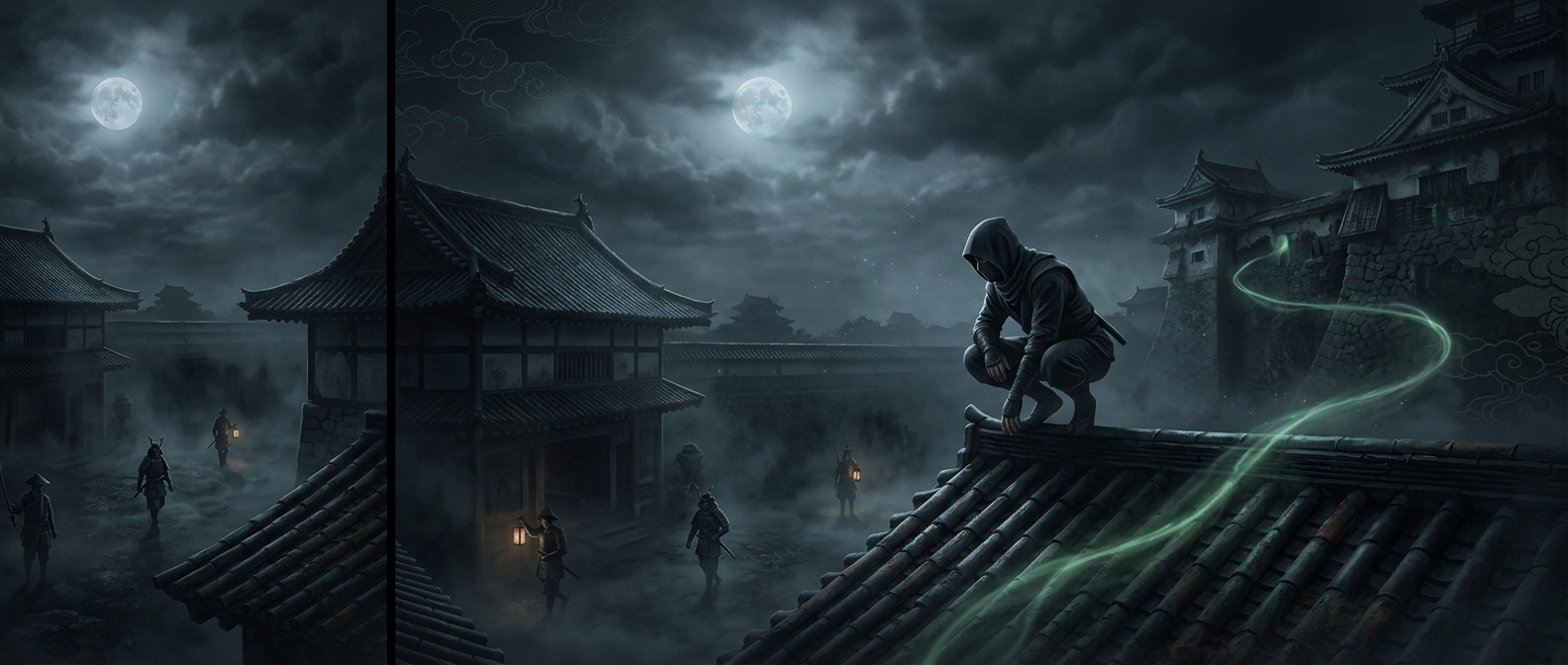
From Tenchu’s shadows to Sekiro’s swordplay
The early idea for Sekiro: Shadows Die Twice was to make a new entry in Tenchu, a stealth-action series centered on ninja missions. That starting point helps explain the game’s familiar ingredients: a shinobi protagonist, rooftops and rooftops’ worth of routes, and the option to slip past or quietly remove enemies.
But a game’s identity is shaped by what its moment-to-moment play asks the player to do. As development proceeded, the project moved away from being a Tenchu reboot. Instead of making stealth the defining test, Sekiro built its central challenge around direct sword fights.
A different kind of ninja challenge
In Sekiro, stealth can help the player choose an approach or gain an advantage, but it cannot replace learning an opponent’s attacks. The combat system rewards meeting blows with precise deflections—timed blocks that throw an enemy off balance—then pressing the opening. That turns a duel into a contest of timing and nerve rather than a simple exchange of damage.
The shift also gave the game room to establish its own character. Its shinobi still moves through hostile spaces like a stealth-game hero, but the defining memory is often a face-to-face fight in which one mistimed move can undo a long stretch of careful play. Tenchu supplied the seed; the decision to make combat, not infiltration, the main event made Sekiro stand on its own.