A working shelter on the summer pasture
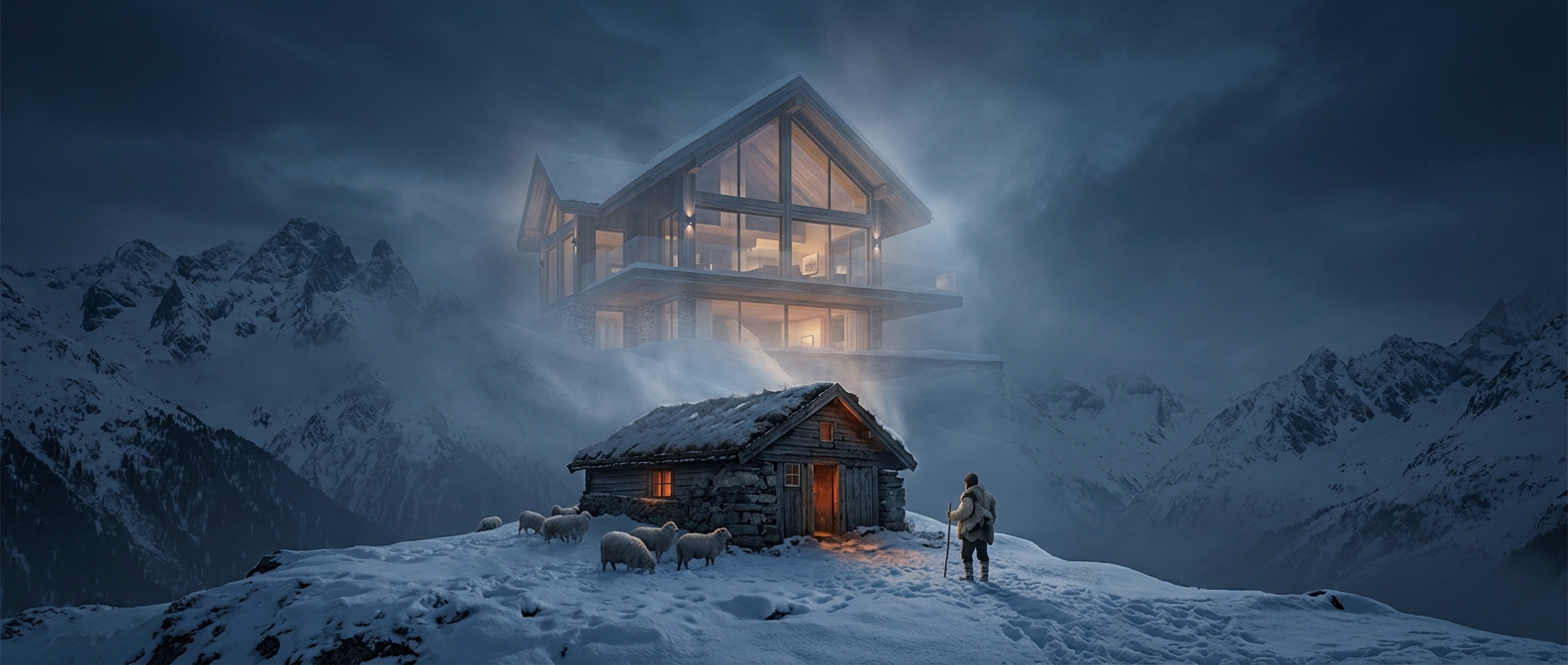
Before the chalet became a holiday-home ideal, it was part of the practical rhythm of Alpine farming. Families moved cattle to high mountain pastures during the warmer months, where herders watched the animals and processed their milk. A small shelter near the herd offered protection from sudden weather and a place to work and sleep; it did not need the comforts or finish of a permanent home in the valley.
Tourism changed what the building meant
As visitors began traveling to the Alps, the countryside itself became part of the attraction. The chalet offered a recognizable image of mountain life: a wooden, rural-looking building set against a dramatic landscape. Lodging businesses and homeowners could draw on that image even when their buildings served a very different purpose from a herder’s hut.
That shift was not simply a matter of adding decoration. A seasonal shelter had to meet basic needs on a working pasture. A tourist chalet had to welcome guests, offer more comfort, and signal a particular kind of escape. The practical form became a style that could be polished, enlarged, and associated with leisure and affluence.
From necessity to symbol
The transformation shows how tourism can change the meaning of an ordinary building. A hut once defined by the labor it supported became a visual shorthand for Alpine life—one that could be enjoyed by visitors far removed from the work of tending cattle. The chalet’s upscale image grew from the very simplicity that had once made it useful.