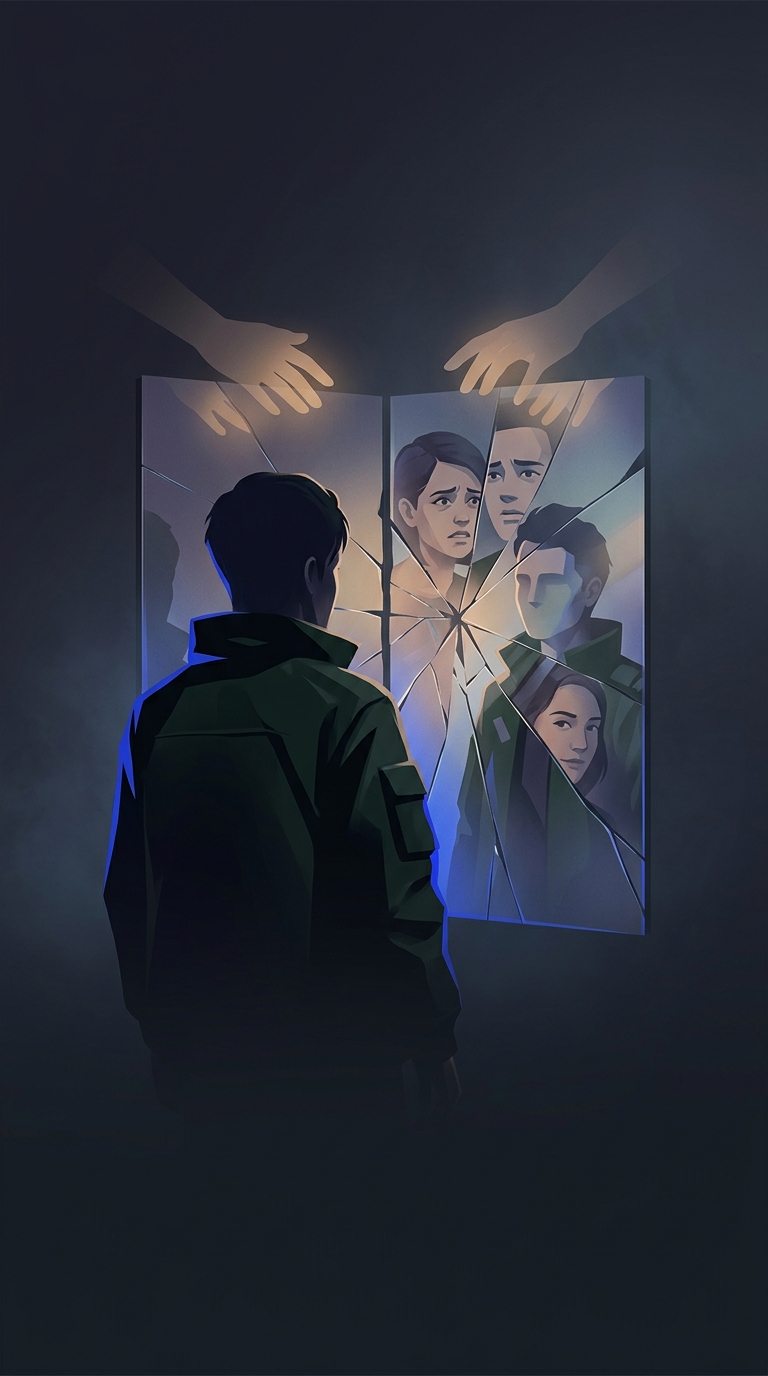
Your reflection is a familiar face with a new frame
You have spent years learning the tiny details of your own face: how your hair falls beside your cheek, where it usually parts, and what its outline looks like from different angles. A haircut changes that frame all at once. Even when the cut suits you, your reflection can feel wrong simply because it no longer matches the version of yourself your brain expects.
That mismatch is especially noticeable in a mirror. You see yourself often, but usually in brief, routine glances; you may not have a clear, neutral picture of your appearance to compare against. After a cut, attention can lock onto the changed feature, turning a small difference into the main event.
You’re judging a change; your friends see a whole person
Your friends have their own familiar picture of you, but they aren’t tracking every strand against yesterday’s version. They’re more likely to take in the haircut together with your face, expression, clothes, and the way you carry yourself. That broader view can make the style seem cohesive before you have adjusted to it.
Their reaction can also be shaped by ordinary social warmth: people who care about you may respond kindly, and they may genuinely like a cut that doesn’t match your personal taste. Neither your first impression nor their praise is an objective verdict.
Give your judgment time to catch up
A useful distinction is “I don’t like this look” versus “this look doesn’t feel like me yet.” Those reactions can overlap, but they aren’t identical. As you see the cut in different lighting, from different angles, and as you style it yourself, it becomes easier to judge what you actually think rather than just how sharply it differs from the old shape.
The mirror’s first verdict is often a verdict on surprise. Your friends may already be seeing the haircut as part of you; you may need a few ordinary mornings before your reflection does too.