A key makes access a physical act
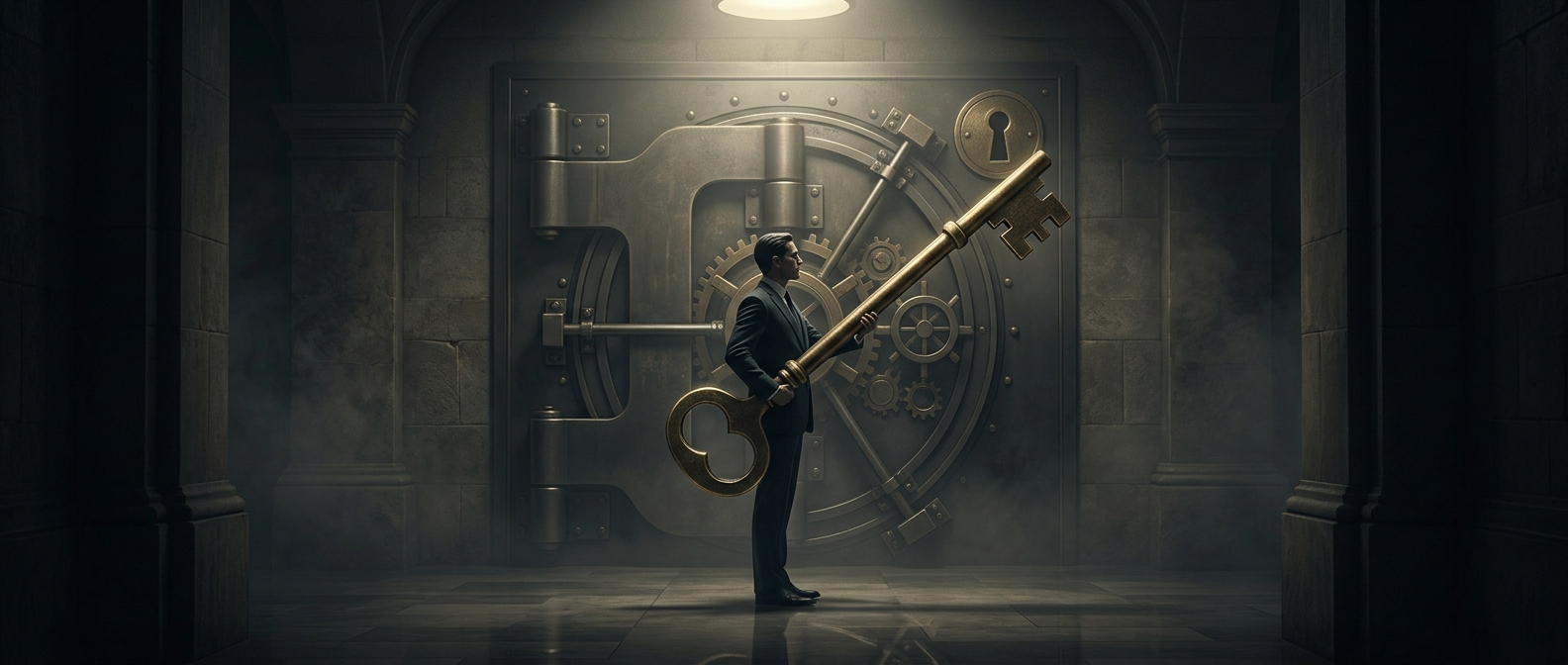
A vault lock works by matching the cuts on a key to parts inside the lock. When those parts line up, the key can turn the mechanism that releases the door. The oversized key makes that action visible and deliberate: someone must bring it to the lock and turn it, rather than enter a code at a keypad.
That does not make the key a complete security system. A key can be copied, lost, or misused, so the important safeguards are also about who may handle it and how access is controlled. The metal lock is one barrier in a larger process, not proof that nobody can get in without it.
Why keep a mechanical lock?
A physical lock can remain useful even as other parts of security become electronic. It offers a direct way to secure a door without relying on a keypad or software to operate the lock itself. The tradeoff is that physical keys must be managed and protected; they cannot simply be reset like a code.
The striking detail is not just the key’s size. It is the visible moment when access becomes real: a person has to put the key in the lock and turn it.