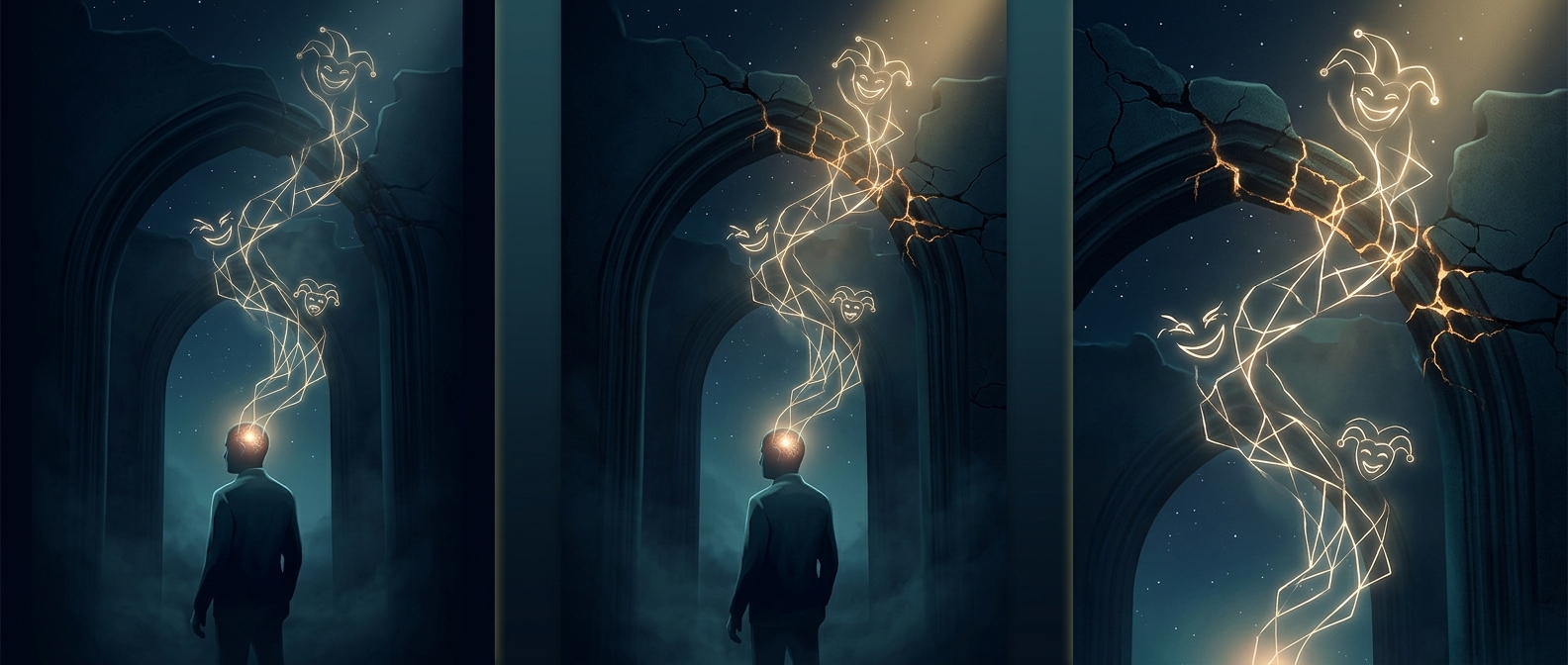
The extra step inside a sarcastic remark
When someone says “Great weather” as rain soaks the picnic, the words point one way and the situation points another. To understand the remark, a listener has to notice that mismatch, use the context, and infer the speaker’s intended meaning. The literal sentence is still there; it just is not the whole message.
That small act of interpretation asks the mind to keep competing possibilities in view and then shift between them. Instead of accepting the first, most direct reading, the listener considers an alternative. This is the mental flexibility that can serve as a warm-up for creative thinking.
From reading between the lines to making new connections
Creativity often involves moving beyond an obvious interpretation—linking ideas that do not normally sit together or finding another way to frame a problem. Sarcasm briefly rehearses a similar move: notice an unexpected relationship, then make sense of it. The joke’s punch comes from the gap between what is said and what is meant.
That does not mean every sarcastic exchange produces a creative idea. The effect is better understood as a possible nudge than a guaranteed boost: interpreting the remark exercises a switch in perspective, but what a person does with that flexibility depends on the task and the moment.
The next time a dry “Perfect timing” lands just as the bus pulls away, the mind has already made a tiny creative detour: it has left the literal meaning behind and found the one the scene supports.